
Step-by-step Installation of 215kWh Cabinet Energy Storage Container for Military Bases: A Field Engineer's Guide
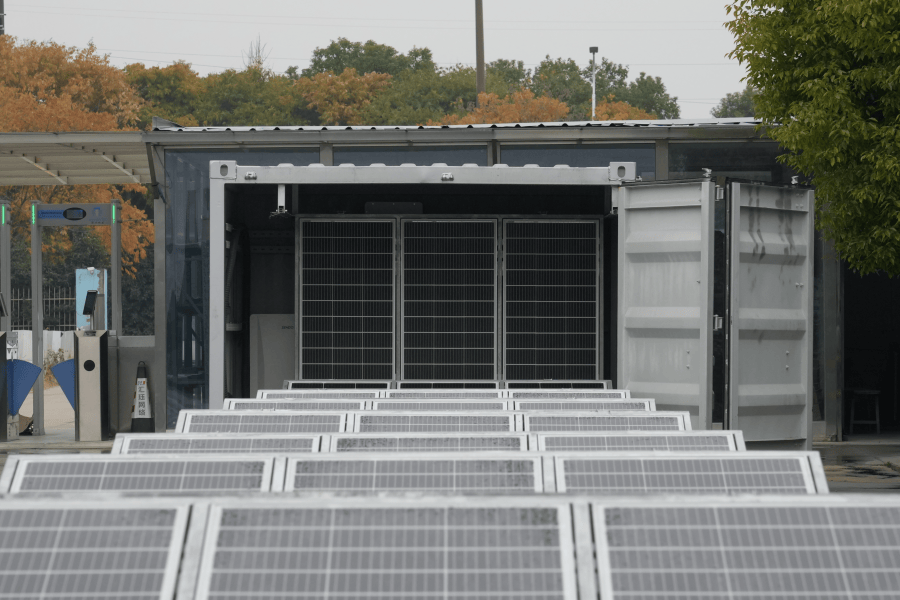
Table of Contents
- The Quiet Problem: Energy Resilience on Military Bases
- Why This Stings: Cost, Security, and Missed Opportunities
- A Practical Solution: The 215kWh Cabinet Container Approach
- Step-by-Step Deployment: What It Really Looks Like On-Site
- Beyond the Install: Keeping It Running Safely & Efficiently
The Quiet Problem: Energy Resilience on Military Bases
Let's be honest. When we talk about energy storage for military installations, the conversation often jumps straight to massive, multi-megawatt systems. But over my two decades on sites from California to Bavaria, I've seen a persistent, quieter need. It's the need for reliable, rapidly deployable, and secure power for critical but smaller-scale loads: communication hubs, perimeter security systems, field command posts, or backup for essential barracks facilities. The grid goes down - whether from an extreme weather event, let's just say "adversarial action," or simple infrastructure aging - and suddenly, mission-critical operations are running on diesel gensets. The noise, the fuel logistics, the maintenance... it's a headache commanders shouldn't have to manage.
Why This Stings: Cost, Security, and Missed Opportunities
This reliance on traditional backup isn't just an operational nuisance; it's a financial and strategic drag. The National Renewable Energy Lab (NREL) has shown that for many distributed applications, the Levelized Cost of Energy (LCOE) from diesel generation is significantly higher when you factor in long-term fuel supply chains and maintenance. I've been on bases where the fuel convoy itself becomes a security vulnerability. Furthermore, with the push for decarbonization, even defense departments are setting aggressive clean energy targets. Sticking solely with diesel means missing out on pairing storage with on-base solar PV, which can provide silent, free "fuel" and enhance energy security.
The real agitation point? Many containerized solutions are either over-engineered (and over-priced) for a 200-300kWh need, or they're commercial units that don't meet the stringent safety and durability standards required for a military environment. I've seen units that claim to be "tough" fail basic vibration tests or have cybersecurity protocols that wouldn't pass a basic IT review. This gap leaves project managers in a bind.
A Practical Solution: The 215kWh Cabinet Container Approach
This is where the focused, step-by-step installation of a purpose-built 215kWh cabinet-style energy storage container makes so much sense. We're not talking about a sprawling, custom-built facility. Think of it as a standardized, high-security power asset. At Highjoule, we've developed our HT-Cabinet series specifically for this niche. It's a fully integrated unit - battery racks, thermal management, fire suppression, and power conversion - all pre-assembled in a ruggedized, ISO-standard container. The magic is in the balance: robust enough for military specs (think UL 9540 for energy storage systems and UL 1741 for inverters, which are the benchmarks in North America), but standardized enough for a repeatable, efficient deployment process.
The core value isn't just the box; it's the predictable, streamlined path from delivery to commissioning. This predictability is gold for base engineers working under tight operational windows.
Step-by-Step Deployment: What It Really Looks Like On-Site
So, what does this "step-by-step" process actually entail? Based on a recent deployment for a National Guard facility in the Midwest U.S., here's the real-world sequence:
- Site Prep & Foundation (Day 1-2): This isn't just pouring a slab. We coordinate for a level, compacted gravel or concrete pad with proper drainage. Conduit for AC and DC cabling is stubbed up precisely. Honestly, getting this right upfront prevents 80% of field issues later.
- Container Placement & Anchoring (Day 3): The unit arrives on a flatbed. A crane or heavy forklift sets it onto the prepared pad. We then use seismic-grade anchor bolts to secure it. This step is non-negotiable for both safety and longevity, especially in areas prone to high winds or seismic activity.
- Electrical Interconnection (Day 4-5): This is the critical phase. Certified electricians run the final cabling from the container's internal switchgear to the point of interconnection - often a critical distribution panel or a dedicated genset tie-in point. Every connection is torqued to spec, and we perform megger tests to ensure insulation integrity. All our cabinets come with a factory-integrated, UL-listed inverter, which massively simplifies this step compared to a component-level install.
- Commissioning & System Check (Day 6): This isn't just flipping a switch. We power up the system in a controlled sequence. The Battery Management System (BMS) is validated, the thermal management system (crucially important for both battery life and safety - it keeps the cells in their happy temperature zone) is tested under load, and the cybersecurity protocols are verified. We simulate grid outages and ensure the transfer to backup is seamless.
- Handover & Training (Day 7): We don't just leave a manual. We conduct a hands-on session with the base's maintenance team. It covers daily status checks, understanding the system alerts, and basic troubleshooting protocols. Empowerment is key to long-term resilience.

Key Technical Insights from the Field
Let me break down two things that often get glossed over in spec sheets but matter hugely on-site:
- Thermal Management: A 215kWh lithium-ion battery pack generates heat. In a sealed container in the Texas sun or a German winter, managing that is everything. Our system uses a closed-loop liquid cooling system. Why? It's vastly more efficient and consistent than air conditioning, which struggles with hot spots. This directly extends cycle life and maintains the system's C-rate (basically, its ability to discharge power quickly) even under peak demand. A thermally stressed battery ages fast and is a safety risk.
- LCOE in a Military Context: When we calculate the Levelized Cost of Energy here, we include more than just equipment. We factor in the avoided cost of fuel transport and storage, reduced maintenance man-hours versus diesel gensets, and the value of silent, undetectable operation for tactical advantage. Suddenly, the ROI picture shifts dramatically.
Beyond the Install: Keeping It Running Safely & Efficiently
The installation is just the beginning. The real test is year three, year five. This is where choosing a provider with a deep service backbone matters. Highjoule's containers are designed for remote monitoring. We can often diagnose - and sometimes even resolve - software-level issues from our network operations center. But for physical maintenance, having local, trained service partners in Europe and North America is non-negotiable. It ensures that if a component needs swapping, you're not waiting for a specialist to fly in from another continent.
The goal is to make this 215kWh asset as "fire and forget" as possible for the base operators, while we handle the proactive health monitoring in the background. It's about providing energy certainty, so the focus can stay on the mission.
So, is your base still mapping its energy resilience strategy around the last century's solutions? What's the one critical load you'd want to secure with silent, reliable power tomorrow?
Tags: UL Standard BESS Military Energy Storage Energy Security Step-by-Step Installation Cabinet Energy Storage
Author
James Zhang
20+ years agricultural energy storage engineer / Highjoule CTO