
Deploying 215kWh BESS in Mining: A Step-by-Step Guide for Remote Operations
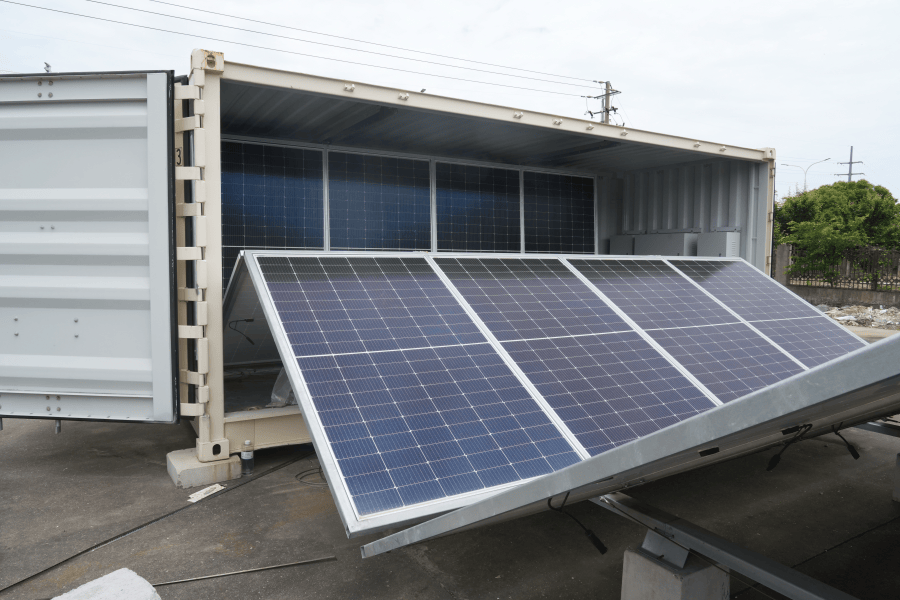
Table of Contents
- The Remote Challenge: More Than Just Distance
- Why Modular, Containerized BESS is the Answer for Industry
- A Real-World Blueprint: The Mauritania 215kWh Mining Installation
- Expert Deep Dive: The Tech That Makes It Work (And Last)
- Beyond the Installation: The Real Value Unlocks
The Remote Challenge: More Than Just Distance
Honestly, when we talk about deploying energy storage for mining or industrial operations in remote areas, the first thing that comes to mind is logistics. Getting equipment to site. But after 20 years on sites from the Australian Outback to the Chilean highlands, I can tell you the real pain points start after the truck arrives.
The core problem isn't just installing a battery; it's installing a reliable, safe, and maintainable power asset in an environment that's often working against you. Think extreme temperatures, dust, limited local technical expertise, and a grid connection that's either non-existent or wildly unstable. I've seen firsthand how a poorly planned BESS installation can turn into a cost center instead of the savings engine it was meant to be.
This agitates three major concerns for any operations manager: Sky-high operational costs from diesel dependency, unpredictable downtime due to power quality issues, and nagging safety anxieties about putting a complex electrochemical system in a harsh, remote location. According to the International Energy Agency (IEA), mining accounts for about 1% of global final energy demand - a huge portion of that in off-grid settings where efficiency and resilience directly impact the bottom line.
Why Modular, Containerized BESS is the Answer for Industry
This is where the solution crystallizes: the pre-engineered, containerized Battery Energy Storage System (BESS). It's not a new concept, but its application for rugged, remote industrial use has been a game-changer. The beauty lies in shifting complexity from the field to the factory floor.
At Highjoule, we build our containerized solutions like the 215kWh cabinet system around a core principle: maximize on-site simplicity. Every component - the battery racks, thermal management system, power conversion system (PCS), and fire suppression - is integrated, tested, and certified (think UL 9540, IEC 62933) under controlled conditions before it ever leaves our dock. This means what arrives on site is essentially a "power plant in a box," drastically reducing the scope for field errors.
I remember a project in Nevada for a mid-tier mining company. Their initial plan was a stick-built system. We proposed a containerized alternative. The result? The installation timeline was compressed by nearly 60%, and because the entire system arrived with UL certifications pre-completed, the local authority having jurisdiction (AHJ) review was smooth sailing. That's the power of modularity.
A Real-World Blueprint: The Mauritania 215kWh Mining Installation
Let's walk through a recent project that perfectly illustrates this step-by-step approach. We deployed a 215kWh cabinet-style solar container for an off-grid mining support camp in Mauritania. The goal was to slash diesel gen-set runtime by pairing with a new solar array.
Step 1: Site Prep & Foundation C The Critical First Move. This happens before the container arrives. We worked with the local team to prepare a level, compacted gravel pad with simple anchor points. No complex concrete pours needed. The key here is planning for drainage and accessibility.
Step 2: Delivery & Placement C The One-Day Wonder. The container was shipped as a single unit. Using a standard flatbed and a crane, the site team had it positioned and anchored to the pad in under 6 hours. Honestly, the hardest part was coordinating the crane schedule.

Step 3: The "Plug-and-Play" Connections (The Smart Part). This is where pre-integration pays off. Our on-site engineer (one was sufficient) guided the local electricians through a handful of critical connections:
- Grid/DG In: Connecting to the main AC distribution panel from the diesel generators.
- PV In: DC input from the solar array combiner boxes.
- Critical Load Out: Feeding the camp's essential loads.
- Communication Links: Connecting to the site SCADA for remote monitoring from the main operations center.
Step 4: Commissioning & Handover C The Confidence Check. We powered the system up remotely with support from our Global Operations Center. We ran automated diagnostics, checked battery string voltages, verified thermal management cycles, and simulated charge/discharge scenarios. The local team received hands-on training on the simple HMI interface - focusing on status checks and alarm interpretation, not complex battery chemistry.
Expert Deep Dive: The Tech That Makes It Work (And Last)
Let's peel back the lid on that container. It's not just batteries in a box. For a 215kWh system in a 45C (113F) desert environment, the engineering is everything.
Thermal Management: This is the unsung hero. Batteries degrade fast if they're too hot or too cold. Our system uses a closed-loop, liquid-cooling system that's independent of the dusty outside air. It maintains an optimal 25C (3C) internal environment regardless of whether it's a scorching day or the system is at a high C-rate (that's the rate of charge/discharge relative to its capacity). A 1C rate means discharging the full 215kWh in one hour; we typically design for a conservative 0.5C for mining to maximize lifespan. Getting thermal management wrong is the fastest way to increase your Levelized Cost of Energy (LCOE) from the storage system.
Safety by Design: Beyond the standard UL 9540 certification, we compartmentalize. The 215kWh capacity is split into multiple, independently sealed cabinets within the container. Each has its own gas and heat detection. If an issue arises, it's isolated. This passive safety architecture gives peace of mind when the nearest fire department is hours away.

Beyond the Mauritania Blueprint
The principles here apply anywhere. We used the same step-by-step, modular philosophy for a 2 MWh system at a manufacturing plant in Germany's North Rhine-Westphalia. The challenges were different - strict local grid codes (VDE-AR-N 4105), space constraints, and different incentive structures - but the core approach of factory-integrated, pre-certified modules streamlined a complex grid-support project immensely.
Beyond the Installation: The Real Value Unlocks
The final step isn't commissioning; it's operation. A well-installed BESS like this becomes a strategic asset. For the Mauritania camp, the immediate benefit was fuel savings - the solar+BESS hybrid system cut generator runtime by over 70%. But the bigger win was reliability. The power for communications, lighting, and critical cooling became immune to gen-set hiccups.
For our clients in Europe and North America, the value proposition often includes demand charge management and providing grid services. But the foundation is the same: a resilient, well-installed asset. Our service model is built on remote monitoring - our team can often diagnose and guide a fix for an issue before the site crew is even aware of it, minimizing downtime.
So, when you're evaluating storage for a remote or demanding industrial site, the question shouldn't just be "what's the price per kWh?" It should be, "how do we make this complex system simple, safe, and successful from day one?" The step-by-step approach, centered on a robust, containerized solution, is the most reliable answer I've seen in two decades. What's the single biggest operational risk you'd want a BESS to mitigate at your site?
Tags: UL Standard BESS LCOE Renewable Energy Mining Operations Energy Storage Installation
Author
James Zhang
20+ years agricultural energy storage engineer / Highjoule CTO