
Streamlined Step-by-step Installation of All-in-one Integrated Lithium Battery Storage Containers for Grids
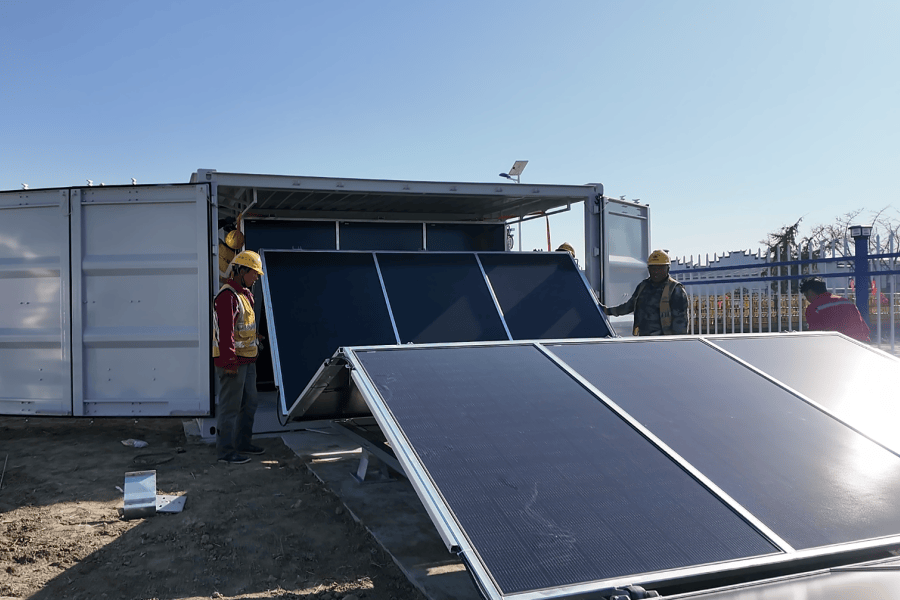
Table of Contents
- The Grid Reliability Puzzle (And Why It's Getting Harder)
- The On-Site Reality Check: Why Traditional BESS Deployments Stumble
- A Smarter Path Forward: The All-in-One Container Approach
- The Installation Playbook: A Step-by-Step Field Guide
- Beyond the Basics: Expert Insights from the Field
- Your Next Step: From Concept to Connected Asset
The Grid Reliability Puzzle (And Why It's Getting Harder)
Let's be honest. If you're managing grid assets in North America or Europe, your job description has changed dramatically in the last five years. It's no longer just about keeping the lights on. Now, you're integrating volatile renewable generation, managing peak demand that's spiking with EV adoption, and preparing for more frequent extreme weather events. The International Energy Agency (IEA) notes that grid-scale battery storage is set to grow by over 25% annually this decade, and for good reason. The grid needs a shock absorber, and fast.
The On-Site Reality Check: Why Traditional BESS Deployments Stumble
I've been on-site for more "modular" or "component-based" BESS projects than I can count. The theory sounds great: ship the batteries, inverters, HVAC, fire suppression, and control systems separately, then assemble them on a concrete pad like a giant, high-stakes Lego set. The reality? It's a recipe for budget overruns and schedule slippage.
Here's what I've seen firsthand:
- Schedule Chaos: A delayed transformer shipment holds up the entire commissioning. A missing cable tray bracket from a supplier in another country stalls electrical work for days. The on-site labor hours for interconnection and testing balloon.
- Cost Creep: Every extra day of crane rental, specialized electricians, and on-site project management hits the bottom line. The Levelized Cost of Storage (LCOS) starts to look less attractive when soft costs spiral.
- Compliance Headaches: Having an inspector check off on ten different subsystems from ten different vendors, all trying to work together, is an exercise in patience. A single component not bearing the right UL or IEC certification can halt everything.
This fragmented approach turns what should be a strategic asset into a complex, risky construction project.
A Smarter Path Forward: The All-in-One Container Approach
This is where the paradigm shifts. Instead of building the system on-site, we build it for the site in a controlled factory environment. An All-in-One Integrated Lithium Battery Storage Container is exactly what it sounds like: a fully assembled, tested, and certified energy storage system in a single shipping container footprint. At Highjoule, we've moved our value from just supplying components to delivering a grid-ready asset. The installation process transforms from a multi-month construction saga into a streamlined, predictable procedure.

The Installation Playbook: A Step-by-Step Field Guide
Based on our deployments from California to North Rhine-Westphalia, here's the streamlined, step-by-step installation process that actually works on the ground:
Phase 1: Pre-Arrival & Site Prep (Weeks 1-2)
This is all about preparation. While the container is in transit, your team and ours finalize the foundation (typically a simple concrete pad with pre-installed anchor bolts), ensure the grid interconnection point is ready, and verify all local permits are in hand. Because the system is pre-certified as a whole (UL 9540/ IEC 62933), a huge chunk of regulatory risk is already eliminated.
Phase 2: Delivery & Placement (Day 1)
The unit arrives on a flatbed truck. Using a standard crane, it's lifted and placed directly onto the foundation anchors. I've seen this done in under four hours. Compare that to the weeks needed to unload and stage dozens of individual components. The "installation" at this stage is primarily mechanical - securing the container to its base.
Phase 3: Electrical Interconnection (Day 2-3)
This is the biggest time-saver. Instead of miles of internal cabling between separate enclosures, you have essentially two main connections: the AC power connection to the grid/interconnection panel and the fiber optic link for the SCADA/control system. Our containers come with a pre-wired, tested power conversion system (PCS) inside. The on-site electricians are making clean, known interface connections. It's simpler, faster, and safer.
Phase 4: Commissioning & Grid Sync (Day 4-5)
Because the entire system - battery racks, thermal management, power electronics, and controls - was factory-tested as a single unit, commissioning is a verification process, not a debugging marathon. We power up, run pre-programmed performance and safety checks, and sync with the grid operator's protocols. The integrated energy management system (EMS) is already configured with base settings, which we then fine-tune with the client for their specific use case (peak shaving, frequency regulation, etc.).
Beyond the Basics: Expert Insights from the Field
Let me pull back the curtain on a few technical points that make this approach so robust, explained without the jargon:
- Thermal Management is Non-Negotiable: Lithium batteries perform best and last longest in a tight temperature range. In a factory-built container, the cooling system is engineered and balanced for the exact cell chemistry and layout inside. On a 100F day in Texas, I can watch the internal climate stay within a 2C band. A field-built system often struggles with hot spots and uneven cooling, which silently degrades battery life.
- Understanding C-rate in Practice: You'll see specs like "1C" or "0.5C." Simply put, it's how fast you can charge or discharge the battery relative to its size. A 2MWh container with a 1C rating can deliver 2MW of power. The beauty of an integrated design is that the PCS, cabling, and cooling are all sized to support that rated C-rate sustainably. In the field, we've seen mismatched components in traditional setups that can't actually hit their theoretical peak power without tripping or overheating.
- The Real Meaning of Lower LCOE: When we talk about optimizing the Levelized Cost of Energy for a storage asset, it's not just about cell price. It's about total lifecycle cost. A faster, cheaper installation (CapEx) and a system designed for reliable, low-maintenance operation (OpEx) contribute more to a attractive LCOE than many realize. A smooth 5-day installation versus a 10-week ordeal has a massive financial impact.
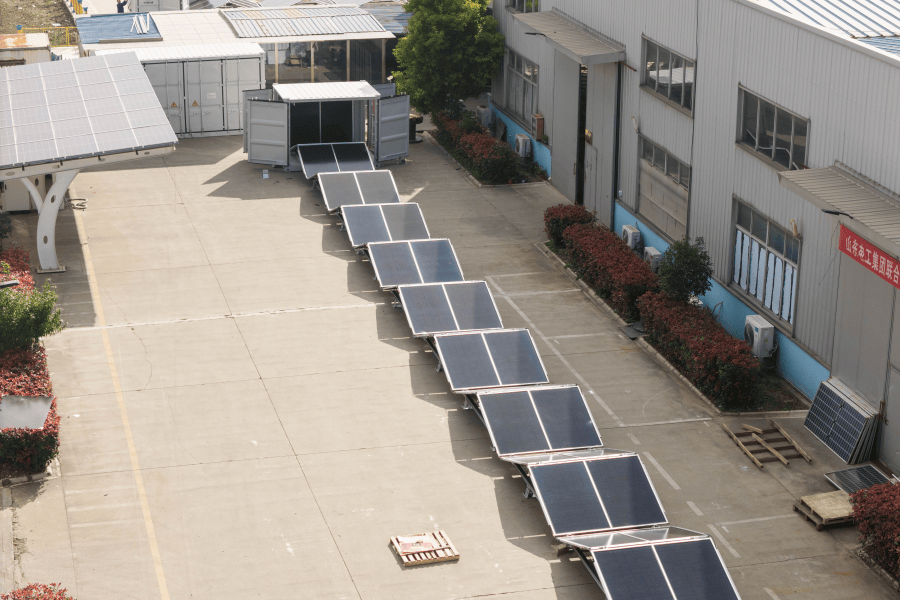
We proved this on a project with a municipal utility in the Midwest US. They needed frequency regulation and backup for a critical substation. The site had limited space and a tight timeline due to an upcoming peak season. A traditional build was out of the question. We delivered and commissioned a 3MW/6MWh Highjoule integrated container in 7 business days from arrival to grid sync. The utility's project manager told me it was the most straightforward energy infrastructure project he'd ever handled. That's the power of a truly integrated solution.
Your Next Step: From Concept to Connected Asset
The question for grid planners and utility decision-makers isn't really if you need storage, but how you can deploy it most effectively. The step-by-step installation of an all-in-one container isn't just a technical process; it's a risk and project management strategy. It turns a complex engineering challenge into a predictable, fast-tracked asset deployment.
What's the single biggest site constraint you're facing for your next storage project - timeline, space, or interconnection complexity? Let's talk about how a pre-integrated approach might change the math.
Tags: UL Standard BESS Lithium Battery Container Utility-Scale Energy Storage Grid Modernization
Author
James Zhang
20+ years agricultural energy storage engineer / Highjoule CTO