
Step-by-step Installation of All-in-one Integrated Photovoltaic Storage System for Data Center Backup Power
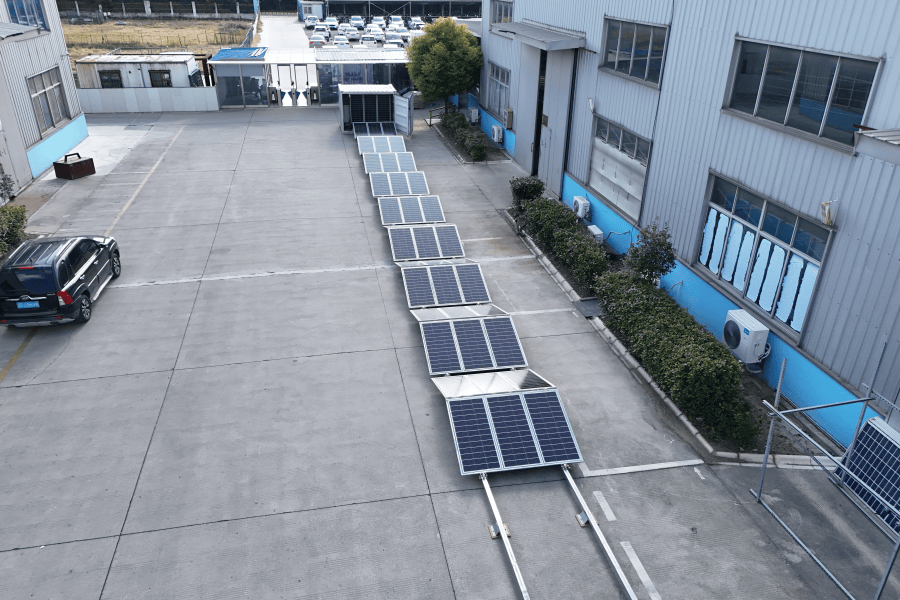
Table of Contents
- The Silent Threat to Your Data Center's Green Ambitions
- Why "Modular" Sometimes Means "Messy" On-Site
- The All-in-One Advantage: More Than Just a Pretty Container
- The Installation Blueprint: From Truck Roll to Turnkey
- A Real-World Test: The Frankfurt FinTech Case
- Beyond the Basics: The Expert's Notebook
- Your Next Step: Cutting Through the Complexity
The Silent Threat to Your Data Center's Green Ambitions
Let's be honest. If you're managing a data center in the US or Europe right now, you're juggling two massive, seemingly conflicting pressures. First, the board and your clients are demanding a credible path to 100% renewable power and net-zero. The IEA reports that global data center electricity consumption could double by 2026 C that spotlight isn't going away. Second, and this is the one that keeps operations folks up at night, is the non-negotiable requirement for 99.999% uptime. Grid instability, extreme weather events C they don't care about your sustainability goals.
The old answer, diesel generators, is becoming a PR and regulatory liability. The new answer, everyone says, is solar plus storage. But here's the silent threat I've seen firsthand: a poorly integrated, complex-to-deploy storage system can turn your green backup power project into a capital-intensive nightmare, fraught with delays, safety concerns, and hidden operational costs that obliterate your projected LCOE (Levelized Cost of Energy, basically your total cost of ownership for power).
Why "Modular" Sometimes Means "Messy" On-Site
The industry's initial approach was modular: buy the PV inverters from one vendor, the battery racks from another, the thermal management system from a third, and the power conversion system (PCS) from yet another. Then, hire an integrator to piece it all together on your crowded data center yard. Sounds flexible, right? In theory, yes. In practice, on a rainy Tuesday in Stuttgart or a windy site in Texas, it's a recipe for headaches.
I've stood on sites where we had 15 different subcontractors, each responsible for their "module." The coordination alone burns budget and time. But worse are the integration risks. Mismatched communication protocols between battery management and grid-tie systems. Inefficient thermal management because the cooling system wasn't designed for the specific cell chemistry's charge/discharge profile (the C-rate). Every additional interface is a potential point of failure, and for a data center backup system, failure isn't an option. It also makes compliance with local standards like UL 9540 for energy storage or IEC 62443 for industrial security a fragmented, painful process.
The All-in-One Advantage: More Than Just a Pretty Container
This is where the shift to a pre-integrated, all-in-one photovoltaic storage system isn't just convenient - it's strategic. Think of it not as a container of parts, but as a single, ultra-reliable power appliance delivered to your site. At Highjoule, we build our HiveCube systems with this philosophy. The core value isn't just putting everything in one steel box; it's about engineering the synergy between components from the ground up.
The battery cells are selected and configured to match the thermal design of our liquid cooling loop. The power electronics are calibrated to the exact energy density of the pack, optimizing efficiency and lifespan. All safety systems - from gas detection to fire suppression - are pre-wired and tested as one unit against UL 9540 and IEC 62619 standards. This deep integration is what truly slashes the Levelized Cost of Energy (LCOE) for you, the operator. You're not paying for on-site integration risk, you're buying a guaranteed performance outcome.
The Installation Blueprint: From Truck Roll to Turnkey
So, what does a proper step-by-step installation of an all-in-one integrated photovoltaic storage system for data center backup power actually look like? It's a world away from the modular circus.
Phase 1: Pre-Flight Check (Weeks 1-4)
It all starts long before the truck arrives. Our team works with your engineers on civil work specs: a level, reinforced concrete pad with precise cable trench routes. We jointly submit the single, comprehensive system design for local utility and AHJ (Authority Having Jurisdiction) permitting. Because it's one system with one set of certified drawings, approvals are often faster.
Phase 2: Delivery & Placement (Day 1)
The unit arrives on a flatbed. Honestly, it's an impressive sight C a single, clean container. Using a crane, it's placed onto the prepared pad. The foundation bolts are secured. This physical installation often takes less than a single day. The simplicity is by design.

Phase 3: The Critical Hookups (Days 2-5)
Now, the skilled work begins, but it's streamlined:
- Electrical Interconnection: High-voltage cables are run from your main switchgear to the unit's pre-installed PCS. With an all-in-one, there's one primary AC connection point.
- PV Array Input: DC lines from your solar field are connected to the integrated MPPT (Maximum Power Point Tracking) charge controllers.
- Control & Monitoring: A fiber optic or secure network link is established between the system's master controller and your data center's Building Management System (BMS) and SCADA. This is where you get a single pane of glass for monitoring.
Phase 4: Commissioning & Acceptance (Days 6-10)
This is the most important phase. We don't just turn it on. We execute a detailed script: insulation resistance tests, functional tests of the grid-forming capability (critical for black start), and simulated fail-over tests where the system seamlessly picks up the critical load from grid to battery. You sign off only after witnessing the performance.
A Real-World Test: The Frankfurt FinTech Case
Let me give you a concrete example. A FinTech company near Frankfurt needed to guarantee 8 hours of backup for its core trading servers and wanted to use its rooftop PV. Their site was tight, with strict German BDEW (grid operator) mid-voltage connection rules.
The challenge? Space constraints ruled out a sprawling multi-vendor setup, and the local utility demanded rigorous grid-support functionality (frequency regulation, reactive power control). A modular approach would have required a custom engineering project.
The solution was a Highjoule HiveCube 2MWh all-in-one system. It fit in the designated yard space. Because its grid-forming inverter and controls were pre-certified to the necessary standards, we passed utility interconnection studies in record time. During commissioning, we simulated a complete grid outage. The system islanded the data center load, powered it from the battery charged by the PV, and maintained perfect 50Hz frequency. The client's ops director told me, "It felt less like installing a system and more like plugging in a giant, ultra-reliable power bank."
Beyond the Basics: The Expert's Notebook
If you take nothing else from this, remember these two insights from the field:
1. Thermal Management is the Lifespan Governor: People obsess over battery chemistry (NMC, LFP), but for a data center running 24/7/365, how you keep those cells cool is paramount. A poorly managed system might see a 10C hotspot, which can double degradation rates. Our integrated liquid cooling directly contacts each cell module, keeping temperature variation across the entire pack within 2C. This is what delivers the 10,000+ cycle life we promise.
2. The "C-Rate" Sweet Spot for Backup: You'll see flashy specs for batteries that can discharge at ultra-high C-rates (like 4C or 5C, meaning they can empty in 15 or 12 minutes). That's for grid frequency regulation. For data center backup, where you need sustained power for hours, a moderate C-rate (0.5C to 1C) is actually better. It's less stressful on the cells, more efficient, and directly contributes to a lower LCOE. An all-in-one system is engineered for this specific duty cycle.
Your Next Step: Cutting Through the Complexity
The path to resilient, green backup power doesn't have to be paved with integration risk and endless contractor meetings. The evolution is towards the power appliance model: a single, standards-compliant, performance-guaranteed unit. When you evaluate solutions, look beyond the price-per-kWh sticker. Ask about the installation timeline, the number of major subcontractors needed, and get clarity on who holds the single warranty for the entire system's performance.
What's the one integration challenge in your current plan that keeps you up at night?
Tags: UL Standard BESS Renewable Energy Data Center Backup Microgrid PV Storage System Installation
Author
James Zhang
20+ years agricultural energy storage engineer / Highjoule CTO