
Step-by-Step Installation of Black Start Capable BESS for Construction Site Power
Contents
- The Silent Site Problem: Why Generators Aren't Enough
- Why "Black Start" Isn't Just a Buzzword
- The Installation Blueprint: A Step-by-Step Field Guide
- Real Numbers, Real Savings: The LCOE Conversation
- Your Next Step: From Blueprint to Reality
The Silent Site Problem: Why Generators Aren't Enough
Let's be honest. If you're managing a mid-to-large scale construction project in the US or Europe right now, you're probably dealing with the same headache I see on site every other week: temporary power. You've got your diesel generators humming away, burning through fuel at a frankly alarming rate, and the noise complaints from neighboring businesses are starting to pile up. The real kicker? That initial, critical power to start up your site C the "black start" C is entirely dependent on that diesel gen-set. If it fails, everything stops. Dead.
This isn't a minor inefficiency; it's a core operational risk. The International Energy Agency (IEA) highlights the volatility of diesel fuel prices and the push for decarbonization in industry. On the ground, this translates to unpredictable costs and increasing pressure to meet sustainability benchmarks. I've seen project managers lose sleep over fuel logistics and the sheer carbon footprint of a 24/7 diesel operation. The traditional model is brittle, expensive, and frankly, a bit outdated.
Why "Black Start" Isn't Just a Buzzword
Here's where the magic C and the real engineering C happens. A Black Start Capable BESS isn't just a big battery. It's an independent power source that can boot itself up from a completely discharged state, without relying on the external grid. For a construction site, this is transformative. Imagine a scenario: you're in an early phase, the local grid connection isn't ready yet, or you need to energize a specific section for testing. With a properly configured BESS, you flip a switch, and it creates its own stable microgrid, powering tools, lighting, and trailers instantly.
The key is in the system design. It combines high-density lithium-ion batteries (we're talking about a high C-rate for that instant surge power to start motors) with advanced power conversion systems (PCS) that can regulate voltage and frequency from scratch. The thermal management system C which, honestly, is the unsung hero C has to be flawless. It keeps the cells at optimal temperature during that intense, initial discharge and during long periods of standby. At Highjoule, our containerized systems are built to UL 9540 and IEC 62933 standards, meaning this black start capability isn't an afterthought; it's engineered-in safety and reliability.

The California Case: From Theory to Muddy Boots
Let me give you a real example. We deployed a 1.5 MWh system for a large commercial development in California's Central Valley. The challenge? The utility connection was 6 months out, but site prep couldn't wait. The client faced massive diesel costs and strict local noise ordinances.
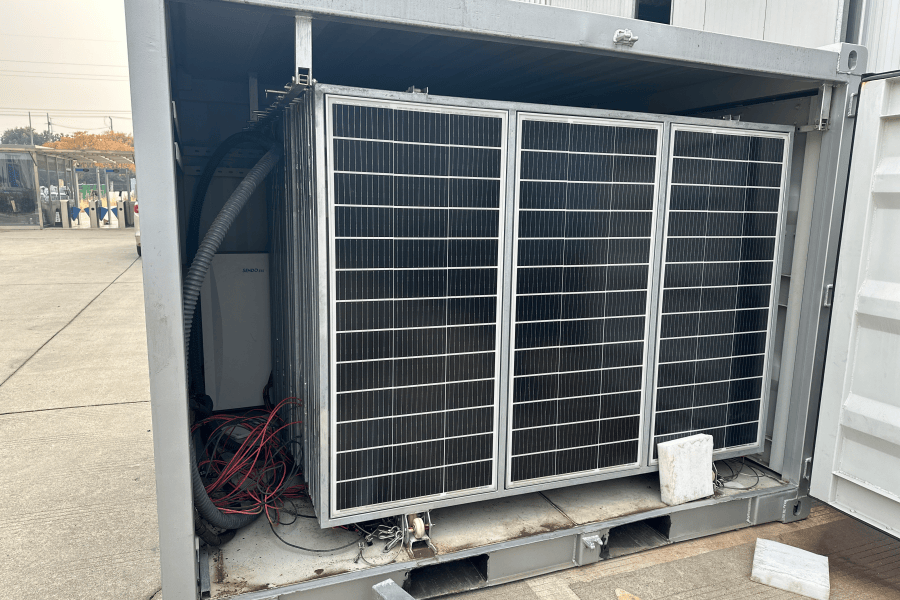
Our step-by-step installation involved: 1) Pre-fabbing the entire BESS, including black start controllers, in a weatherproof container at our facility; 2) Delivering it as a single "plug-and-play" unit to the site; 3) Placing it on a simple concrete pad (no complex foundations); 4) Connecting it to their temporary distribution panel. Within two days of arrival on site, it was providing silent, fume-free power for the entire staging area, office trailers, and equipment charging. The black start function was tested weekly, ensuring they were never in the dark. The project manager later told me they cut their temporary power fuel costs by over 70% in that initial phase.
The Installation Blueprint: A Step-by-Step Field Guide
So, how does this actually get built on your site? Forget the overly technical manuals. Here's the practical sequence, the way I'd walk a site supervisor through it:
Phase 1: Pre-Site & Planning (The Most Important Phase)
- Site Assessment & Permitting: This is more than just finding a flat spot. We look at soil bearing capacity, drainage, access routes for heavy machinery, and proximity to both the future point of grid interconnection and the immediate load centers. We handle the permit drawings, focusing on local fire codes (like NFPA 855 in the US) and the specific UL/IEC certifications for the entire assembly.
- System Design & Factory Testing: The BESS is configured for your specific load profile. How much instantaneous power do you need for crane motors vs. continuous power for lighting? The black start sequence is programmed and tested in our factory under full load. This is where we catch any issues, long before the unit ships.
Phase 2: Site Installation & Commissioning
- Foundation & Placement: A level concrete pad is usually sufficient. The containerized unit is craned into place. I've seen this done in a single morning.
- Electrical Interconnection: Qualified electricians connect the BESS output to your site's temporary main distribution board. The grid connection point (if available) is also established through a properly rated transfer switch.
- The Black Start Commissioning Test: This is the moment of truth. We isolate the system, simulate a total blackout, and initiate the start sequence. We verify that the BESS can self-energize its internal systems, establish stable voltage and frequency (60Hz/50Hz), and then successfully pick up the designated site loads. We document every millisecond of this test.

Real Numbers, Real Savings: The LCOE Conversation
I know what you're thinking: "This sounds great, but what's the payback?" Let's talk Levelized Cost of Energy (LCOE). While diesel generators have a low upfront capital cost, their LCOE is sky-high due to volatile fuel, constant maintenance, and inefficiency at partial load. A National Renewable Energy Laboratory (NREL) analysis shows how pairing renewables with storage is increasingly cost-competitive.
For a construction site, the math is even more compelling. A BESS with black start capability eliminates the need for a primary or backup generator. You save on:
- Fuel Logistics & Cost: Zero. No deliveries, no theft risk, no price spikes.
- Maintenance: No oil changes, no filter replacements, no engine overhauls.
- Noise & Emission Fines: Many urban sites in Europe now have zero-emission zones for construction.
Your Next Step: From Blueprint to Reality
Look, I've been on both sides of this C as the engineer designing the system and as the boots-on-the-ground guy making sure it works when the rain starts pouring. The shift to Black Start Capable BESS for construction power isn't a future trend; it's a practical, financially-sound decision you can make for your very next project.
The step-by-step process is proven. The standards (UL, IEC, IEEE) are clear. The question isn't really about the "how" anymore. It's about when you decide to stop writing checks for diesel and start investing in a resilient, silent, and clean power asset for your business. What's the one critical phase on your upcoming project schedule that would benefit most from having instant, independent power?
Tags: Construction Site Power UL Standard BESS Black Start Energy Storage Installation
Author
James Zhang
20+ years agricultural energy storage engineer / Highjoule CTO