
Step-by-step Installation of Black Start Capable Lithium Battery Storage Container for Public Utility Grids
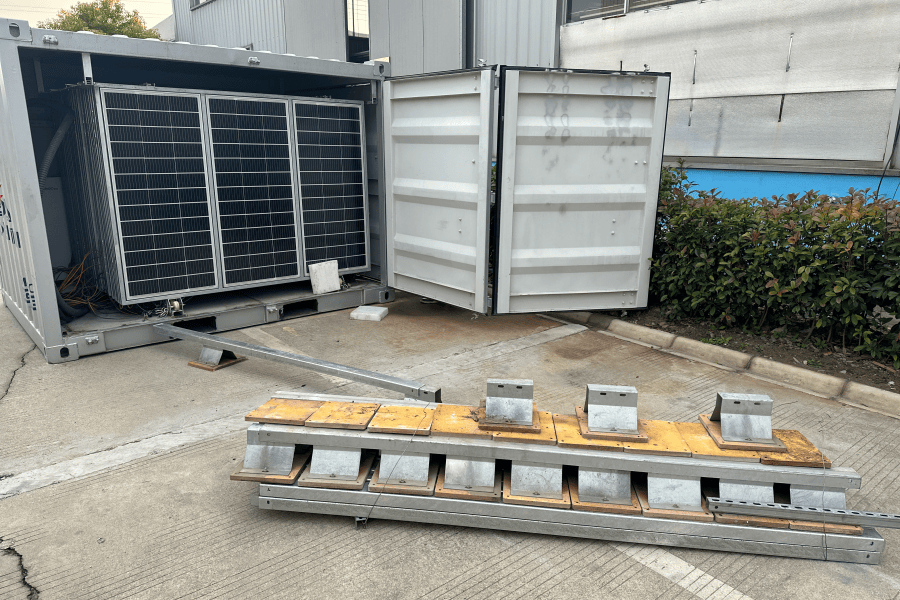
The Grid's Silent Guardian: A Field Engineer's Guide to Installing Black Start Battery Storage
Let's be honest. When the lights go out across a city, the pressure isn't on the boardroom. It's on the grid operators, and ultimately, on the equipment we've installed. I've spent over two decades in the field, from the deserts of Arizona to the industrial hubs of Germany, and one truth remains: a black start system isn't just another battery. It's the grid's emergency restart button. And installing it wrong? That's not an option.
Table of Contents
- The Real Problem: More Than Just Backup Power
- The Installation Minefield: Where Projects Stumble
- A Blueprint for Resilience: The Step-by-Step Process
- Beyond the Manual: An Engineer's On-Site Insights
- The Human Element: Training & The Long Game
The Real Problem: More Than Just Backup Power
Public utilities are facing a perfect storm. Aging infrastructure meets increasing climate volatility and a rapid influx of variable renewables. The North American Electric Reliability Corporation (NERC) has been vocal about the growing risks to grid stability. A standard backup generator can restart a single plant, but who restarts the grid itself after a complete collapse? That's the unique, non-negotiable role of a black start capable Battery Energy Storage System (BESS).
The pain point I see most often is treating this critical infrastructure like a commodity battery pack. Procurement focuses on upfront $/kWh, but the real cost lies in integration complexity, long-term reliability under extreme stress, and navigating a thicket of local and international codes. A system might be UL 9540 certified, but if the installation sequence doesn't respect the thermal management design or the grid synchronization controls aren't meticulously tuned, that certification is just a piece of paper when you need megawatts in a hurry.
The Installation Minefield: Where Projects Stumble
Agitation comes from seeing good projects face avoidable delays and cost overruns. Based on data from the National Renewable Energy Lab (NREL), soft costs - including permitting, interconnection studies, and complex commissioning - can make up 30-50% of total BESS project costs. For black start systems, this percentage skews even higher due to stringent utility requirements.
I recall a project in Northern Europe - a wind-heavy grid seeking black start insurance. The containerized BESS units arrived on schedule. The civil works (foundation, cabling trenches) were perfect. The stumbling block? The sequencing of the medium-voltage switchgear commissioning with the battery management system's (BMS) black start logic. The teams were working from different manuals, causing a two-week standstill. That's two weeks of potential grid resilience, lost. This isn't a rare story; it's a common symptom of viewing installation as a series of discrete tasks rather than an integrated, carefully choreographed operation.

A Blueprint for Resilience: The Step-by-Step Process
So, what does a robust, field-tested installation process look like? Let's break it down. This isn't just a technical checklist; it's the philosophy we follow at Highjoule to ensure our systems perform when it matters most.
Phase 1: Pre-Site Deployment (The Foundation of Success)
This phase is everything. It happens long before the container ship leaves port.
- Detailed Site-Specific Integration Study: This goes beyond the utility's standard interconnection study. We model the exact sequence of energizing the grid section from a dead state. Which transmission line gets powered first? What is the inrush current profile of the critical transformers? This study defines the setpoints for our system's power conversion system (PCS).
- Regulatory & Safety Compliance Mapping: We create a master matrix aligning every component with the relevant standards: UL 9540 for the system, UL 1973 for the batteries, IEEE 1547 for grid interconnection, and local fire codes (like NFPA 855 in the U.S.). This becomes the bible for the site inspectors.
- Staged Factory Acceptance Testing (FAT): We don't just test the BESS. We test the black start sequence in the factory. The container is connected to a simulated grid load. We kill the external power and command a black start. Watching the system wake itself up and then sequentially re-energize the simulated load is the only way to have confidence before shipping.
Phase 2: Site Installation & Mechanical Completion
The physical installation must respect the system's design intent.
- Foundation & Thermal Considerations: The slab isn't just for weight. We ensure optimal airflow paths for the container's closed-loop liquid cooling system. Blocking an air intake with a poorly placed cable tray can derate the system's C-rate capability on the hottest day of the year - precisely when you might need it.
- Container Placement & MV Hookup: Using specialized rigging, we place the container with millimeter precision for pre-terminated medium-voltage cable connections. This "plug-and-play" approach, a key part of our Highjoule QuadGuardTM container design, slashes interconnection time and reduces on-site electrical risk.
- Commissioning the "Island": Before we even think about connecting to the grid, we commission the system as a standalone island. We verify all internal communications (BMS to PCS to fire suppression), test the thermal management system under full fan load, and perform a closed-loop black start test into a dummy load. This proves the system can function as a self-sustaining power plant.
Phase 3: Grid Integration & Functional Performance Testing
This is the moment of truth, performed under the utility's direct supervision.
- Sequential Synchronization: We bring the BESS online in normal grid-following mode. Once stable, we work with the utility's control room to test the transition to grid-forming mode - the essential precursor to black start. The voltage and frequency stability during this transition is breathtaking to see when tuned correctly.
- The Live Black Start Drill: This is the final exam. On a pre-agreed date, for a pre-agreed substation or feeder, the utility deliberately isolates the section. Our system receives the signal, initiates its black start sequence, establishes a stable voltage and frequency "island," and then begins re-energizing downstream assets according to the pre-defined sequence. Success isn't just technical; it's building operational trust with the utility crew.
Beyond the Manual: An Engineer's On-Site Insights
Here's where the manual ends and experience talks. Let's demystify two critical concepts.
Understanding C-rate in a Crisis: A black start isn't a gentle ramp-up. It requires delivering a huge surge of power (a high C-rate) to energize transformers and lines before settling into a steady state. If your battery's thermal management can't handle that initial burst, it will derate itself, potentially stalling the restart. We design for that peak C-rate with overhead, ensuring the system's "sprint" capability is never in doubt.
The Real Meaning of LCOE for Grid Assets: For a utility, the Levelized Cost of Storage isn't just about cycle life. It's about availability and assured performance over 20 years. A system that needs frequent recalibration or has complex maintenance procedures has a high operational LCOE, even if the capex was low. Our design philosophy prioritizes simplicity and robustness in the field - fewer moving parts, more passive safety, easier diagnostics - which directly translates to a lower, more predictable total cost of ownership for the asset manager.

The Human Element: Training & The Long Game
The final, most overlooked step is knowledge transfer. A black start system is a partnership. We don't just hand over the keys. We conduct immersive training for the utility's operations and maintenance teams. We walk them through the same control sequences, explain the alarm hierarchies, and practice routine health checks. Honestly, I've seen firsthand that the utilities that invest in this training are the ones that seamlessly integrate the BESS into their daily grid operations and emergency drills.
So, the real question for any utility considering this path isn't just "What's the price per megawatt-hour?" It's "Who will be with us on site at 2 AM, in the rain, a decade from now, ensuring our restart button still works?" That's the conversation worth having over coffee.
Tags: BESS Black Start Grid Resilience Utility-scale Storage Energy Storage Installation
Author
James Zhang
20+ years agricultural energy storage engineer / Highjoule CTO