
Step-by-Step Installation of C5-M Anti-Corrosion BESS for Construction Site Power
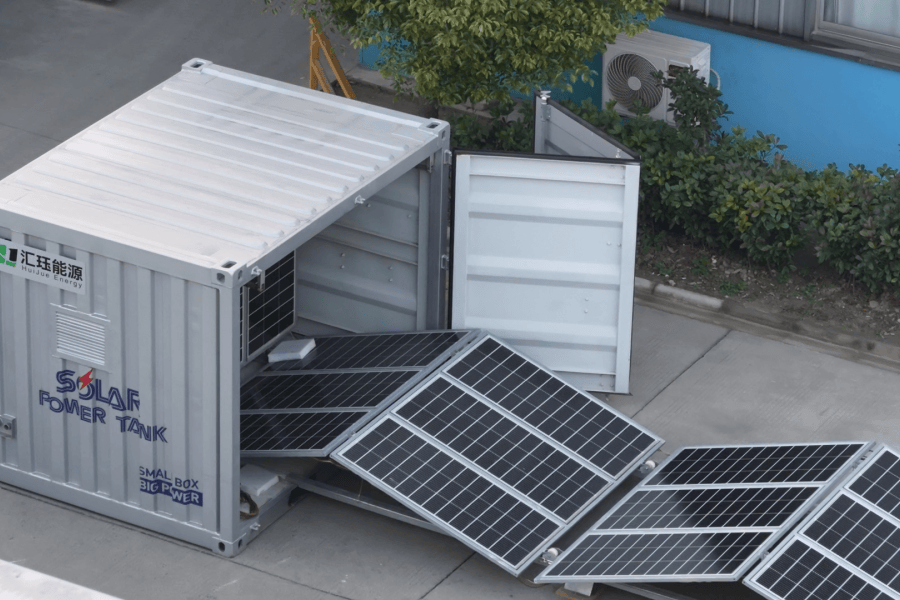
Table of Contents
- The Silent (and Expensive) Problem on Your Job Site
- Why It Hurts More Than You Think: The Real Cost of Unreliable Power
- A Better Way: The C5-M Anti-Corrosion BESS as a Mobile Power Plant
- The Installation Playbook: A Step-by-Step Field Guide
- Beyond the Box: The Tech That Makes It Work (In Plain English)
- Your Next Move: Is Your Site Ready?
The Silent (and Expensive) Problem on Your Job Site
Let's be honest. When you're managing a construction site, your primary headaches are usually schedule, labor, and materials. Power is supposed to be a given - you hook up a diesel generator or tap into the grid, and you're good to go. Right? Well, after 20+ years on sites from Texas to Bavaria, I've seen firsthand that this "given" is often the weakest link. The real, silent problem isn't just getting power; it's getting clean, reliable, and cost-effective power in an environment that's actively trying to destroy electrical equipment. We're talking about dust, moisture, chemical vapors from curing concrete or adhesives, and wide temperature swings. This isn't a typical industrial setting; it's a C5-M corrosion environment as defined by the ISO 12944 standard, meaning very high corrosivity. Standard battery enclosures simply aren't built for this.
Why It Hurts More Than You Think: The Real Cost of Unreliable Power
So you've got some corrosion on a container. Big deal? It is. Let's agitate this a bit. This isn't just a maintenance issue. I was on a site in Florida where a standard battery system for tool charging and temporary lighting started faulting repeatedly within 4 months. The culprit? Salt-laden ambient air combined with high humidity led to connector corrosion. The result wasn't just a repair bill. It was a full work stoppage for a critical concrete pour that had to happen within a specific thermal window. The delay cost? Far exceeding the capital cost of the storage system itself.
And let's talk about the diesel dependency. The National Renewable Energy Lab (NREL) has shown that for many applications, pairing solar with storage can reduce fuel use by over 60%. But if your storage system can't survive the site, you're locked into 24/7 diesel runtime. You're exposed to fuel price volatility, noise complaints (which can trigger strict local ordinances), and emissions. In places like California or parts of the EU, those emissions can literally limit your permitted working hours.

A Better Way: The C5-M Anti-Corrosion BESS as a Mobile Power Plant
This is where a purpose-built solution changes the game. The core idea is to stop trying to protect a standard system and start with a system designed for the abuse. A true C5-M Anti-corrosion BESS, like the ones we engineer at Highjoule, isn't just a battery in a box. It's a mobile, self-contained power plant where every component - from the HVAC and battery racks down to the cable glands and cabinet seals - is selected and tested for harsh environments. It's your step-by-step ticket to energy resilience on day one.
I remember deploying one for a large logistics warehouse construction in Germany's North Rhine-Westphalia region. The challenge was twofold: strict local noise regulations prohibited diesel gensets overnight, and the temporary grid connection was both expensive and unreliable. The solution was a containerized C5-M BESS, charged via a temporary grid connection during off-peak hours (when rates were low) and powering the site's security, lighting, and critical tools during peak hours and at night. It turned a major constraint into a cost-saving, silent, and reliable power source. The installation process was key to its success.
The Installation Playbook: A Step-by-Step Field Guide
Based on countless deployments, here's the practical, step-by-step sequence that ensures a smooth installation. Missing a step here is where most field issues arise.
Phase 1: Pre-Site Delivery (The Most Critical Week)
Step 1: Site-Specific Review & Permitting. Before the unit even leaves our factory, we work with your team on the exact location. This isn't just about space. It's about access routes for cranes, soil bearing capacity, and proximity to both your load center and any renewable source (like a temporary solar array). We ensure the design packs meet all local codes - UL 9540 for the energy storage system, UL 1973 for the batteries, and relevant IEC/IEEE standards for grid interconnection, even if temporary.
Step 2: Foundation & Civil Works. The BESS arrives on a skid or as a container. You need a level, compacted gravel or concrete pad. We provide the exact specs. This step is often underestimated. A unlevel foundation stresses the frame and can complicate final electrical connections.
Phase 2: Delivery & Mechanical Installation (Day 1-2)
Step 3: Offloading and Positioning. Using a crane or tilt-bed truck, the unit is placed on the prepared pad. Our containers have integrated lifting points designed for the load. The key here is precision - getting it right the first time avoids risky re-positioning maneuvers.
Step 4: Anchoring and External Hookups. Once positioned, it's anchored to the pad per seismic/wind load requirements. Simultaneously, the external conduits for AC power (from grid/generator), DC power (from solar, if applicable), and communications are routed to the entry points. The C5-M rating is crucial here: all entry points use specialized, corrosion-resistant cable glands.

Phase 3: Electrical & Commissioning (Day 2-3)
Step 5: Internal System Check and Power-Up. Our field technician performs a final internal visual inspection, verifies all DC and AC connections are tight, and ensures the thermal management system is operational. Then, we apply power in a controlled sequence. The system's power conversion system (PCS) wakes up.
Step 6: Configuration and Functional Testing. This is where we "teach" the system about your site. We set parameters: What's the source priority? (e.g., Solar first, then battery, then grid). What are the discharge schedules to avoid peak tariffs? We then run tests - simulating a grid outage to ensure it picks up the load seamlessly, checking the battery management system (BMS) readings.
Step 7: Handover and Training. We don't leave you with just a manual. We walk your site foreman through the basic HMI interface - how to check state of charge, see power flows, and acknowledge common alarms. Your team needs to know it's working, not how to be an electrical engineer.
Beyond the Box: The Tech That Makes It Work (In Plain English)
Okay, so the installation is done. But what's inside that makes this different? Let me break down two key terms you'll hear, without the jargon.
Thermal Management: This is the system's climate control. Batteries are like people - they perform terribly when too hot or too cold. In a dusty, corrosive site, you can't just use fans that suck in outside air. Our systems use a closed-loop, liquid-cooled design. It keeps the battery at its perfect 25C (77F) sweet spot using an internal coolant, completely isolated from the corrosive external air. This extends lifespan dramatically.
Understanding LCOE (Levelized Cost of Energy): This is your true "cost per kWh" over the system's life. A cheaper, non-corrosion-resistant unit might have a lower upfront cost. But if it fails in 3 years or requires constant maintenance, its LCOE is sky-high. A C5-M BESS has a higher initial price but operates reliably for 10-15 years on-site with near-zero maintenance. When you factor in diesel savings and avoided downtime, its LCOE plummets. You're buying total cost of ownership, not just hardware.
Your Next Move: Is Your Site Ready?
The step-by-step process is proven. The technology is robust. Honestly, the bigger question now is about your site's readiness. Have you quantified the true cost of your current temporary power? Not just the diesel invoices, but the risk cost of a generator failure during a critical pour or a delay due to a noise violation?
At Highjoule, we've built our service around making this transition straightforward. From the initial site assessment to providing locally-stocked critical spares for long-term peace of mind, our role is to ensure the system we install becomes the most reliable, and quietest, piece of equipment on your lot. The goal isn't to sell you a battery. It's to give you one less thing to worry about, so you can focus on building everything else.
What's the single biggest power reliability headache you're facing on your current project?
Tags: Construction Site Power UL Standard BESS Europe US Market Renewable Energy C5-M Anti-Corrosion
Author
James Zhang
20+ years agricultural energy storage engineer / Highjoule CTO