
Step-by-step Installation Guide for C5-M Anti-corrosion Off-grid Solar Generator in Telecom
Navigating the Content
- The Silent Threat to Your Off-Grid Telecom Assets
- Beyond the Price Tag: The Real Cost of Corrosion
- A Systematic Approach: The C5-M Installation Philosophy
- On-the-Ground Lessons from a German Forest Site
- Key Technical Considerations for Decision Makers
- Choosing the Right Partner for the Long Haul
The Silent Threat to Your Off-Grid Telecom Assets
Honestly, when we talk about deploying off-grid solar and battery systems for telecom base stations, most of the initial conversation revolves around power output, battery capacity, and of course, capital expenditure. But there's a silent, relentless enemy that I've seen cripple projects from the inside out, long before the payback period is even in sight: corrosion. It's not a glamorous topic, but in the coastal regions of Florida, the industrial belts of the Ruhr Valley, or the snow-laden, salt-treated roads of Scandinavia, it's the single biggest predictor of long-term system failure and spiraling operational costs.
The problem is that a standard, out-of-the-box battery energy storage system (BESS) is simply not designed for these aggressive environments. According to the National Renewable Energy Lab (NREL), environmental factors can degrade system performance by up to 30% over a 10-year period in harsh climates. We're talking about sulfation on battery terminals, rust on structural components, and moisture ingress into electrical panels C all of which lead to increased downtime, expensive emergency maintenance calls, and a total cost of ownership that blows the initial business case out of the water.
Beyond the Price Tag: The Real Cost of Corrosion
Let me agitate this point a bit, based on what I've seen firsthand on site. A telecom operator isn't just buying a box of batteries; they're purchasing uptime and network reliability. When a remote base station goes dark because a corroded connection failed, the cost isn't just the technician's helicopter ride. It's the lost revenue, the service level agreement (SLA) penalties, and the brand damage. I recall a project in the Gulf Coast where a non-spec system failed after just 18 months. The post-mortem revealed that salt-laden air had penetrated the enclosure, leading to a cascading failure. The replacement and lost revenue cost was three times the initial "savings" from choosing a cheaper, non-corrosion-protected unit.
This is where the specification becomes critical. The "C5-M" classification isn't just marketing jargon. It's a defined standard (under ISO 12944) for environments with very high corrosivity, like coastal and offshore areas with salt spray, or industrial areas with high chemical pollution. Deploying a system rated for a milder environment (like C3) in a C5-M zone is a guaranteed financial mistake.
A Systematic Approach: The C5-M Installation Philosophy
So, what's the solution? It's a two-part answer: First, you must start with hardware designed and certified for the fight C a true C5-M anti-corrosion off-grid solar generator. Second, and this is where most failures happen, you must follow a meticulous, step-by-step installation protocol that preserves that built-in protection. The hardware and the installation method are inseparable partners.
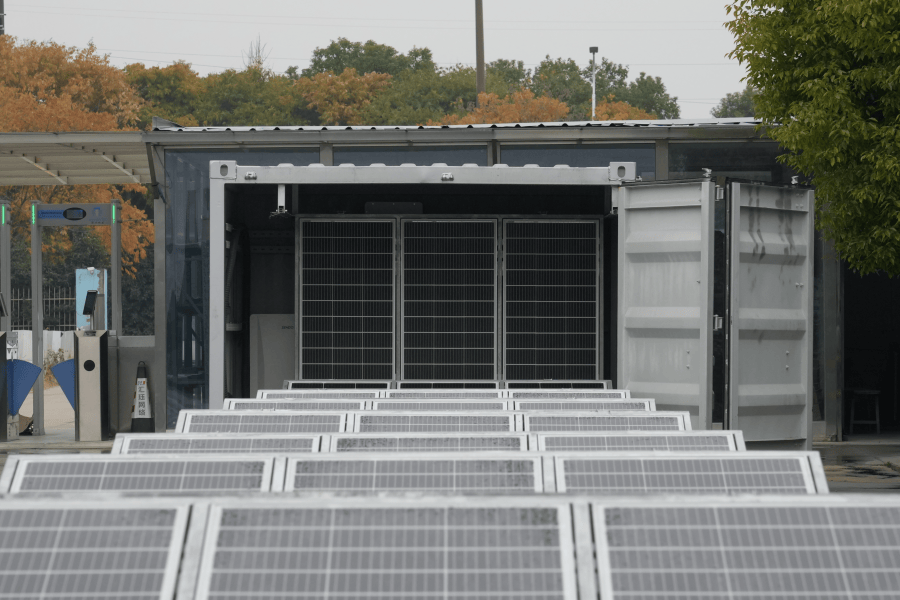
At Highjoule, our approach to the Step-by-step Installation of C5-M Anti-corrosion Off-grid Solar Generator for Telecom Base Stations is treated with the same rigor as the manufacturing itself. It's not just about bolting things down. Here's a simplified view of our phased methodology:
- Phase 1: Site Prep & Foundation. This goes beyond a level concrete pad. We ensure proper drainage away from the unit, consider prevailing wind direction for salt spray, and use non-corrosive, galvanized steel or composite mounting structures. The goal is to prevent corrosive elements and moisture from pooling around the system from day one.
- Phase 2: Unpacking & Handling. This seems basic, but it's vital. Using the correct lifting points to avoid damaging the sealed, powder-coated enclosure. Inspecting the shipping seals before breaking them. We treat the exterior cladding as the first and most critical layer of defense.
- Phase 3: Electrical & Mechanical Integration. Here, every penetration is a potential failure point. We use proprietary gland kits and sealing compounds on all cable entries. All external busbars, lugs, and connectors are made of copper with a thick, durable tin or nickel plating. We torque every connection to spec to prevent micro-gaps where corrosion can start. Thermal management is also key C we ensure the HVAC system's vents are positioned to minimize ingestion of corrosive particulates.
- Phase 4: Commissioning & Documentation. We don't just turn it on. We run a full diagnostic, checking isolation resistance to ensure no moisture has compromised the electrical system. Every step, torque value, and sealant application is documented. This creates a baseline for future maintenance and proves the installation integrity.
This process ensures compliance not just with the corrosion standard, but with the broader safety ecosystem of UL 9540 for the BESS, UL 1741 for inverters, and IEEE 1547 for grid interconnection (where applicable), giving asset owners and operators in North America and Europe the confidence they require.
On-the-Ground Lessons from a German Forest Site
Let me give you a real case. We deployed a system for a major telecom provider in the Black Forest region of Germany. The challenge wasn't the coast, but a combination of high humidity, acidic forest air, and heavy winter snowfall with road salt drift from a nearby highway. The site was also extremely remote, making any maintenance a significant cost event.
The client's primary concern was minimizing Levelized Cost of Energy (LCOE) over a 15-year period. They understood that a higher upfront cost for a C5-M system with a proper installation would be offset by near-zero corrosion-related OPEX and sustained performance. We followed the step-by-step protocol religiously. A key moment was during the foundation phase, where we added a slight berm and channel to divert meltwater and runoff away from the container skid.

Three years in, the system's performance data is exactly on curve. Infrared scans during a routine check show no hot spots from degrading connections, and the enclosure shows no signs of paint blistering or base metal corrosion. The asset manager sleeps well at night knowing that the LCOE is tracking perfectly, with no surprise maintenance bills. That's the value of getting the installation right.
Key Technical Considerations for Decision Makers
For the non-engineer making the buying decision, here are a few insights to discuss with your technical team:
- C-Rate in Harsh Climates: A battery's C-rate (charge/discharge speed) is often derated in extreme temperatures. A quality C5-M system will have a thermal management system robust enough to maintain optimal temperature, ensuring you get the full power (kW) and capacity (kWh) you paid for, even on the hottest or coldest days.
- Thermal Management is Corrosion Management: It's not just about battery life. A good HVAC system keeps the internal environment dry, preventing condensation C a primary driver of internal corrosion. Ask about the dew point management strategy of the BESS.
- LCOE is Your True North: Always frame the conversation around Levelized Cost of Energy. A cheaper, non-protected system will have a lower capex but a much higher operational cost due to failures, replacements, and lost energy throughput. The C5-M solution with a certified installation flattens that OPEX curve dramatically, yielding a lower, more predictable LCOE.
Choosing the Right Partner for the Long Haul
The final piece, and maybe the most important, is partnership. You're not just buying a product; you're buying 15+ years of performance in a harsh environment. Does your provider have the field experience to guide the installation? Do they offer localized service and maintenance plans that understand the specific corrosion challenges of your region? At Highjoule, our advantage is that our product design is informed by two decades of field deployments. We know where systems fail, and we've engineered those lessons directly into our C5-M products and our mandatory installation protocols.
So, the next time you're evaluating an off-grid power solution for a critical telecom site, look past the glossy datasheet. Ask the hard questions about corrosion protection and, crucially, how they ensure that protection survives the transition from factory floor to your remote site. What's the one step in their installation guide you'd want to see them double-check on your project?
Tags: UL Standard BESS LCOE Europe US Market Renewable Energy Off-grid Solar IEEE Standards Anti-corrosion Telecom Power C5-M
Author
James Zhang
20+ years agricultural energy storage engineer / Highjoule CTO