
Step-by-step Installation of Grid-forming Pre-integrated PV Container for Agricultural Irrigation
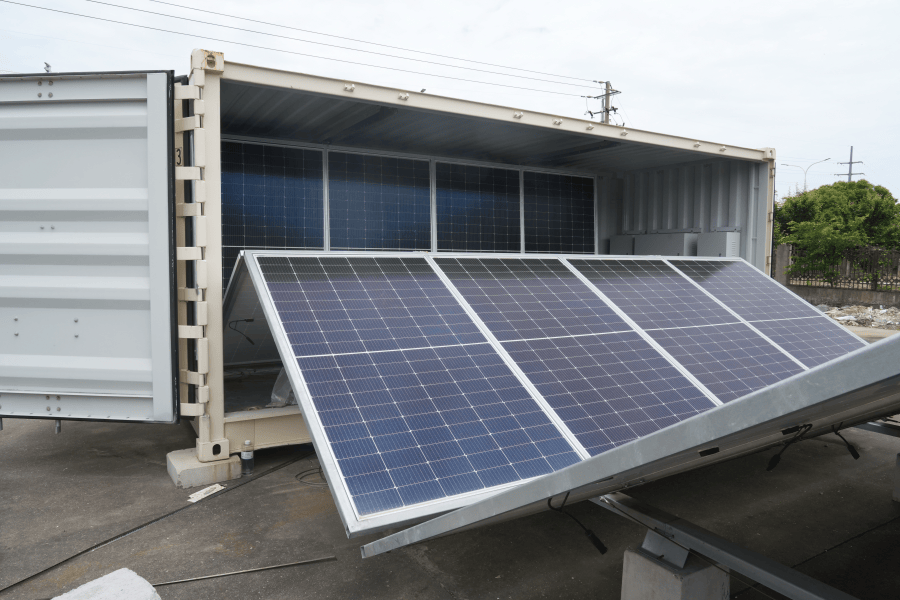
Table of Contents
- The Real Problem: It's Not Just About Power, It's About Predictability
- Why This Hurts Your Bottom Line More Than You Think
- The Solution Unpacked: What "Pre-Integrated" Really Means for Your Farm
- The Step-by-Step Reality: From Delivery to First Irrigation Cycle
- A Case in Point: Almonds, Sunshine, and Grid-Forming Power in California
- Expert Corner: The Three Things We Always Check On Site
- Making It Happen: What to Ask Your Vendor
The Real Problem: It's Not Just About Power, It's About Predictability
Honestly, after two decades on sites from Texas to Bavaria, I've seen the same pattern. A farm invests in a solar array for irrigation, excited about energy independence. But then reality hits. The grid goes down during a critical irrigation window, or the local utility's rates spike right when you need to pump the most water. Your PV panels sit idle because, without a sophisticated battery system, you can't time-shift that solar bounty. The problem isn't generating clean energy; it's having reliable, dispatchable power exactly when your crops demand it. For agricultural irrigation, this isn't an inconvenience - it's a direct threat to yield and revenue.
Why This Hurts Your Bottom Line More Than You Think
Let's agitate that pain point a bit. I've walked fields with owners facing a tough choice: run diesel gensets during peak sun (defeating the purpose of solar) or risk water stress. The National Renewable Energy Lab (NREL) has shown that agricultural operations can spend up to 30% of their operating costs on energy. Every minute of pump downtime during a narrow agronomic window can translate into tangible loss. Furthermore, piecemeal systems - solar from one vendor, batteries from another, an inverter from a third - create a nightmare of compatibility issues, extended commissioning, and finger-pointing when something fails. The complexity and risk scare off many who would benefit most.
The Solution Unpacked: What "Pre-Integrated" Really Means for Your Farm
This is where the concept of a Grid-forming Pre-integrated PV Container changes the game. It's not just a battery in a box. Think of it as a self-contained power plant on a skid, designed for your specific scenario. "Pre-integrated" means the PV combiner, the grid-forming battery inverters, the lithium-ion battery racks, the thermal management system, and the safety controls are all assembled, wired, and tested in a controlled factory environment - long before it reaches your field. "Grid-forming" is the magic sauce: it allows the system to create a stable, clean voltage and frequency waveform from scratch, meaning it can start up a microgrid for your pumps even if the main grid is completely down. No genset needed.

The Step-by-Step Reality: From Delivery to First Irrigation Cycle
So, what does this "step-by-step installation" actually look like on the ground? It's far simpler than traditional builds.
- Site Prep (Week 1-2): We're talking about a level, reinforced concrete pad. The beauty of the containerized approach is the footprint is known upfront. Parallel to this, our team handles the interconnection studies and permits, leaning heavily on pre-certified UL 9540 and IEC 62485-2 standards to streamline local AHJ (Authority Having Jurisdiction) approval.
- Delivery & Placement (Day 1): The container arrives on a flatbed. A crane lifts it, and it's set on the pad. I've seen this done in under four hours. The major electrical and mechanical components are already inside, secured for transport.
- Final Field Connections (Day 2-4): This is where the "pre-integrated" payoff happens. Our field crews aren't building a system; they're making a few key connections: AC to your pump controller/main panel, DC from your existing PV array, and communications. It's like plugging in a sophisticated appliance rather than constructing one.
- Commissioning & Go-Live (Day 5): We power up the system and run through a rigorous protocol. We validate the grid-forming functionality by simulating a grid outage and ensuring the pumps seamlessly transition to battery power. We check the thermal management - crucial for battery longevity - ensuring the HVAC system maintains the optimal 25C (3C) operating temperature, even in a California summer. The owner gets a simple dashboard to control the system, and we schedule the first irrigation cycle.
A Case in Point: Almonds, Sunshine, and Grid-Forming Power in California
Let me give you a real example. A 400-acre almond orchard in California's Central Valley had a 1 MW solar field but was still vulnerable to Public Safety Power Shutoffs (PSPS) and time-of-use charges. Their challenge was to ensure continuous irrigation during a 5-day PSPS event in peak season. We deployed a 500 kW / 2 MWh Highjoule GridForm Container. The pre-integrated design meant we had it operational in under 3 weeks from pad completion. During a planned test outage, the system formed its own grid and powered the 350-horsepower pump load without a hitch. The owner's calculation wasn't just about backup; by arbitraging energy - storing cheap midday solar and avoiding peak evening grid imports - they're projecting a Levelized Cost of Energy (LCOE) reduction of over 22% for the irrigation load. That's a number that makes any CFO pay attention.
Expert Corner: The Three Things We Always Check On Site
When I'm commissioning a system, my checklist goes beyond the manual. Here's my insider take:
- Thermal Gradient, Not Just Temperature: Yes, the container AC keeps the air at 25C. But I use a thermal camera to check for hot spots inside the battery racks. A uniform temperature profile is key to preventing premature aging of any single cell. A well-designed system like ours uses active liquid cooling for this precision.
- The C-Rate in Real Life: Data sheets talk about C-rate (charge/discharge speed). For irrigation, you need a high discharge C-rate to start big pump motors. But you also need a charge C-rate that can soak up all that midday solar without clipping. We size the inverter and battery chemistry (like LFP) to match the actual solar curve and motor inrush current, not just theoretical peaks.
- Grid-Forming "Stiffness": Not all grid-forming is equal. When a large pump motor kicks on, it causes a sudden load surge. The inverter must respond instantly to hold voltage and frequency steady - we call this "stiffness." I test this by sequencing pumps on purpose, watching the waveform on my scope. It's the difference between lights flickering and a rock-solid power supply.

Making It Happen: What to Ask Your Vendor
If you're considering this path, your conversation with a provider shouldn't start with price per kWh. It should start with: "Walk me through your step-by-step process for my site." Ask for a single-line diagram of the pre-integrated unit. Demand evidence of UL 9540 certification for the entire energy storage system (ESS), not just components. Inquire about their thermal management design philosophy. And crucially, ask for a site visit to an operational system. At Highjoule, we're transparent because our solutions are built on two decades of field reality, not just datasheet promises. The right system doesn't just power your pumps; it secures your harvest and optimizes your energy economics for the long term.
What's the one operational constraint in your irrigation schedule that keeps you up at night?
Tags: UL Standard BESS LCOE Europe US Market PV Container Agricultural Irrigation Grid-Forming Inverter
Author
James Zhang
20+ years agricultural energy storage engineer / Highjoule CTO