
IP54 Outdoor Pre-integrated PV Container for Coastal Salt-spray Environments
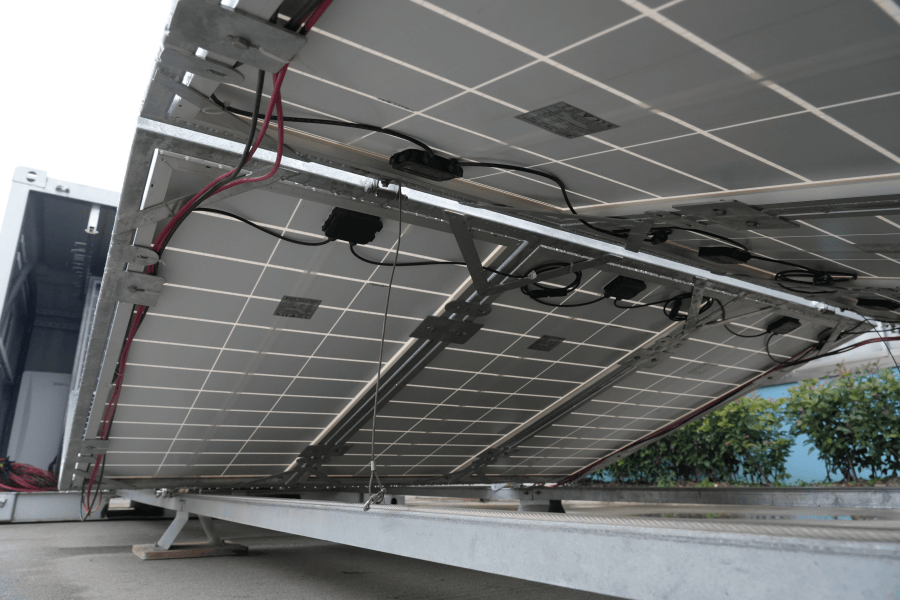
Surviving the Coast: Why Your Standard BESS Container Isn't Enough
Honestly, if I had a dollar for every time I've seen a beautiful battery energy storage system (BESS) project on paper get absolutely hammered by the real world within two years, I'd probably be retired on a beach somewhere. But the beach is exactly the problem, isn't it? I've seen this firsthand on site, from the Gulf Coast of Texas to the North Sea shores in Germany. That salty, humid air? It's a silent budget killer. Today, let's talk about a specific, often overlooked, but absolutely critical decision: choosing the right outdoor, pre-integrated container for coastal salt-spray environments. It's not just a box; it's the first and last line of defense for your multi-million dollar investment.
Quick Navigation
- The Hidden Cost of Salt in the Air
- Beyond the IP Rating: The Salt-Spray Reality Check A Tale of Two Containers: A California Case Study
- What Makes a Container "Coast-Ready"?
- The LCOE Connection: Durability = Better Economics
The Hidden Cost of Salt in the Air
We all want to deploy storage where the renewable energy is, right? Often, that's near coastlines - solar farms, offshore wind integration points, critical industrial ports. The International Renewable Energy Agency (IRENA) highlights the massive growth of renewables in coastal regions. But here's the thing the glossy reports sometimes skip: salt-laden atmospheres accelerate corrosion at rates 5 to 10 times faster than inland industrial areas. It's not just surface rust. I've opened up cabinets where terminal connections have become resistive, where cooling fan bearings have seized, and where sensitive PCB boards have developed dendritic growths - all from salt ingress.
The initial agitation? You might save 15-20% on CapEx by going with a standard, off-the-shelf outdoor container rated IP54. It keeps the rain out, sure. But salt mist is a different beast. It's fine, pervasive, and incredibly corrosive. The real cost hits in Year 3: unplanned downtime for component replacement, skyrocketing O&M costs, and a degraded system that can't deliver its promised C-rate (that's the charge/discharge power relative to its capacity, basically its athletic performance) when the grid needs it most. Your Levelized Cost of Energy Storage (LCOE) just took a huge, unplanned jump.
Beyond the IP Rating: The Salt-Spray Reality Check
This is where the comparison gets real. IP54 is a good start - it means protected against dust ingress and water splashes from any direction. But the "4" says nothing about corrosive agents. For coastal sites, you need to look for containers designed and tested against specific standards like IEC 60068-2-52 or ASTM B117 for salt spray (fog) testing. A true "coastal-ready" IP54 container isn't just welded steel with a coat of paint. It's a system.
From my two decades on the ground, the difference lies in the details: the grade of stainless steel used for external hardware, the multi-step coating process (zinc-rich primer, epoxy intermediate, polyurethane topcoat isn't overkill, it's necessary), and critically, the design of the thermal management system. Does the air intake have specialized corrosion-resistant filters? Is the HVAC unit itself built with coated coils? If not, you're pulling salt-saturated air directly over your battery racks and electrical gear. That's a recipe for premature failure.
A Tale of Two Containers: A California Case Study
Let me give you a real example from a microgrid project I consulted on near San Diego, California. Two identical 2MW/4MWh BESS units were installed about 800 meters apart, both from reputable integrators. One used a standard IP54 container. The other, from Highjoule, used what we call our "Maritime-Grade" pre-integrated platform, which exceeds the baseline IP54 with the extra anti-corrosion specs we just talked about.
By the 28-month mark, the difference was stark. The standard container required its first major unscheduled service: corroded busbar connections in the PCS section and failing fans in the thermal management loop. Downtime: 11 days. The Highjoule unit? Its scheduled maintenance was just that - scheduled. A visual inspection showed minimal corrosion, and the internal environment data (humidity, particulate) was well within spec. The client's team now directly links the choice of container to predictable operational expenditure. That's the power of a proper comparison.

What Makes a Container "Coast-Ready"?
So, when you're comparing options, don't just check the IP box. Dig into these specifics:
- Material & Coatings: Ask for the coating system specification sheet and the salt spray test hours (e.g., 1000+ hours to red rust per ASTM B117).
- Sealing & Filtration: Gaskets should be closed-cell foam (not sponge) and all cable entries should have double-sealed glands. Air filters should be rated for corrosive environments.
- Thermal Management Design: This is huge. A liquid-cooled system is inherently more sealed from the external environment than air-cooled. If it's air-cooled, the unit's corrosion protection is paramount.
- Compliance: Does it meet UL 9540 for the overall system and relevant sections of IEEE 1547 for grid interconnection? A quality integrator like Highjoule builds these certifications into the pre-integrated design from day one, so you're not facing costly retrofits.
The LCOE Connection: Durability = Better Economics
At the end of the day, we're all making business decisions. The initial price tag is one data point. The true metric is LCOE - the total lifetime cost of owning and operating the storage asset divided by the total energy it dispatches. A container that protects your core systems from corrosion directly extends the operational life and reduces annual maintenance costs. That drives the denominator up and the numerator down, giving you a significantly better LCOE over 15-20 years.
That's the philosophy behind our pre-integrated solutions at Highjoule. We've taken the lessons from hundreds of global deployments, especially the tough coastal ones, and baked them into a standardized yet highly adaptable product. It's not just about selling a container; it's about delivering a promised financial return by ensuring the hardware survives to see its full lifespan. We handle the complex integration of power conversion, battery racks, safety systems, and thermal management in a controlled factory environment - all within a shell built for the specific environmental hazard of your site.
So, the next time you're evaluating a BESS proposal for a coastal site, go beyond the kW and kWh specs. Ask the hard questions about the box it all lives in. What's your experience been with salt spray corrosion? Can I see the test reports for the container's coating system? Honestly, the answer will tell you almost everything you need to know about the long-term viability of that project. What's one environmental challenge you've faced that wasn't in the original project plan?
Tags: UL Standard BESS Europe US Market Renewable Energy Salt-Spray Corrosion
Author
James Zhang
20+ years agricultural energy storage engineer / Highjoule CTO