
Step-by-step Installation of a High-voltage DC 5MWh BESS for EV Charging
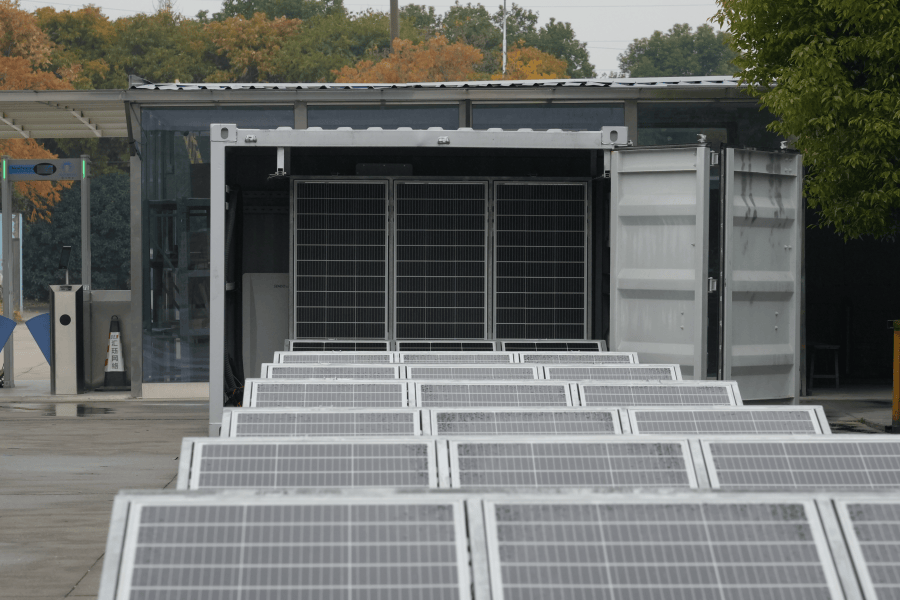
Table of Contents
- The Grid Strain Problem
- Why a 5MWh HVDC BESS is the Answer
- Step-by-Step Installation: A Field Engineer's Perspective
- The Real-World Case: California EV Hub
- Key Technical Insights: Beyond the Bolts
- Making the Project Work for You
The Grid Strain Problem
Honestly, if I had a dollar for every time a commercial or municipal client told me their EV charging expansion plans were being throttled by grid capacity or astronomical demand charges, I'd be writing this from a beach. It's the single biggest blocker I see on site. You want to install a bank of high-power DC fast chargers, but the local utility says the necessary transformer upgrade is 18 months out and will cost six figures. Or worse, you get the power, but the monthly bill from those 15-minute supercharging peaks makes the whole project uneconomical.
This isn't a hypothetical. The International Energy Agency (IEA) reports that global electricity demand from EVs is set to skyrocket, and without smart management, this can lead to costly grid reinforcements. We're talking about a fundamental mismatch: the grid is built for steady, predictable loads, while EV charging, especially at commercial fleets or highway hubs, is inherently spiky and intense.
Why a 5MWh HVDC BESS is the Answer
So, what's the fix? In my 20+ years, I've seen the evolution from simple backup generators to sophisticated, grid-integrated batteries. For a serious EV charging depot, the sweet spot we're increasingly deploying is the high-voltage DC, utility-scale battery energy storage system (BESS) C think the 5MWh range. This isn't a glorified power bank; it's an active grid asset.
The logic is beautiful in its simplicity. Instead of pulling all that peak power directly from the grid, the BESS charges slowly and steadily during off-peak hours when electricity is cheap and grid stress is low. Then, when a dozen trucks or cars plug in simultaneously, the BESS delivers that stored high-voltage DC power directly to the chargers. You flatten that crippling demand spike, avoid the upgrade fees, and slash your energy costs. The financials, when you run the Levelized Cost of Energy (LCOE) for the system over its lifetime, just make sense.
Step-by-Step Installation: A Field Engineer's Perspective
Alright, let's get practical. How do you actually get one of these 5MWh titans from the factory floor to powering chargers? It's a symphony of planning and precision, not just a "plug and play." Here's the real-world sequence I follow:
Phase 1: Pre-Site & Paperwork (The Unsexy, Critical 80%)
- Site Audit & Design: This is where we avoid 90% of future headaches. We model the exact energy profile, finalize the footprint (a 5MWh containerized system needs about the space of 4-5 shipping containers), and plan cable routes, crane access, and thermal management clearances. Everything is designed to local codes C UL 9540 for the system, UL 1973 for the batteries, and IEEE 1547 for grid interconnection here in the States.
- Permitting & Utility Interconnection: We handle the labyrinth of paperwork. This is non-negotiable. The utility needs to approve how your system will sync with their grid safely.
Phase 2: The Physical Build
- Site Prep & Foundation: We pour a reinforced concrete pad that's perfectly level. This base is crucial for the structural integrity of the container and for proper water runoff.
- Container Placement & Securing: The day the BESS arrives is always a big one. Using a certified crane crew, we position the pre-integrated container. Then, it's all about anchoring it down to meet local seismic and wind load requirements. I've seen this firsthand on site in Florida C proper anchoring isn't optional.
- Electrical Integration: This is the high-stakes part. Qualified electricians run the medium-voltage cabling from the utility point of interconnection to the system's transformer. Inside, the high-voltage DC busbars connect the battery racks to the power conversion system (PCS). Every bolt is torqued to spec, every connection thermally scanned. Safety is the absolute mantra.
- Commissioning & Testing: We don't just flip a switch. We run a exhaustive sequence: insulation resistance tests, functional checks of the battery management system (BMS) and fire suppression, and finally, a graduated charge/discharge cycle to validate performance. Only then do we connect it to the EV chargers for a live test.

The Real-World Case: California EV Hub
Let me give you a concrete example. We recently deployed a 4.8MWh Highjoule system for a logistics company in California's Central Valley. Their challenge was classic: they needed to fast-charge 50 electric delivery vans overnight, but their existing service couldn't handle the simultaneous load.
The Highjoule solution involved two of our pre-integrated HV DC containers. The installation followed the steps above, but the magic was in the control software. The system intelligently charges from the grid during super-off-peak windows and then discharges to support the depot's charging schedule. The result? They deferred a $350,000 transformer upgrade and are projected to cut their monthly energy costs by over 40% for that load. The project passed California's strict fire safety (CEC) and interconnection rules because our core design is built to exceed those standards.
Key Technical Insights: Beyond the Bolts
For the decision-makers, here's what matters beyond the installation manual:
- C-rate Isn't Just a Number: It's the speed of the battery's charge/discharge. A 1C rate means a 5MWh battery can deliver 5MW of power. For EV charging, you need a C-rate high enough (often 0.5C to 1C) to support those rapid power draws without stressing the battery. Our systems are engineered for these high-throughput cycles.
- Thermal Management is Everything: Heat is the enemy of battery life and safety. A robust, liquid-cooled system isn't a luxury; it's what ensures consistent performance in a Phoenix summer or a Texas heatwave and keeps the system within its safe operating window. This directly impacts your long-term LCOE.
- The LCOE Lens: Don't just look at upfront cost. Levelized Cost of Energy factors in installation, maintenance, degradation, and energy savings over 15-20 years. A well-installed, high-quality BESS with superior thermal management will have a lower LCOE than a cheaper, less efficient unit that degrades faster.

Making the Project Work for You
The step-by-step process is the blueprint, but the success lies in the partner you choose. At Highjoule, our value isn't just in the UL 9540-certified container we deliver. It's in the 20 years of knowing that the pad needs a 1% slope for drainage, how to navigate the utility interconnection study in Ohio versus Germany, and having a local technician available for the annual maintenance check. It's about designing the system with the right C-rate and cooling so that in year 10, it's still performing like year three.
The question isn't really if you'll need storage to support your EV charging ambitions - the grid constraints make it inevitable. The question is, will your installation be a smooth, compliant process that delivers the ROI you modeled on day one? That's the conversation I love having over a coffee. What's the biggest grid constraint you're facing in your next EV project?
Tags: UL Standard BESS LCOE Europe US Market EV Charging Infrastructure Renewable Energy Utility-Scale Energy Storage
Author
James Zhang
20+ years agricultural energy storage engineer / Highjoule CTO