
Step-by-step Installation of High-voltage DC Off-grid Solar Generator for Construction Site Power
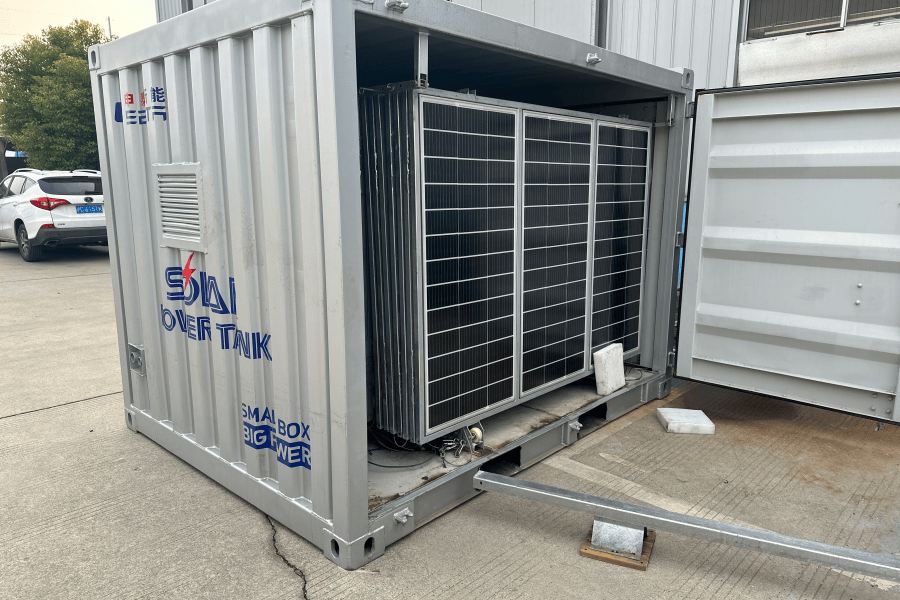
Powering the Job Site: A Real-World Guide to High-Voltage DC Off-Grid Solar
Hey there. Let's grab a coffee and talk about something I see all the time on job sites from California to Bavaria: the headache of temporary power. You know the drill C the noise, the fumes, the soaring diesel costs, and the sheer logistical puzzle of getting reliable, clean power to where your tools and equipment need it. Honestly, after two decades in the field, I've seen the shift. More project managers are asking, "There has to be a better way." And there is. Today, I want to walk you through the real, boots-on-the-ground process of deploying a high-voltage DC off-grid solar generator. It's not just theory; it's the practical, step-by-step solution we're implementing right now to solve those exact pain points.
Quick Navigation
- The Real Problem: More Than Just an Inconvenience
- Why This Solution Makes Sense Now
- The Step-by-Step Installation Guide
- Case in Point: A German Autobahn Project
- Key Technical Insights for Decision-Makers
- Making It Happen on Your Site
The Real Problem: More Than Just an Inconvenience
Let's be frank. Relying on diesel gensets for remote construction power isn't just noisy and dirty - it's a massive, unpredictable cost center. The International Energy Agency (IEA) has highlighted the volatility of diesel prices as a major risk for off-grid industrial operations. But on site, the problem feels even more immediate. I've coordinated crews waiting for fuel deliveries, dealt with generators tripping under sudden load demands from heavy equipment, and faced strict noise ordinances that shut down night work. It's a triple threat: cost, reliability, and regulatory compliance. This isn't just about being green; it's about keeping your project on schedule and within budget.
Why This Solution Makes Sense Now
The technology has matured. High-voltage DC battery systems, specifically designed for off-grid industrial use, are now robust, safe, and, frankly, more cost-effective over the life of a project. By integrating solar PV directly with a DC-coupled battery storage system (BESS), you cut out multiple energy conversion steps. This means higher overall efficiency - often 5-8% more than traditional AC-coupled setups. For a 24/7 site, that efficiency gain translates directly into lower fuel consumption or smaller, more cost-effective solar arrays. The key is a system built to UL 9540 and IEC 62933 standards, ensuring it's not a science experiment but a proven industrial asset.

The Step-by-Step Installation Guide
Based on our deployments, here's the practical sequence. It might look detailed, but with the right partner, this flows smoothly and gets you powered up fast.
Phase 1: Site Assessment & Engineering (Week 1)
This is where we avoid 90% of future headaches. It's not just about a flat piece of ground. We map the sun path for optimal solar placement, conduct a detailed load analysis of every piece of equipment (from site offices to tower cranes), and model the system's performance. We design for the highest expected load (the C-rate of the battery is critical here) and the local climate (thermal management is non-negotiable). The output is a site-specific plan that meets all local electrical codes (like the NEC in the US) and safety regulations.
Phase 2: Foundation & Pre-assembly (Week 2)
Most of our systems are containerized or skid-mounted for a reason. We prepare a simple, level concrete pad or compacted gravel base. Meanwhile, the core system - the battery racks, high-voltage DC power conversion system (PCS), and control brain - is pre-wired and tested at our facility. This "plug-and-play" approach drastically reduces on-site labor and complexity. We've seen this cut installation time by up to 40% compared to piecemeal assembly.
Phase 3: Installation & DC Coupling (Week 3)
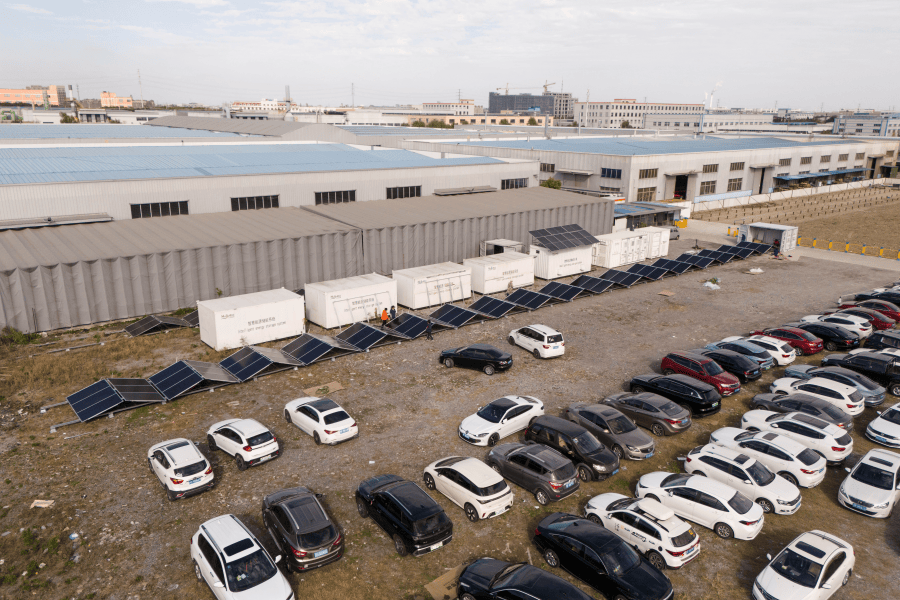
The main event. The pre-assembled BESS unit is positioned. Then, the solar array is installed. Here's the crucial bit: the solar strings are connected directly to the DC input of the hybrid inverter or charge controller. This high-voltage DC link (often 600-1500V DC) is more efficient for transferring power over the distances typical on a construction site. All connections are made with safety paramount, using DC isolators and arc-fault protection devices that exceed UL and IEC standards. Highjoule's systems, for instance, incorporate layered protection that I've seen firsthand prevent issues during fault conditions.
Phase 4: Commissioning & Handover (Week 4)
We don't just flip a switch. We run a full sequence: functional tests of every protection device, performance tests under simulated load, and finally, integration tests with the actual site equipment. We train your site manager on the simple monitoring dashboard - usually an app that shows solar production, battery state of charge, and diesel generator run hours. The goal is to hand you a system that works predictably from day one.
Case in Point: A German Autobahn Project
Let me give you a real example. We deployed a system for a bridge repair project on the A3 Autobahn in North Rhine-Westphalia. The challenges? Zero grid connection, strict environmental limits on noise and emissions, and a need for continuous power for lighting, welding, and concrete mixers.
The solution was a 250kW/500kWh high-voltage DC off-grid system. The solar canopy was mounted on the construction barrier itself, saving space. The DC-coupled BESS handled the base load and peak shaving, while a small, efficient diesel genset acted only as a rarely-used backup. The result? A 70% reduction in diesel consumption, zero noise complaints, and the project lead told me they avoided nearly ?15,000 in potential fuel cost overruns. The system was certified to VDE-AR-E 2510-50, the go-to standard for mobile storage in Germany.
Key Technical Insights for Decision-Makers
You don't need to be an engineer, but understanding a few concepts helps you choose the right partner:
- C-rate: Think of this as the "power rating" of the battery. A 1C rate means a 100kWh battery can deliver 100kW. For construction sites with big motors, you need a higher C-rate (like 1.5C or 2C) to handle those sudden surges without straining the system.
- Thermal Management: Batteries perform poorly if they're too hot or too cold. A liquid-cooled system isn't a luxury; it's essential for maintaining performance and lifespan in outdoor, variable climates. It keeps the internal temperature even, preventing hotspots that degrade cells.
- LCOE (Levelized Cost of Energy): This is your true cost of power over the system's life. While the upfront cost might be higher than a generator, the near-zero "fuel" cost from solar and reduced maintenance give these systems a significantly lower LCOE for projects longer than 6-12 months. The National Renewable Energy Laboratory (NREL) has great tools showing this crossover point.
Making It Happen on Your Site
The step-by-step installation of a high-voltage DC off-grid solar generator is a proven path. It's about choosing a partner who brings the engineering rigor, the certified hardware, and - critically - the on-site experience to tailor the solution. At Highjoule, we've built our service around this lifecycle: from initial feasibility and compliant design to local deployment and remote monitoring support. We ensure your system isn't just installed, but optimized for your specific site economics and challenges.
So, what's the biggest power reliability hurdle you're facing on your next remote project? Let's talk about how a step-by-step, engineered approach can turn that hurdle into a competitive advantage.
Tags: Construction Site Power UL Standard BESS Off-grid Solar DC High-Voltage
Author
James Zhang
20+ years agricultural energy storage engineer / Highjoule CTO