
Step-by-step Installation of IP54 Outdoor Off-grid Solar Generator for Industrial Parks
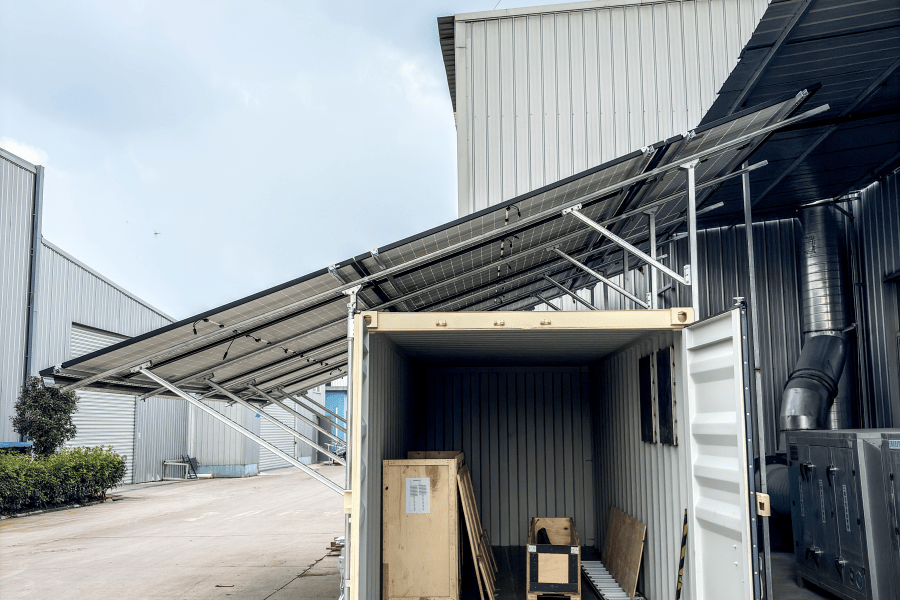
Table of Contents
- The Real Problem: It's More Than Just "Plug and Play"
- Why It Hurts: Cost Overruns and Hidden Dangers
- A Better Way: The Phased, On-Site Reality
- Step 1: The Pre-Installation Site Assessment (The "Coffee Shop Blueprint")
- Step 2: Foundation & Enclosure Placement (Getting the Base Right)
- Step 3: Thermal Management & Ventilation Setup (The Heartbeat of Longevity)
- Step 4: DC/AC Electrical Integration & Safety Sign-off
- Step 5: Commissioning & Handover (The Final Mile)
- Expert Insight: The LCOE Game-Changer
The Real Problem: It's More Than Just "Plug and Play"
Honestly, if I had a dollar for every time a facility manager told me, "It's just a big battery, right? How hard can the install be?" I'd probably be retired on a beach. The reality on the ground, especially for IP54 outdoor off-grid systems in sprawling industrial parks, is a different beast entirely. The problem isn't the desire for energy resilience or lower costs - it's the massive gap between the neat sales brochure and the gritty, muddy, code-intensive reality of a live deployment. You're not installing a server rack in a data center; you're deploying a power plant asset that must withstand hail, seasonal temperature swings from -20C to 40C, and do it all while meeting UL 9540, IEC 62485, and local fire codes.
Why It Hurts: Cost Overruns and Hidden Dangers
I've seen this firsthand. A project in the Midwest U.S. faced a 6-week delay because the initial site prep ignored subsurface drainage. The concrete pad for the container? It became a seasonal pond. Corrosion set in on auxiliary components way before schedule. According to the National Renewable Energy Laboratory (NREL), improper siting and installation can degrade system performance by up to 20% in the first five years. That's a direct hit on your projected ROI. The aggravation amplifies when you realize that most of these issues - thermal hotspots, ground fault alarms, premature capacity fade - are not manufacturing defects. They're installation defects. And in an off-grid industrial setting, a failure doesn't mean a hiccup; it means production lines stopping.
A Better Way: The Phased, On-Site Reality
So, what's the solution? It's a methodical, step-by-step process that respects the complexity. At Highjoule, we don't ship containers and wish you luck. Our approach is built on two decades of field scars and successes. It's a collaborative, phased installation that treats the IP54 outdoor off-grid solar generator as the core of a living system, not a standalone product. The goal is a system that doesn't just work on day one, but is optimized for a 15-year lifespan with the lowest possible Levelized Cost of Energy (LCOE). Let's break down what that actually looks like on your site.

Step 1: The Pre-Installation Site Assessment (The "Coffee Shop Blueprint")
Before a single piece of equipment arrives, we're on-site with you. This is the most critical, and often skimped-on, phase. We're looking at:
- Geotechnical & Drainage: Will the ground support the weight? Where does water flow during a storm?
- Access & Clearances: Can a crane reach the spot? Are there overhead lines? We always plan for 10ft minimum service clearance around the unit, as per NFPA 70 safety codes.
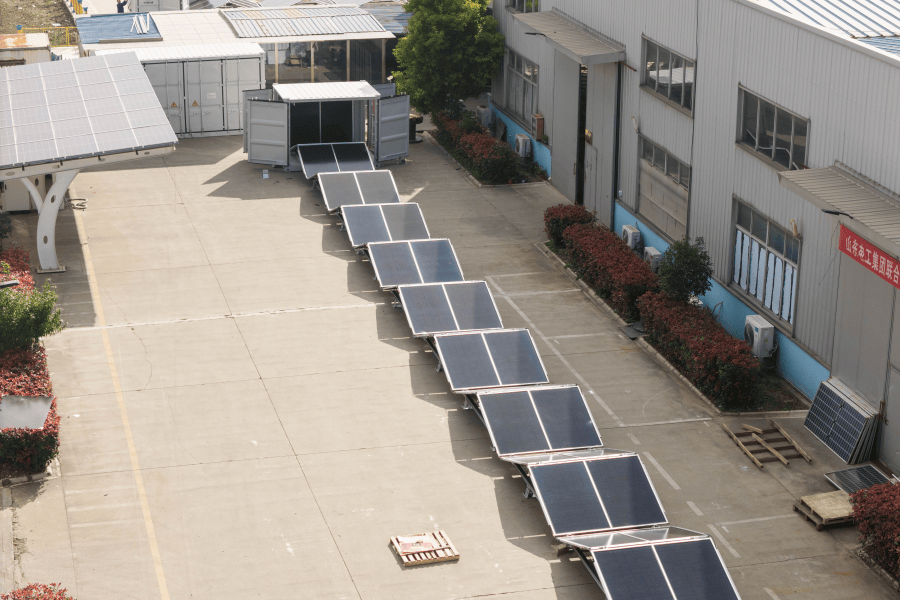
- Solar & Load Proximity: Minimizing DC run distances from PV arrays reduces losses. Same for the AC connection to your critical load panel.
- Local Code Deep Dive: This is where our local partners are gold. A requirement in Texas might not fly in Germany's North Rhine-Westphalia. We map it all upfront.
Step 2: Foundation & Enclosure Placement (Getting the Base Right)
The IP54 rating means it's protected against dust and water splashes from any direction. But that rating is void if the unit is sitting in 6 inches of water. We typically specify a reinforced concrete pad with a slight taper for runoff. The anchor bolts are set with precision laser-leveling. When the container arrives, it's a smooth crane-and-set operation. I remember a project in California where this precise leveling saved us two days of rework during the electrical fit-up - everything just lined up.
Step 3: Thermal Management & Ventilation Setup (The Heartbeat of Longevity)
Here's a key insight: battery degradation is primarily a function of temperature and C-rate. The IP54 enclosure has integrated, N+1 redundant HVAC systems. Our job on-site is to ensure the intake and exhaust vents are never obstructed (a common mistake - don't let the landscaping team plant shrubs there later!). We verify the ambient temperature sensors and the internal battery thermal management system (BTMS) are communicating perfectly. This system is what allows our units to maintain optimal 25C 3C cell temperature, whether it's a Phoenix summer or a Norwegian winter.
Step 4: DC/AC Electrical Integration & Safety Sign-off
Now for the live connections. The off-grid solar generator's inverter/charger is the brain. Our technicians, certified to local standards, handle:
- DC Side: Connecting the PV combiner boxes with proper string-level fusing and surge protection.
- AC Side: Integrating with your backup load panel via a automatic transfer switch (ATS).
- Grounding: This is non-negotiable. A separate, low-impedance grounding grid is established for the entire system.
Every connection is torqued to spec, labeled, and photographed for the as-built documentation. Then comes the moment of truth: the pre-energization safety check with the local AHJ (Authority Having Jurisdiction). Our UL and IEC certified designs make this step smoother, but we never take it for granted.
Step 5: Commissioning & Handover (The Final Mile)
Power is on, but we're not done. Commissioning is a 2-3 day scripted process. We cycle the system through its paces: simulated grid failures, partial load tests, full discharge/charge cycles at different C-rates. We calibrate the battery management system (BMS) and show your team the monitoring portal. This isn't a black box; you'll see real-time data on state-of-charge, cell voltages, and system health. The handover includes a thick binder of documentation and a direct line to our Highjoule 24/7 performance monitoring center, which proactively watches for anomalies.
Expert Insight: The LCOE Game-Changer
Let's talk brass tacks. Why go through all this rigor? It boils down to LCOE - the total cost of owning and operating the system over its life. A sloppy install increases capital cost (rework, delays) and operational cost (inefficiency, early failure). A precise, experienced installation does the opposite. It maximizes cycle life, minimizes downtime, and ensures every kWh of your on-site solar is stored and dispatched efficiently. For an industrial park manager, that's the difference between an energy cost headache and a predictable, resilient asset that pays for itself. The right installation partner doesn't just deliver a product; they de-risk your entire project and embed success into the foundation.
What's the one site-specific challenge you're most concerned about for an off-grid storage install on your property?
Tags: UL Standard BESS Europe US Market Industrial Energy Storage Off-grid Solar IP54 Installation
Author
James Zhang
20+ years agricultural energy storage engineer / Highjoule CTO