
Step-by-Step Installation Guide for IP54 Outdoor Solar Container BESS in Industrial Parks
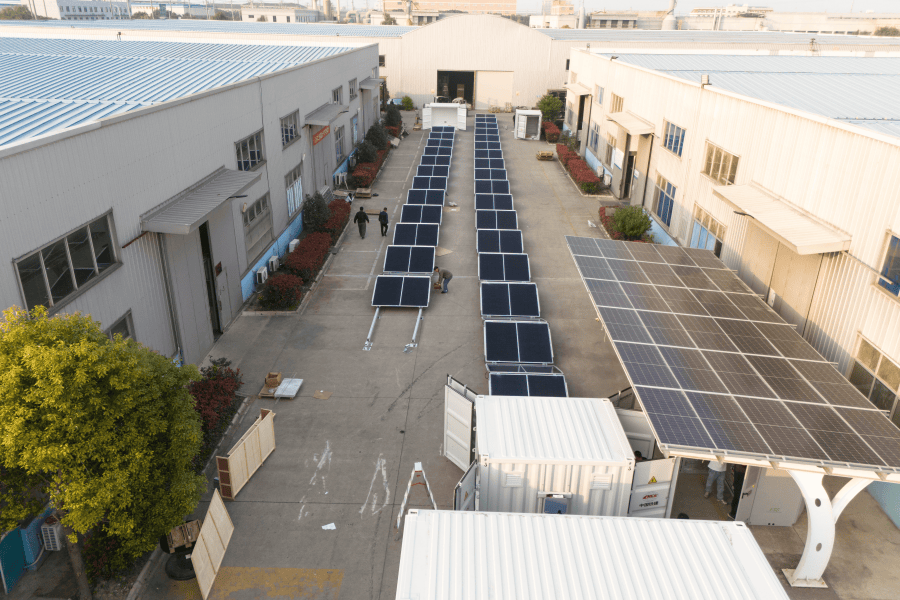
Table of Contents
- The Hidden Costs of Getting BESS Installation Wrong
- Why "Just Plug and Play" is a Myth for Industrial Storage
- A Smarter Path: The Pre-Engineered IP54 Outdoor Container
- The Critical 5-Step Field Installation Process (What Really Matters)
- A Real-World Snapshot: How It Works in Texas
- The Engineer's Notebook: Three Things You Won't Find in the Manual
The Hidden Costs of Getting BESS Installation Wrong
Honestly, when I'm on site with a client, the conversation rarely starts with battery chemistry or C-rate. It starts with frustration. I've seen this firsthand: a plant manager in Ohio staring at a delayed project timeline, or a sustainability director in Germany sweating over a budget that's ballooned by 30% before a single battery is charged. The dream is clear C energy independence, backup power, slashing those demand charges. But the path to get there, especially for outdoor, industrial-scale battery storage? That's where the pain sets in.
The core problem isn't the technology itself anymore. It's the deployment. Building a Battery Energy Storage System (BESS) from scratch on an industrial park lot is like constructing a small, hyper-critical data center outdoors. You're dealing with custom concrete pads, complex electrical interconnection, thermal management systems, fire suppression, and cybersecurity C all while navigating a maze of local permits, NFPA 855 in the US, or IEC 62933 standards in the EU. A report by the National Renewable Energy Laboratory (NREL) highlighted that "soft costs" C like permitting, interconnection, and installation labor C can constitute up to 40% of the total system cost for non-residential storage. That's a massive chunk of your budget not going into the actual energy storage hardware.
Why "Just Plug and Play" is a Myth for Industrial Storage
Let's agitate that pain point a bit. Think about a traditional, piecemeal installation. First, you have site prep: weeks of earthwork, pouring a perfectly level concrete foundation with embedded conduits. Then, the container arrives. But it's just an empty shell. Now the real fun begins: racking the battery modules, installing the HVAC, fitting the fire detection and suppression system, pulling miles of cable, integrating the power conversion system (PCS). Every day of this on-site assembly is a day of weather risk, labor cost overruns, and safety incidents waiting to happen.
The biggest risk? Inconsistency. A connection that's 90% right in the field is 100% wrong. A slight torque miscalculation on a busbar, an airflow path blocked during assembly C these are the ghosts that haunt system performance and safety years down the line. They directly impact your Levelized Cost of Storage (LCOS), turning a promising ROI into a headache.
A Smarter Path: The Pre-Engineered IP54 Outdoor Container
So, what's the solution we've moved towards at Highjoule? It's shifting the complexity from the field to the factory. The Step-by-Step Installation of an IP54 Outdoor Solar Container isn't about building from zero on your site. It's about the disciplined, sequential process of deploying a pre-integrated, pre-tested unit. Think of it like deploying a submarine, not welding a ship in a stormy harbor.
An IP54 rating means the container is built to withstand dust and water splashes from any direction C a non-negotiable for industrial parks. Our units arrive with the batteries, BMS, PCS, thermal management, and safety systems all integrated, wired, and functionally tested in a controlled environment. This is the game-changer. It transforms the on-site task from "construction" to "connection and commissioning." The focus shifts to perfect execution of a defined process, not improvisation.
The Critical 5-Step Field Installation Process (What Really Matters)
Based on our deployments from California to North Rhine-Westphalia, here's the streamlined sequence that actually matters for a safe, compliant, and efficient install:
- Pre-Check & Foundation Handoff: Before the container even ships, our team verifies your foundation survey. The moment it's on your site, we do a joint inspection. The foundation isn't just a slab; it's the first part of the thermal system. A warped foundation stresses the frame and can disrupt air seal integrity.
- Precision Placement & Anchoring: Using specialized rigging, we place the container onto pre-set anchor bolts. This isn't just "setting it down." It's about absolute leveling to ensure proper drainage (critical for IP54) and structural alignment for high-wind ratings. A few degrees off can cause long-term stress points.
- Utility-Grade Electrical Interconnection: This is where UL 9540 and IEC 62477-1 come to life. Our crews connect the pre-terminated, labeled cables from the container's main disconnect to your switchgear. Because the internal wiring is already factory-done and certified, this step is about robust, clean, and torqued-to-spec external connections. We're essentially connecting two large, pre-built modules.
- Commissioning & Grid Harmony Test: This is the "light-up" sequence. We bring the system online in a controlled manner, verifying communication between the BMS, PCS, and your energy management system. We test grid response curves, ensuring the system doesn't just work, but works well with the local utility's requirements. This step is what turns hardware into an asset.
- Client System Handover & Training: We don't just leave you with a manual. We walk your facility team through the physical system, the monitoring interface, and basic operational protocols. You understand what normal looks and sounds like (yes, the thermal management system has a specific sound when it's happy).
A Real-World Snapshot: How It Works in Texas
Let me give you a concrete example. Last year, we deployed a 2 MWh system for a manufacturing plant near Houston. Their challenge? Brutal heat, volatile energy prices, and a need for critical backup during grid instability. A traditional build would have taken 12+ weeks on site, exposing workers to the summer heat and delaying their ROI.
With our pre-engineered IP54 container, the site work was distilled. The factory-built unit arrived with UL 9540 certification in hand. The core field installation C from placement to final commissioning C was completed in under three weeks. The plant manager's main comment? "It felt more like a military logistics operation than a construction site C precise, clean, and on schedule." The system now shaves their peak demand charges and provides seamless backup, with the IP54 enclosure handling everything from torrential rain to dust storms.

The Engineer's Notebook: Three Things You Won't Find in the Manual
Here's my insider take, the stuff from the trenches:
- Thermal Management is The Silent Governor: Everyone talks about battery cycle life. The real dictator is temperature. A well-designed container doesn't just have an AC unit; it has a calculated airflow path. On site, we check that path is never obstructed by external conduits or landscaping. A 10C rise above spec can halve your battery's lifespan. It's not an accessory; it's the core system.
- C-Rate Isn't Just a Number; It's a Financial Lever: A 1C vs. 0.5C system changes your PCS size and thermal load. A higher C-rate gives you faster, more powerful bursts for demand charge management but stresses the batteries more. We help clients model this against their actual load profile. Sometimes, a slightly larger, slower-discharging system has a better LCOS because it's gentler on the assets.
- The "Soft Cost" Savings are Real Money: By having a single, certified container, the permitting process is often faster. Authorities Having Jurisdiction (AHJs) are reviewing a known, tested assembly, not a one-off design. This can shave months off your timeline. In energy projects, time is literally money C both in saved labor and earlier revenue generation.
The step-by-step installation of these robust containers is, honestly, our way of de-risking your investment. It brings predictability to a complex process. So, when you're evaluating storage for your industrial park, look beyond the spec sheet. Ask the vendor: "Walk me through your actual field installation process. How do you ensure what left the factory is what works perfectly on my site?" The answer will tell you everything you need to know.
What's the single biggest logistical hurdle you're anticipating for your site?
Tags: UL Standard BESS LCOE Industrial Energy Storage Solar Container Installation
Author
James Zhang
20+ years agricultural energy storage engineer / Highjoule CTO