
Step-by-Step Installation of LFP Mobile Power Containers for Agricultural Irrigation
Table of Contents
- The Real Problem: It's Not Just About Power, It's About Predictability
- Why It Hurts: The High Cost of Unreliable Power in Agriculture
- The Mobile Solution: LFP Power Containers That Work Where You Need Them
- A Realistic, Step-by-Step Guide to Getting It Right
- Case in Point: A California Vineyard's Success Story
- Expert Insights: What We've Learned On-Site
- Making It Work for Your Operation
The Real Problem: It's Not Just About Power, It's About Predictability
Let's be honest. If you're running a large-scale farm or agribusiness in North America or Europe, you've probably had this conversation. You need to irrigate 200 acres of high-value crops during a peak heatwave. The grid is strained, electricity prices are spiking, or maybe you're in a remote area where three-phase power is a distant dream. The diesel generator is roaring in the background, burning cash and adding a layer of operational complexity (and emissions) you'd rather avoid. The problem isn't a lack of energy solutions; it's a lack of a predictable, flexible, and cost-effective one that can keep up with the precise demands of modern irrigation.
Why It Hurts: The High Cost of Unreliable Power in Agriculture
I've seen this firsthand on site. A client in the Midwest had a perfectly timed irrigation schedule to optimize yield. A localized grid fault knocked out power for 8 hours during a critical window. The financial impact wasn't just the lost diesel for backup; it was the potential 5-10% yield hit on that field. According to the National Renewable Energy Laboratory (NREL), agricultural operations are increasingly vulnerable to grid volatility, and the levelized cost of energy (LCOE) for traditional backup methods often ignores these hidden risks of downtime.
The agitation is real: rising energy costs, tightening environmental regulations, and the absolute non-negotiable need for water when the crops need it. Static, fixed infrastructure can't solve this. You need agility.
The Mobile Solution: LFP Power Containers That Work Where You Need Them
This is where the concept of a mobile Lithium Iron Phosphate (LFP) power container shifts from being a "nice-to-have" to a core operational asset. Think of it as a giant, ultra-safe, plug-and-play battery bank on a trailer. It's not permanently tied to one location. You can deploy it to support pivot irrigation in one sector for a season, then move it to power cold storage during harvest. The chemistry - LFP - is key here. It's inherently more stable than other lithium-ion types, with a longer cycle life, which is crucial for the daily charge/discharge cycles of solar+storage or time-of-use arbitrage.
A Realistic, Step-by-Step Guide to Getting It Right
Based on our deployments from Texas to Spain, here's the practical, step-by-step process we follow. It's more than just "drop and play."
Phase 1: Pre-Site Assessment & Planning (The Most Critical Step)
This happens long before the container arrives. We look at:
- Load Profile: What's the exact power (kW) and energy (kWh) need of your irrigation pumps? We need the start-up surge and continuous draw.
- Site Terrain: We need a stable, level area with proper drainage. A quick geotechnical check can save huge headaches later.
- Grid/Generation Interface: How will it charge? From a dedicated solar array, the existing farm connection, or a combination? This defines the AC/DC cabling and switchgear needs.
- Local Codes: This is huge for the US and EU. We ensure the entire system design is pre-approved to relevant standards like UL 9540 for the energy storage system and IEC 62619 for the battery cells. This isn't just paperwork; it's about insurance and safety.

Phase 2: Site Preparation & Foundation
For a mobile container, a permanent concrete pad isn't always necessary, but a prepared gravel or compacted stone base is. We ensure:
- Clear access roads for the trailer.
- Marked underground utility lines.
- Pre-poured concrete footings for any optional stability anchors or if a more permanent future location is desired.
Phase 3: Delivery, Positioning, and Mechanical Installation
The container arrives on a low-bed trailer. Using a skilled operator, it's carefully offloaded and positioned. Then, the "mobile" part is often secured:
- Stabilizing jacks are deployed.
- The trailer axles might be removed (depending on the design).
- This is where Highjoule's design focus on serviceability pays off. We ensure there's ample clearance on all sides, especially the service panel side, for future maintenance.
Phase 4: Electrical Integration & Commissioning
This is the nerve center. Certified electricians connect the container to your point of interconnection (e.g., a distribution panel feeding the irrigation pumps).
- Cabling: Heavy-duty, rated cables are run through conduit.
- Protection: Correctly rated breakers and disconnects are installed.
- Brain Connection: The container's energy management system (EMS) is connected to your control system or our simple HMI. We set the parameters: when to charge (from grid or solar), when to discharge, and all the safety limits.
- Commissioning: This isn't just flipping a switch. We run a full sequence: insulation tests, communication checks, gradual ramp-up of C-rate (that's the charge/discharge speed) to verify thermal performance, and finally, a full capacity test. We sign off on a checklist that aligns with IEEE 1547 for grid interconnection standards.
Phase 5: Training & Handover
We don't leave until your head grower or farm manager is comfortable. We provide simple, laminated guides on daily operations, what normal status lights look like, and who to call for what. Our remote monitoring platform, which we include, gives you a dashboard to see state of charge, savings, and system health.
Case in Point: A California Vineyard's Success Story
Let me tell you about a project in Sonoma County. The challenge: A prestigious vineyard needed to expand irrigation to a new, off-grid hillside block. Trenching grid power was quoted at over $200k and would take 6 months. They also wanted to reduce their overall carbon footprint.
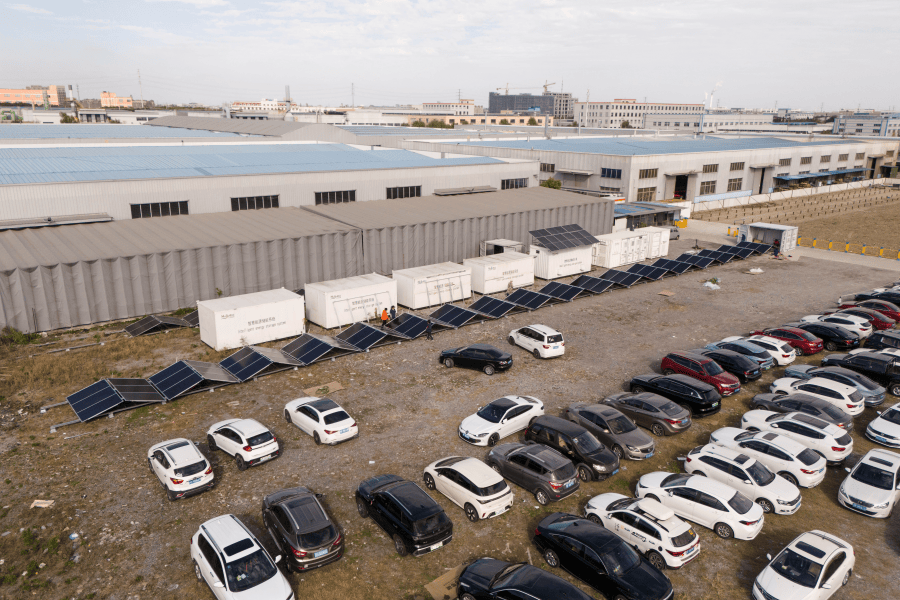
The Solution: We deployed a 250 kWh Highjoule LFP mobile container paired with a ground-mount solar array. The container was sited in a single day. The solar provided daytime charging, and the container provided evening/night irrigation runs.
The Outcome: Zero grid connection costs. The system now provides 100% of the block's irrigation needs. They avoided over 15,000 kg of CO2 annually versus a diesel generator. The LCOE for this setup, over its 15-year life, is less than half of what the grid power would have been, even before considering the avoided trenching cost. The mobility means they can reposition it in the future if vineyard layouts change.
Expert Insights: What We've Learned On-Site
A few nuggets from the field that you won't always find in a spec sheet:
Thermal Management is Everything: LFP is safer, but it still hates extreme heat. A well-designed container has an integrated, climate-controlled thermal management system. It's not just a fan; it's a precision system that keeps the battery in its happy zone (usually 15-25C), maximizing lifespan. We always overspec this for desert or high-ambient environments.
Think in Total System Cost, Not Just Upfront Price: The real value of a mobile LFP system is in its operational flexibility and durability. A cheaper system with poor thermal management or weak cycle life will have a much higher LCOE because you'll replace it sooner. We design for a 6000+ cycle life, which translates to decades of daily use in ag applications.
Standardization is Your Friend: Our containers are built to uniform, certified designs. This means faster permitting with authorities having jurisdiction (AHJs) who recognize UL and IEC marks, and easier service - any of our global techs have seen this system before.
Making It Work for Your Operation
The step-by-step installation of an LFP mobile power container is a proven path to energy resilience for agriculture. It turns a fixed, high-capital problem into a flexible, operational asset. The key is partnering with a provider who understands both the technical rigor needed for UL/IEC compliance and the practical realities of a working farm.
What's the one irrigation pump or remote asset on your property that keeps you up at night worrying about power? Imagine if you could roll a solution to it next season.
Tags: UL Standard BESS Agricultural Irrigation LFP Battery Mobile Power Container Energy Storage Installation
Author
James Zhang
20+ years agricultural energy storage engineer / Highjoule CTO