
Step-by-Step Installation of LFP Off-grid Solar Generator for Construction Site Power
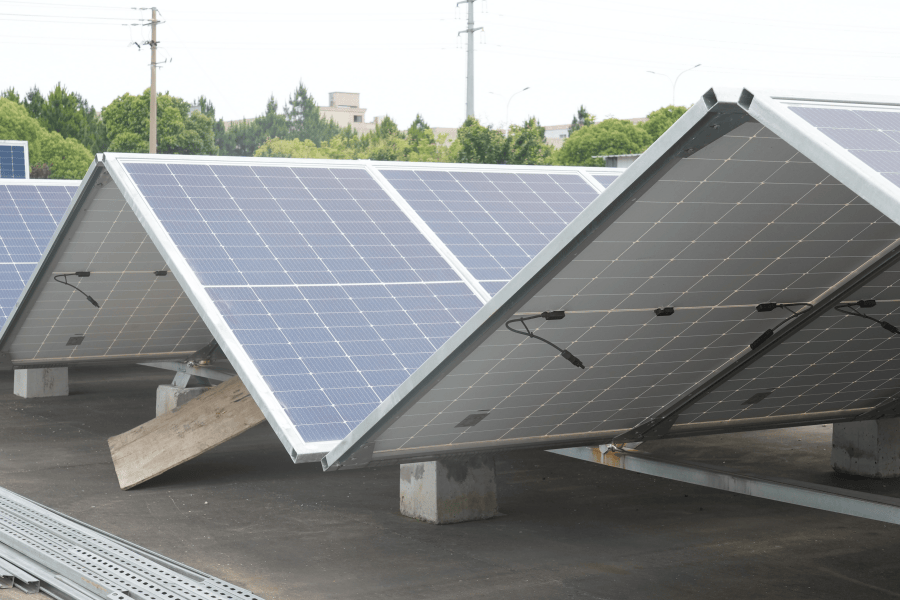
Let's Talk Power: Why Your Next Construction Site Needs a Proper Off-grid Setup
Hey there. If you're reading this, you're probably managing a project where the power grid is either miles away, hopelessly unreliable, or the connection quotes are giving your CFO heart palpitations. I've been there, standing in a muddy field, looking at diesel generators guzzling fuel and wondering, "There has to be a better way." Honestly, for years, the "better way" - renewable off-grid power - felt like a science project. Too complex, too fragile, too many unknowns for the rough-and-tumble world of construction.
But that's changed. The core challenge we see across the US and Europe isn't a lack of technology; it's a lack of clear, trusted, boots-on-the-ground guidance on how to deploy it correctly. You need power that's safe (we're talking UL 9540 and IEC 62619 standards, non-negotiable), predictable in cost, and rugged enough to handle a job site. That's where a step-by-step approach to installing a Lithium Iron Phosphate (LFP or LiFePO4) off-grid solar generator becomes your blueprint for success.
In This Guide
- The Real Cost of Getting It Wrong
- Why LFP is Now the Go-To for Job Sites
- Your Step-by-Step Field Installation Guide
- A Quick Look at the Numbers: LCOE in Action
- Beyond Installation: Thinking Like a System Operator
The Real Cost of Getting It Wrong
Let's cut to the chase. The problem with traditional off-grid power for construction is threefold: volatility, vulnerability, and verifiability.
Volatility in Fuel Costs: We all watched diesel prices swing wildly. The International Energy Agency (IEA) consistently highlights energy price volatility as a major risk for industries reliant on fossil fuels. On a 12-month project, that uncertainty can blow your OpEx budget wide open.
Vulnerability in Design: I've seen "solar generators" thrown together with mismatched components. The inverter can't handle the surge from a pile driver. The battery management system (BMS) isn't talking to the charge controller. The system fails not in a lab, but in week 3 of a critical pour. The cost? Delays, rushed diesel rentals, and reputational damage.
Verifiability (or Lack Thereof): In the US and EU, insurance and permitting are getting strict. Can you prove your battery system meets UL 9540 for fire safety? Can you show the electrical design follows the latest NEC (NFPA 70) or IEC standards? If not, you're facing delays before you even break ground.
This isn't theoretical. On a project in Northern Germany, a team tried to use a repurposed EV battery pack for site offices. It failed certification, sat in a container for 8 weeks awaiting a compliant unit, and the project had to run on costly temporary grid connections. The lesson? Deployment readiness is everything.

Why LFP is Now the Go-To for Job Sites
So why LFP? From a practical, on-site perspective, it comes down to chemistry and character. Unlike some other lithium chemistries, LFP is inherently more stable. It's far more tolerant of high temperatures and has a much lower risk of thermal runaway - a fancy term for a fire we absolutely do not want. This intrinsic safety is why it's become the preferred choice for stationary storage where people are working nearby.
Furthermore, the cycle life is phenomenal. We're talking 6,000+ cycles to 80% depth of discharge in quality systems. For a construction site running 24/5, that's years of service, and it directly translates to a lower Levelized Cost of Energy (LCOE). LCOE is just your total cost of ownership divided by the total energy output. A longer-lasting, safer battery brings that cost down, beating diesel on pure economics over a project's lifespan.
At Highjoule, when we design our LFP-based PowerBlock systems for construction, we build on this chemistry with physical ruggedization (think seismic-braced racks inside a weatherproof container), integrated thermal management that works from -30C to 50C, and a unified BMS that gives you one clear dashboard for state of charge, health, and power flow. It turns a complex chemical asset into a simple, reliable power appliance.
Your Step-by-Step Field Installation Guide
Here's the process we've refined over hundreds of deployments. It's methodical because it has to be.
Phase 1: Pre-Site Planning & Engineering (The Most Important Phase)
- Load Audit & Sizing: List every tool, light, trailer, and piece of equipment. Don't just sum peak watts; understand sequence of operation. Does the crane motor start at the same time as the concrete vibrators? Your inverter's surge capacity must handle this.
- Site Layout & Logistics: Choose a stable, level, well-drained area with clear access for the delivery truck and crane. Consider future phases - will you need to move the unit? Plan for cable runs to main distribution panels.
- Permitting & Compliance: Engage with the local Authority Having Jurisdiction (AHJ) early. Have your cut sheets ready showing UL/IEC certifications for the entire integrated system, not just components. This is where using a pre-certified solution saves months.
Phase 2: Site Preparation & Foundation
For a containerized solution, this usually means a simple concrete pad or a set of engineered gravel pads. The goal is to prevent settling, ensure water runoff, and provide a grounding point. We always install a dedicated grounding rod array as per IEEE 80, bonded directly to the container chassis. This is your first and best defense against electrical faults.

Phase 3: Delivery, Placement, & Mechanical Integration
- Rigging & Setdown: Use the container's certified lifting points. A smooth setdown onto the pad is critical.
- AC/DC Conduit & Wiring: Run conduits from the unit to your site's main distribution panel and solar array combiner box. Use the correct wire gauges for the distance and current. This seems basic, but undersized cables are a common source of efficiency loss and heat.
- Thermal System Check: Before powering on, verify the HVAC unit for the battery container is operational. Thermal management isn't optional; it's the system's life insurance. Proper LFP systems keep the cells within a tight, happy temperature band, maximizing lifespan.
Phase 4: Electrical Commissioning & System Bring-Up
This is the moment of truth, done with a qualified technician. It involves: 1. Final torque checks on all electrical connections. 2. Insulation resistance and megger testing. 3. Sequential power-up: Batteries first, then DC bus, then inverter, then AC disconnect. 4. System configuration: Setting grid codes (for off-grid, this is often "island mode"), charge/discharge parameters, and communication with the solar inverters. 5. Load testing: Gradually adding site loads to verify stability.
A Quick Look at the Numbers: LCOE in Action
Let's make this tangible. According to analysis from the National Renewable Energy Lab (NREL), the LCOE for solar-plus-storage has fallen dramatically, making it competitive with traditional generation. For a construction site, the calculation is simpler.
Imagine a site needing 50 kW of continuous power, 10 hours a day, for 18 months. A diesel generator might have an LCOE (including fuel, leasing, maintenance, and refueling labor) of $0.35-$0.50/kWh, highly fuel-price dependent.
A properly sized LFP solar generator system, with a 20-year lifespan far beyond the single project, might have an LCOE of $0.18-$0.25/kWh for that project, and even lower over its full life. The upfront CapEx is higher, but the total cost and risk are lower. You're buying predictable, silent, zero-emission power. For multi-site operators, this asset can be redeployed again and again.
Beyond Installation: Thinking Like a System Operator
Installation is just the start. The real value comes from operation. A modern system gives you visibility. What's your state of charge at 4 PM? Can you schedule the battery to be full by sundown to power night-shift lighting? Can you prioritize solar charging to minimize generator runtime?
This is where the software and service wrapper matter. We design our systems for remote monitoring, so you or we can see performance trends, get alerts for maintenance (like air filter changes), and even update software to improve efficiency. It's about turning a power source into a strategic asset.
I've seen projects in California where the site manager used the system's data to prove clean energy usage, helping the main contractor win bids with sustainability mandates. That's the future - power as a competitive advantage.
So, what's the first question you need to answer for your next remote site? Is it about the square footage of the pad, or the peak starting current of your largest motor? Getting the sequence right from the start makes all the difference.
Tags: UL Standard BESS LCOE Europe US Market Off-grid Power Renewable Energy Construction
Author
James Zhang
20+ years agricultural energy storage engineer / Highjoule CTO