
Step-by-step Installation of Liquid-cooled Solar Container for Telecom Base Stations
Contents
- The Silent Cost of Powering Remote Telecom
- Why Cooling Matters More Than You Think
- A Better Way: The Plug-and-Play Container Approach
- The Installation Blueprint: From Site Prep to Power-On
- Real Numbers, Real Savings: The California Case
- Your Next Step: Making the Switch
The Silent Cost of Powering Remote Telecom
Honestly, if you're managing telecom infrastructure in North America or Europe, you're fighting a battle on two fronts. First, there's the relentless pressure to expand network coverage and capacity. Second, and just as brutal, is the battle to keep those remote base stations online and profitable. I've been on site in the hills of California and the forests of Germany, and the story is the same: diesel generators humming away, maintenance trucks rolling out every week, and the constant fear of a power-related outage that triggers those punishing SLA penalties. The International Energy Agency (IEA) points out that telecoms can account for up to 3% of global energy demand, and a huge chunk of that for off-grid sites is pure operational cost with no upside. It's a cost center that just keeps growing.
The Agitation: It's Not Just About Fuel Bills
Let's agitate that pain point a bit. It's easy to look at the diesel invoice, but the real cost is hidden. Every site visit for refueling or generator service is a security and logistics headache. Battery systems meant to bridge the gap often fail prematurely because, in my experience, their thermal management wasn't up to the task. They get cooked in a sealed shelter, their cycle life plummets, and suddenly you're doing a full battery swap years ahead of schedule. The levelized cost of energy (LCOE) - that's the total lifetime cost per kWh - for these sites goes through the roof. You're not just buying power; you're buying uncertainty.
Why Cooling Matters More Than You Think
Here's a bit of expert insight I've learned the hard way: the heart of reliability isn't just the battery chemistry, it's the climate you create for it. People throw around terms like C-rate (how fast you charge/discharge a battery) but forget that pushing a high C-rate without proper cooling is like revving a car engine in a sealed garage C it's going to overheat and fail. Active liquid cooling is a game-changer. It quietly circulates coolant to keep every battery cell at its optimal temperature, whether it's 110F in Arizona or -10F in Norway. This isn't a luxury; it's what allows a system to deliver on its promised cycle life and safety, especially under the rigorous UL 9540 and IEC 62619 standards we design to at Highjoule.

A Better Way: The Plug-and-Play Container Approach
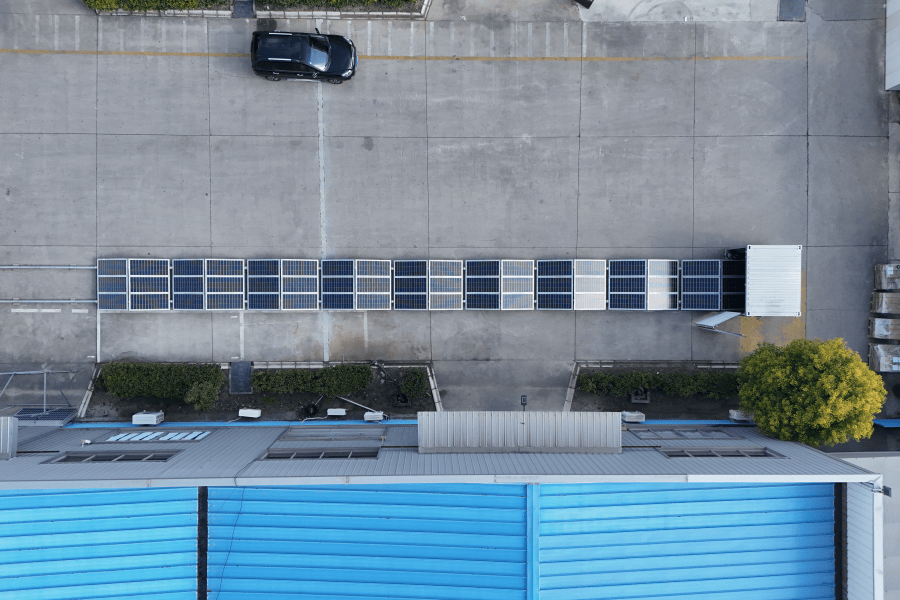
So, what's the solution? After two decades, I'm convinced it's the standardized, liquid-cooled solar-storage container. This isn't a theory. We're talking about a factory-integrated, pre-tested unit that arrives on your site with the batteries, inverter, cooling system, and safety controls all speaking the same language, already compliant with the key local standards (UL, IEEE, etc.). Your job shifts from complex electrical engineering to straightforward site preparation and connection. It turns a 6-8 month custom engineering nightmare into a 2-3 week installation process. That's the core of the Step-by-step Installation of Liquid-cooled Solar Container for Telecom Base Stations methodology we've perfected.
The Installation Blueprint: From Site Prep to Power-On
Let me walk you through the real-world steps, the way I'd explain it to a project manager over coffee. This process is why our clients in the EU and US are seeing ROI so much faster.
Phase 1: The Foundation & The Pad (Weeks 1-2)
It all starts with a solid, level concrete pad. We provide the exact specs, but it's straightforward. Simultaneously, the container is finishing its final checks at our facility. A key step here is coordinating the grid or generator interconnection point. Having clear drawings upfront is 80% of the success.
Phase 2: Delivery & Placement (Day 1)
The unit arrives on a flatbed. Using a crane, we set it on the pre-prepared pad. Because it's a standard 20ft or 40ft container footprint, there's no guesswork. We bolt it down, and just like that, the most complex system is physically in place.
Phase 3: The Critical Hookups (Days 2-4)
Now we connect the arteries. This is a sequential, safety-first process:
- Electrical AC/DC Links: Qualified technicians connect the main AC cables from your power source (grid tie-point or generator automatic transfer switch) and the DC cables from any on-site solar arrays to the pre-labeled terminals inside the container's main panel.
- Cooling System Commissioning: We fill the closed-loop liquid cooling system with its coolant, purge any air, and power on the pumps and chillers for a dry run. This is where that thermal management magic starts.
- Communications & Control: We link the container's master controller to your site SCADA or network monitoring system. This is plug-and-play with most major protocols.
Phase 4: Testing & Energization (Days 5-6)
We don't just flip a switch. We follow a strict sequence:
- Initial system self-check and insulation resistance tests.
- Gradual, software-controlled power-up of the battery racks, monitoring each cell's voltage and temperature.
- Functional tests of all modes: charge from grid/solar, discharge to site load, and seamless failover simulations.
- A final review with your team, handing over the system logs and a simple operator guide.
Real Numbers, Real Savings: The California Case
Let's talk about a real project. A regional telecom operator in Northern California had a cluster of three critical but remote cell towers. Each was on a diesel generator, with batteries that needed replacing every 4 years. Their challenges were high fuel costs, carbon emissions, and reliability fears during fire season grid shutdowns.
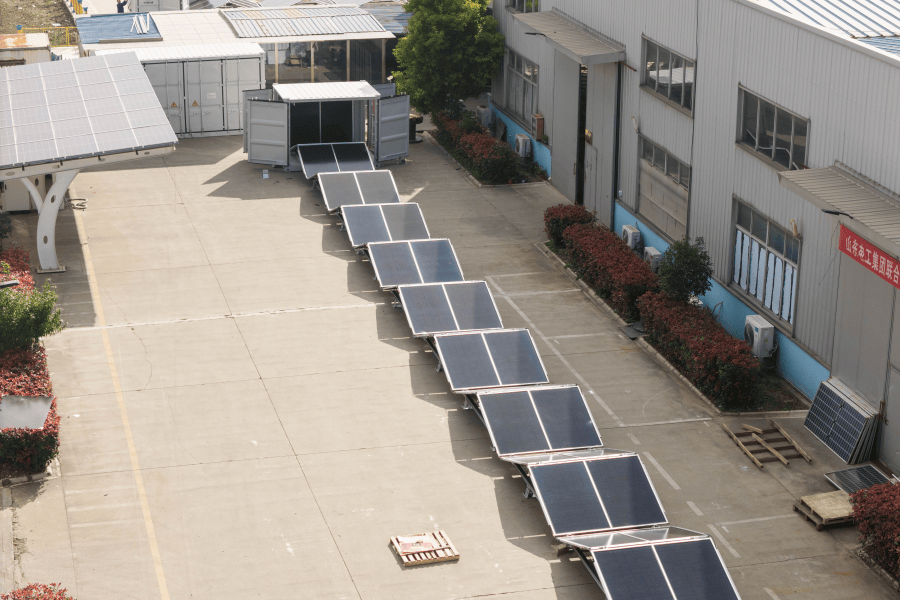
We deployed three of our liquid-cooled containerized BESS units, each paired with a ground-mounted solar array. The installation followed the step-by-step blueprint above. The outcome? Diesel runtime dropped by over 90%. The NREL has shown that hybrid renewable systems can reduce LCOE by up to 50% compared to pure diesel gensets, and this project landed right in that ballpark. But beyond the numbers, the client gained peace of mind. The liquid-cooled system maintained optimal battery temperature even during peak summer loads, and the pre-certified UL 9540 design smoothed the permitting process with the local authority having jurisdiction (AHJ).
Your Next Step: Making the Switch
Look, the technology isn't the barrier anymore. The barrier is often just knowing where to start. The step-by-step process demystifies it. If you're evaluating an upgrade or planning a new remote site, the first move is to get a site assessment that looks beyond just energy needs - it looks at access, logistics, and your long-term total cost of ownership. That's where our team comes in, not just as vendors, but as partners who've done this hundreds of times. We bring the local compliance knowledge (crucial for the US and EU markets) and the on-site experience to make your transition smooth.
So, what's the one remote site on your map that keeps you up at night? Imagine it running silently, reliably, and at a fraction of the cost. How much would that free up for your network's next big leap?
Tags: UL Standard BESS LCOE Europe US Market Thermal Management Renewable Energy Telecom Power
Author
James Zhang
20+ years agricultural energy storage engineer / Highjoule CTO