
Rapid Deployment Industrial ESS Container for Mining: A Step-by-Step Guide for Global Operations
Table of Contents
- The Remote Power Problem Isn't Just About Location
- The Real Cost of Waiting: More Than Just Diesel Bills
- A Faster Way Forward: The Pre-Engineered Container Solution
- Step-by-Step in the Field: What Deployment Actually Looks Like
- Beyond the Box: Technical Insights for Decision Makers
- Making It Work for Your Operation
The Remote Power Problem Isn't Just About Location
Honestly, when we talk about powering remote industrial sites C mining in Mauritania, a processing plant in Nevada, or a microgrid in Western Australia C the conversation often jumps straight to "off-grid" and "diesel." But after two decades on sites from the Atacama to Alberta, I've seen the core problem is more nuanced. It's not just where the power comes from, but how fast and reliably you can get a scalable, modern energy asset online. The traditional approach of custom-engineered, stick-built battery storage is a marathon of civil works, complex inter-trade coordination, and prolonged commissioning. For a mining CFO or operations head, this means capital is tied up, project timelines are vulnerable, and the promised savings from solar or wind integration are delayed by months, sometimes years.
The Real Cost of Waiting: More Than Just Diesel Bills
Let's agitate that pain point a bit. A study by the National Renewable Energy Laboratory (NREL) highlighted that soft costs - engineering, permitting, installation - can constitute up to 30-40% of a total BESS project cost in the US. That percentage skyrockets in remote, complex environments. Every day your energy transition project is in the "construction" phase, you're bleeding money: continued reliance on volatile diesel fuel, missed opportunity to lock in low-cost renewable power, and potential penalties for emissions or operational delays. I've been on sites where the foundation work alone for a bespoke BESS took longer than the entire delivery and commissioning of a containerized system. That's lost productivity you never get back.
A Case in Point: The Texas Industrial Park Pivot
I recall a project for a large industrial park in Texas. The initial plan was a traditional build. Permitting and detailed site-specific engineering dragged on. Then, a major utility incentive was announced with a strict commissioning deadline. They pivoted to a pre-fabricated, rapid-deployment container solution from a provider with UL 9540 and IEC 62933 standards baked into the design. The container arrived from the factory with the battery racks, thermal management, and fire suppression fully integrated and tested. We went from empty pad to grid-connected in under three weeks, catching that incentive window. The speed wasn't just convenient; it was financially transformative for the project's ROI.

A Faster Way Forward: The Pre-Engineered Container Solution
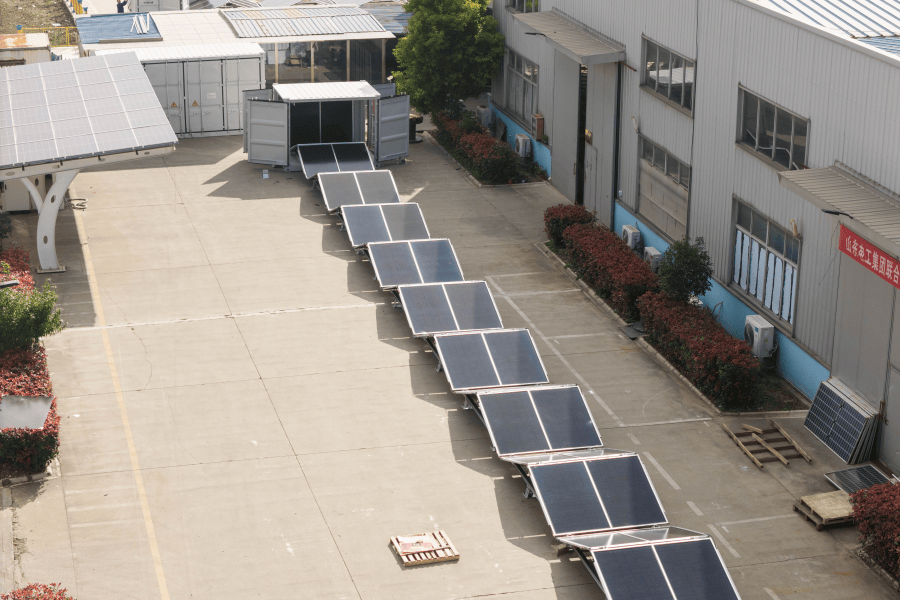
So, what's the solution? It's shifting the complexity from the field to the factory. A rapid-deployment industrial ESS container for an operation like a mine in Mauritania isn't a mysterious black box. It's a pre-engineered, fully integrated power plant module. Think of it like a data center container: all the critical systems C battery modules, HVAC, power conversion, safety, and controls C are assembled, wired, and rigorously tested in a controlled environment before it ever leaves the dock. This is the model we've championed at Highjoule. Our approach is to deliver a product that meets the stringent safety benchmarks (UL, IEC, IEEE) that North American and European operators demand, but with a deployment velocity suited for global challenges.
Step-by-Step in the Field: What Deployment Actually Looks Like
Let's demystify the installation process. For a mining operation, speed and simplicity are safety and profit.
- Step 1: Site Prep & Foundation. This is the most variable part. We work with local teams to prepare a level, compacted gravel pad or a simple concrete slab. Because the container is its own structural enclosure, you avoid the cost of building a dedicated battery house.
- Step 2: Delivery & Positioning. The container arrives via standard shipping logistics. Using a crane, it's placed on the prepared pad. I've seen this done in a matter of hours.
- Step 3: The "Plug-and-Play" Connections. Here's where the factory integration pays off. We're essentially making a handful of robust, pre-defined connections: the medium-voltage or low-voltage AC interface to your switchgear, a communication link for SCADA/control, and a water supply for the closed-loop thermal system if needed. It's vastly simpler than field-wiring hundreds of individual components.
- Step 4: Commissioning & Grid Sync. With integrated controls pre-configured, commissioning focuses on site-specific parameters and safety checks. The system performs self-diagnostics, and we run through functional tests with your operations team. The goal is a seamless handover.
This streamlined process is what turns a 6-month ordeal into a 4-week project. It dramatically reduces weather delays, on-site labor risks, and commissioning unknowns.
Beyond the Box: Technical Insights for Decision Makers
You don't need to be an engineer to grasp the key points that make this work. Let's break down two critical terms:
1. Thermal Management (The "C-rate" Dance): Batteries generate heat when they charge and discharge rapidly (a high "C-rate"). In a Mauritanian mining environment, you also have extreme ambient heat. A poorly managed thermal system kills battery life and risks safety. A high-quality container solves this with a dedicated, N+1 redundant HVAC system designed for the battery's needs, not just repurposed from a commercial unit. This precise control keeps the batteries in their sweet spot, ensuring you get the full cycle life and performance you paid for, directly optimizing your Levelized Cost of Storage (LCOS).
2. The LCOE/LCOS Win: The Levelized Cost of Energy (LCOE) from your onsite solar is falling. The Levelized Cost of Storage (LCOS) is the other half of the equation. Rapid deployment slashes the "soft costs" and gets the system storing and dispatching cheap energy faster. Every day earlier you offset diesel, you improve the project's net present value. This financial predictability is what resonates with boardrooms in London and New York.
Making It Work for Your Operation
The beauty of this model is its adaptability. The same core principles of factory integration, safety-by-design (aligning with UL 9540A test methodology for fire safety, for instance), and rapid deployment apply whether the destination is Mauritania or Minnesota. The difference is in the configuration C perhaps a higher ingress protection (IP) rating for dust, or a specific grid code compliance package for the local utility.
At Highjoule, our role isn't just to sell a container. It's to provide the upfront expertise to specify the right system, then leverage our experience to ensure the step-by-step installation is as smooth on your site as it is in our brochure. We handle the complex global logistics and provide the documentation packs that local inspectors need. The goal is to give your team a predictable, bankable energy asset, not a construction project.
So, the next time you're evaluating an energy storage project for a remote or time-sensitive site, ask yourself: Is your timeline and budget being consumed by construction, or is it focused on generating value? The step-by-step might just be simpler than you think.
Tags: UL Standard BESS LCOE Rapid Deployment Renewable Energy Industrial ESS Mining Operations Energy Storage System
Author
James Zhang
20+ years agricultural energy storage engineer / Highjoule CTO