
Step-by-step Installation of Rapid Deployment Off-grid Solar Generator for Eco-resorts
Contents
- The Quiet Challenge: Powering Paradise Isn't Easy
- Beyond the Brochure: The Real Cost of "Off-Grid"
- A Better Way: The Rapid-Deployment, Step-by-Step Blueprint
- Step 1: The Pre-Site Assessment C It's Not Just a Survey
- Step 2: The Foundation & Container C Getting it Square and Secure
- Step 3: The Heart of the System C BESS & Power Electronics
- Step 4: Solar Array Integration & Final Commissioning
- Real-World Proof: A Case from California's Redwood Coast
- Your Next Step: From Vision to Reality
The Quiet Challenge: Powering Paradise Isn't Easy
Honestly, if I had a dollar for every time I've sat with a resort developer who's passionate about sustainability but visibly stressed about their energy plan, well, let's just say I'd have a lot of dollars. You envision a pristine, self-sufficient getaway, a true escape from the grid. But then the reality hits: complex permitting, logistical nightmares of getting equipment to remote sites, and the daunting question of whether the system will actually work reliably when your first guests arrive. I've seen this firsthand on site - the scramble, the unexpected costs, the delays. It's the unglamorous side of building an eco-paradise.
Beyond the Brochure: The Real Cost of "Off-Grid"
The dream often gets agitated by a few hard truths. First, time is capital. A traditional custom-built microgrid can take 12-18 months from design to commissioning. Every month of delay is a month of lost revenue. Second, unpredictable Levelized Cost of Energy (LCOE). Without a standardized approach, hidden costs in extended labor, specialized parts, and ongoing maintenance can balloon your energy costs over the system's 15+ year life. Finally, and most critically, safety and standards. In remote locations, you can't compromise. Systems need to be inherently safe, compliant with strict codes like UL 9540 for energy storage and IEEE 1547 for grid interconnection (even for islanded grids, it's a best-practice framework), and manageable by on-site staff. A single thermal event or system failure isn't just an outage; it's a reputational disaster.
A Better Way: The Rapid-Deployment, Step-by-Step Blueprint
So, what's the solution? It's moving from a "construction project" mentality to a "precision deployment" process. At Highjoule, we've refined this into a replicable, rapid step-by-step installation for containerized solar generators. The core idea is leveraging pre-engineered, factory-tested power blocks - think of them as "energy LEGOs" - that drastically cut field time and uncertainty. Let me walk you through how this actually works on the ground.

Step 1: The Pre-Site Assessment C It's Not Just a Survey
This isn't about just taking photos. We conduct a virtual and, if needed, physical assessment focusing on three things: Logistics access (can a flatbed truck with a 40-ft container get here?), geotechnical stability (the soil report is your best friend), and energy load profiling. We'll analyze your planned occupancy, kitchen, water heating, and HVAC needs - often using data from similar resorts. This step defines the system size. For example, a 50-lodge resort might need a 500kW solar array paired with a 1MWh battery system. Getting this right upfront prevents the painful and expensive "oversizing" or "undersizing" I've seen doom projects.
Step 2: The Foundation & Container C Getting it Square and Secure
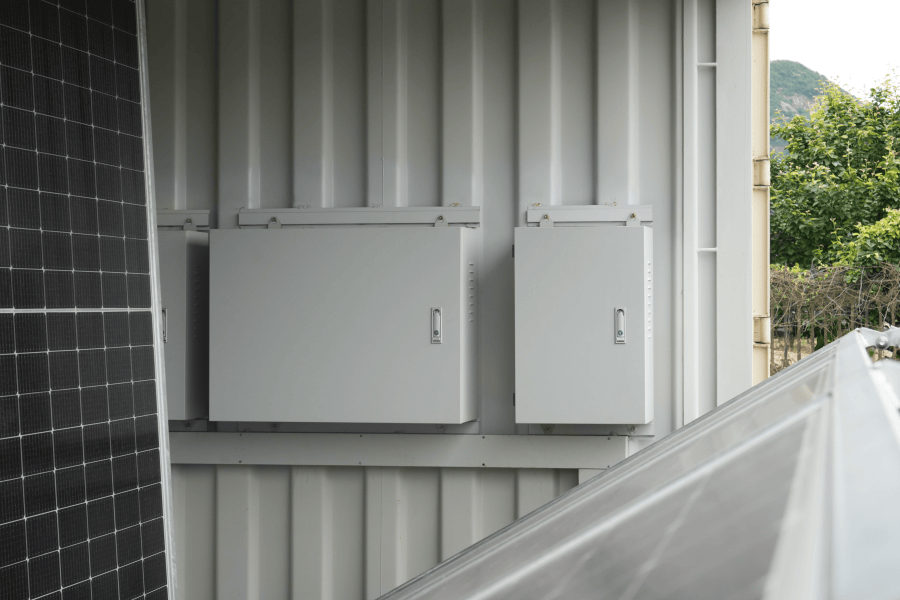
Once the site plan is locked, we prepare for the main event. The foundation is typically a simple, reinforced concrete pad. The key is precision leveling. When our pre-integrated container arrives - housing the battery racks, HVAC, fire suppression, and power conversion systems all wired and tested at the factory - it gets craned into place. This is where days or weeks of field assembly are reduced to a single day's work. The container itself is a fortress: built to ISO standards, with NEMA 3R environmental protection and integrated thermal management that's been validated to UL standards. It's designed to just sit there and work, reliably, for decades.
Step 3: The Heart of the System C BESS & Power Electronics
Inside the container, the magic is in the pre-configured integration. The Battery Energy Storage System (BESS) is matched with bi-directional inverters and a system controller. Here's some plain-English expert insight: we talk about C-rate - that's basically how fast you can charge or discharge the battery. For a resort, you don't need an ultra-high C-rate like a grid-frequency application; you need a stable, long-duration discharge (a lower C-rate) to get through the night. That choice directly optimizes your LCOE and extends battery life. The thermal management system is equally critical. It's not just air conditioning; it's a precise liquid-cooling or forced-air system that maintains every battery cell within a 2-3C window, which is the single biggest factor in preventing premature degradation. This isn't an afterthought; it's engineered in from day one.
Step 4: Solar Array Integration & Final Commissioning
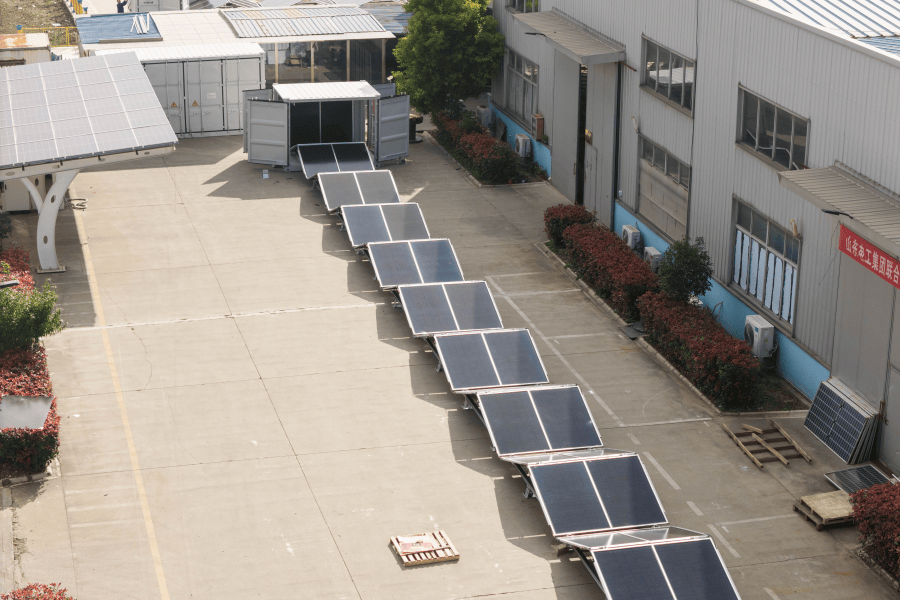
With the power hub in place, the solar array installation becomes a straightforward task of mounting panels and running DC lines to the container. The final, non-negotiable step is comprehensive commissioning. This isn't just "flipping the switch." We run simulated load tests, cycle the batteries, verify all safety shutdowns, and train your on-site team on the simple, web-based monitoring dashboard. We ensure the system meets all relevant IEC 62477 (power converter) and UL 9540 (ESS) safety benchmarks, giving you and your insurers peace of mind.
Real-World Proof: A Case from California's Redwood Coast
Let me give you a real example. A high-end, 30-cabin eco-resort in Northern California was facing a $1.2 million quote to extend the grid through 5 miles of forest. The timeline was 2+ years. They chose a rapid-deployment off-grid solar generator path. We deployed a 400kW/800kWh Highjoule Titan Series containerized system. The on-site work, from empty pad to powered resort, was under 11 weeks. The resort opened on schedule, and their monitored LCOE is sitting 30% below what the local utility's rate would have been. The head engineer there told me the simplicity of the interface is what he values most - he's a hospitality pro, not a full-time power engineer.
Your Next Step: From Vision to Reality
The difference between an energy headache and a seamless, silent power provider comes down to process. The step-by-step, rapid-deployment approach transforms complexity into predictability. It brings the certainty of UL and IEC standards to the most remote locations and turns the LCOE from a mystery into a managed metric.
So, what's the one logistical constraint about your site that keeps you up at night? Is it the road access, the seasonal load variance, or the local permitting hurdles? Identifying that is often the perfect place to start a practical conversation. For a deeper dive into the technical standards that make systems like this reliable, organizations like the National Renewable Energy Lab (NREL) publish fantastic, accessible resources on microgrid best practices.
Tags: UL Standard BESS Renewable Energy Off-grid Solar Microgrid Eco-Resort
Author
James Zhang
20+ years agricultural energy storage engineer / Highjoule CTO