
Scalable 5MWh BESS Installation for Farm Irrigation: A Step-by-Step Guide
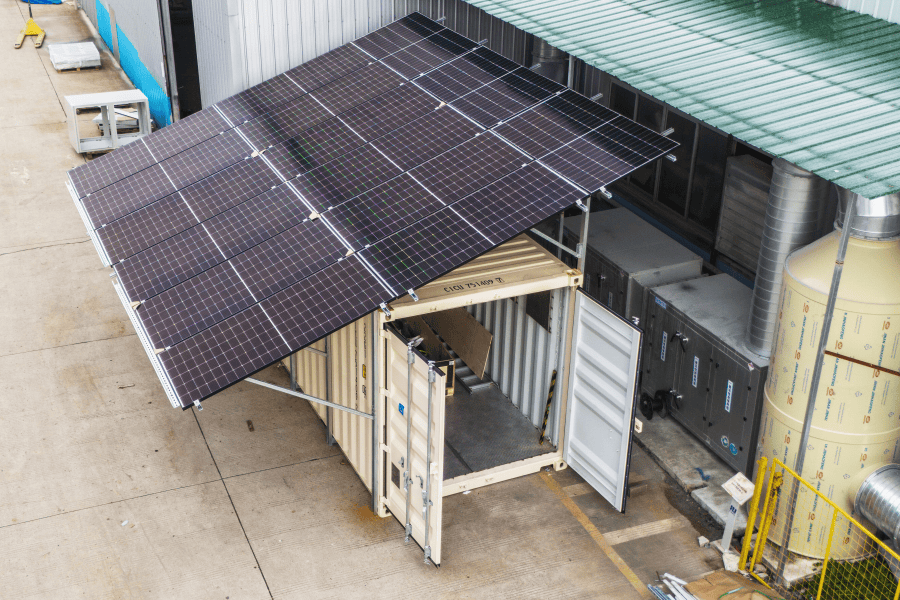
Table of Contents
- The Real Problem: It's Not Just About Power, It's About Predictability
- Why It Hurts: The High Cost of Unreliable Power for Modern Farms
- The Modular Solution: Building Your 5MWh Power Bank, One Block at a Time
- Step-by-Step Walkthrough: From Dirt to Dispatch
- The Expert Touch: What We Look For On Site That Data Sheets Don't Tell You
- Making It Real: How This All Comes Together for Your Operation
The Real Problem: It's Not Just About Power, It's About Predictability
Let's be honest. If you're managing a large-scale agricultural operation in California, Spain, or anywhere relying on irrigation, you've felt the pinch. It's not just about rising energy costs C though that's a huge part C it's about the unpredictability. You plan your irrigation cycle around crop needs, only to have a grid constraint, a time-of-use rate spike, or a simple voltage dip throw everything off. I've been on sites where a two-hour outage during a critical watering window put an entire season's premium crop at risk. The problem isn't a lack of solar or wind; it's a lack of control over when you can use that energy.
Why It Hurts: The High Cost of Unreliable Power for Modern Farms
This unpredictability translates directly to your bottom line. First, there's the raw cost. According to the International Energy Agency (IEA), electricity costs for agricultural pumping can represent up to 40% of a farm's operational expenses in some regions. When you're forced to pump during peak tariff periods, that number balloons.
But the agitation goes deeper. Modern pivot and drip irrigation systems are sensitive. Voltage fluctuations can damage pumps and controllers. Intermittent power disrupts precise schedules, leading to water stress or runoff. And let's talk about resilience C with climate patterns shifting, having a dependable, on-site power source for irrigation isn't a luxury anymore; it's business continuity. I've seen firsthand on site how a well-timed BESS can turn a grid advisory into a non-event, allowing irrigation to continue seamlessly while others are scrambling.

The Modular Solution: Building Your 5MWh Power Bank, One Block at a Time
So, what's the fix? Enter the scalable, modular 5MWh utility-scale Battery Energy Storage System (BESS). Think of it not as a single, monolithic unit, but as a set of powerful, pre-engineered building blocks. This approach is a game-changer for agriculture. Why? Because farms evolve. Your water needs this year might be different from next year's. A modular system, like the architecture we use at Highjoule, lets you start with what you need C say, a 2.5MWh core C and scale up by adding identical, pre-tested modules as your operation grows or as you add more solar capacity. It's future-proofing, plain and simple.
Step-by-Step Walkthrough: From Dirt to Dispatch
Let's walk through what installing a system like this actually looks like. Forget the theory; here's the field manual version.
Phase 1: Site Assessment & Foundation (Weeks 1-2)
This is where we avoid 90% of future headaches. We're not just looking for a flat spot. We're analyzing soil bearing capacity, drainage (battery containers don't like sitting in water, trust me), proximity to your main irrigation pump substation, and access for cranes and trucks. We design a reinforced concrete pad that meets local seismic codes C a must in places like California or Italy. All cabling conduits are laid in this phase. It's meticulous, unglamorous work, but it's the bedrock of a safe, 20-year asset.
Phase 2: Modular Container Placement & Interconnection (Week 3)
This is where the modular magic happens. Instead of wrestling with one giant 40-foot container, we position multiple smaller, standardized modules. Each is a self-contained unit with its own battery racks, thermal management, and fire suppression C all pre-tested and certified to UL 9540 and IEC 62619 standards before it leaves the factory. We crane them into place, bolt them to the foundation, and then connect the power and data buses between them. It's like assembling a high-tech Lego set. The beauty? If a module needs service, it can be isolated without taking the entire 5MWh system offline. Your irrigation keeps running.

Phase 3: Power & Control Integration (Week 4)
Here, we tie the BESS into your world. We install the Power Conversion System (PCS) and the medium-voltage transformer, making the final connection to your farm's main electrical panel or pump controller. The brain of the operation C the Energy Management System (EMS) C is configured. This is where we input your irrigation schedule, utility rate structure, and solar production forecasts. The system learns to automatically charge when power is cheap or sunny, and discharge to run pumps during expensive peak periods or at night. Compliance with IEEE 1547 for grid interconnection is validated here. It's the integration phase that turns a battery into a profit center.
Phase 4: Commissioning & Handover (Week 5)
We don't just flip a switch. We run through hundreds of test sequences: full capacity charge/discharge cycles, simulated grid failures, communication checks with your SCADA system. We verify every safety protocol. Then, we sit down with your team. We hand over the keys C literally and figuratively C with clear manuals and training on the monitoring dashboard. Our local service network is flagged, so you know who to call, not a generic 1-800 number.
The Expert Touch: What We Look For On Site That Data Sheets Don't Tell You
Okay, technical bit made simple. When we talk about a system like this, we obsess over three things:
- C-rate: Fancy term for how fast you can charge or discharge the battery. For irrigation, you need a high enough C-rate to support the sudden, large load when multiple big pumps kick on. A wimpy C-rate means your battery can't keep up, and the grid has to step in C defeating the purpose. We spec for real-world surge loads.
- Thermal Management: Batteries generate heat. In a 45C (113F) field in Texas or Andalusia, that's a problem. Passive cooling often fails. We insist on liquid-cooled or advanced forced-air systems that maintain an optimal temperature range. This is the single biggest factor in extending battery life and preventing safety incidents. I've opened poorly cooled units, and the degradation is startling.
- Levelized Cost of Storage (LCOS): This is your true cost per kWh over the system's life. It's not just the sticker price. A cheaper battery that degrades 30% in 5 years has a terrible LCOS. Our focus on thermal management, high-cycle life chemistry, and modularity (which reduces replacement costs) is all about driving your LCOS down. That's the number that matters on your balance sheet.
Making It Real: How This All Comes Together for Your Operation
Take a project we completed in the Pacific Northwest for a large hops farm. Their challenge was classic: expensive peak-demand charges from running irrigation pumps and a desire to use their on-site solar at night. We deployed a scalable 4MWh modular BESS. The installation followed the steps above on a compact plot adjacent to their pump house. The result? They shifted over 85% of their irrigation load off-peak, slashing their demand charges. Their solar self-consumption jumped to nearly 100%. And because the system is modular, they're already planning to add another 2MWh block next season as they expand.
The point is this: the technology is proven. The standards (UL, IEC, IEEE) give us a clear safety and performance roadmap. The real value comes from a partner who understands both the technology and the dirt-under-the-fingernails reality of your operation. It's about designing and installing a system that doesn't just work on paper, but works relentlessly, season after season, through heatwaves and tariff changes, to make your energy predictable and your operation more resilient.
So, what's the one irrigation load on your farm that keeps you up at night worrying about the next grid alert or utility bill?
Tags: UL Standard BESS LCOE Renewable Energy US Europe Market Modular Battery IEEE 1547 Agricultural Energy Storage
Author
James Zhang
20+ years agricultural energy storage engineer / Highjoule CTO