
Step-by-Step Installation of Scalable Modular Photovoltaic Storage for Island Microgrids
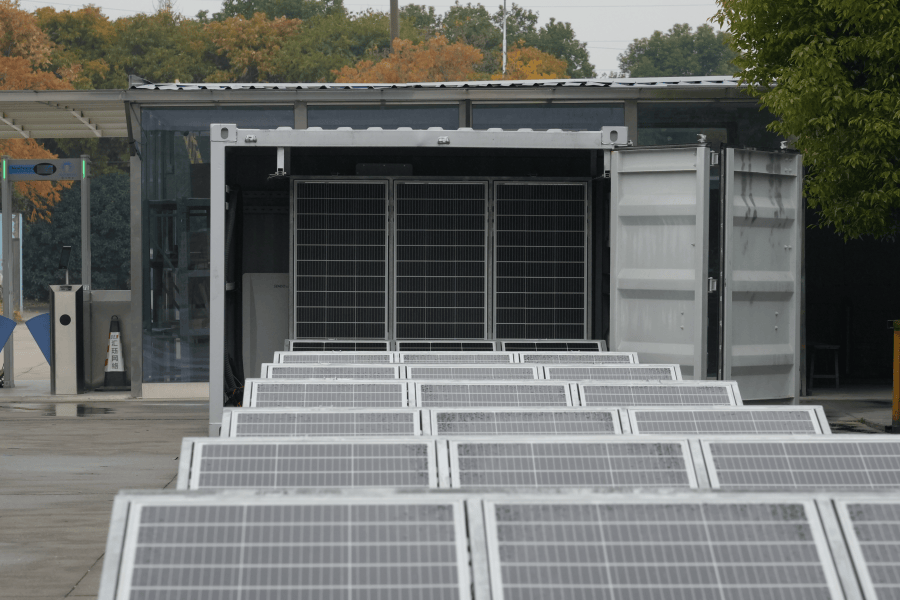
The Real-World Guide to Installing Scalable Storage for Island Microgrids
Honestly, if I had a nickel for every time I've sat across from a project developer or a community energy manager on a remote island, hearing the same set of concerns?- I'd have a lot of nickels. The dream is clear: energy independence, resilience against fuel supply shocks, and a cleaner footprint. But the path to get there? It's often shrouded in uncertainty, especially when it comes to the battery storage system C the heart of a modern microgrid. I've seen firsthand on sites from the Caribbean to the Scottish Isles that a misstep in the installation and planning phase can turn that dream into a very expensive, underperforming reality.
Quick Navigation
- The Core Problem: Why "Big & Custom" Fails Remote Projects
- The Domino Effect: Cost, Complexity, and Long-Term Risk
- The Modular Solution: Thinking in Blocks, Not Monoliths
- A Realistic, Step-by-Step Installation Process
- A Project Manager's Perspective: Case Study Snapshot
- Key Technical Insights (Without the Jargon)
- Making It Work For Your Project
The Core Problem: Why "Big & Custom" Fails Remote Projects
The traditional approach for island microgrids has been to treat the Battery Energy Storage System (BESS) as a one-off, custom-engineered monolith. You spec a massive container, it gets built in a factory thousands of miles away, shipped as a single, inflexible unit, and then you pray it fits the site constraints and future needs. The International Renewable Energy Agency (IRENA) notes in their island reports that this lack of standardization and scalability is a primary barrier to faster renewables adoption.
On a remote island, every single shipment is a logistical event. Specialized heavy-lift equipment might not be available. Site grading might be more limited. And frankly, your energy needs in year one might be half of what they'll be in year five. A fixed, large-scale system forces you to overbuild initially (sinking capital you don't need to) or limits your future growth, locking you into a costly upgrade path later.
The Domino Effect: Cost, Complexity, and Long-Term Risk
Let's agitate that pain point a bit. A non-modular, custom BESS doesn't just have a high upfront cost. It creates a cascade of downstream challenges:
- Installation Nightmares: Coordinating the arrival of a 40-foot container with a heavy-duty crane on a island with one small port? I've managed that ballet. It's stressful, weather-dependent, and expensive.
- Safety & Standards Hurdles: Getting a one-off system fully certified to UL 9540 (the essential standard for BESS safety in the US) or IEC 62933 internationally can be a protracted process. Local inspectors might be unfamiliar with a unique design.
- Operational Inflexibility: If one module in a monolithic system has a fault, the entire system might need to be taken offline. On an island, that's not an inconvenience; it's a potential crisis.
- LCOE Impact: The Levelized Cost of Energy (LCOE) C the true measure of your project's economic viability C gets bloated by high installation costs, financing for overcapacity, and uncertain maintenance.
The Modular Solution: Thinking in Blocks, Not Monoliths
This is where the scalable, modular approach isn't just a "nice-to-have"; it's a fundamental shift in project execution. Instead of a single unit, you're working with pre-engineered, factory-assembled blocks. Think of them as high-performance building blocks for your microgrid. Each block C say, a 250kW/500kWh cabinet C is its own fully functional, UL/IEC-certified system. They are designed from the ground up to be combined seamlessly.
At Highjoule, we built our ModuStack series around this philosophy. Each module arrives site-ready, with its own thermal management, controls, and safety systems already integrated and validated. This isn't a theoretical concept; it's a direct response to the logistical and financial realities we've witnessed on remote projects for two decades.
A Realistic, Step-by-Step Installation Process
So, what does this modular approach look like on the ground? Here's a more practical, less theoretical sequence:
Phase 1: Pre-Site & Logistics (The Most Critical Phase)
This happens long before the ship docks. With modular units, your site prep is simpler. You're preparing a stable pad, not a giant custom foundation. The real work is in planning. We work with clients to stagger deliveries. You might ship the first four modules to cover your Phase 1 load, then add more later as demand grows or budget allows. This dramatically reduces initial freight costs and simplifies handling. Each module is sized for standard container handling equipment, which is often already available locally.
Phase 2: Physical Deployment & Interconnection
Modules are offloaded and positioned. Their beauty is in the plug-and-play (or rather, connect-and-commission) design. Pre-fabricated, armored interconnects link the modules together for power and data. This is where you see the time savings. I've seen a 1 MWh modular system go from crates to grid-forming in days, not weeks, compared to a traditional container. The commissioning process is also modular C you can bring up part of the system while continuing to build out the rest.

Phase 3: Grid Integration & Commissioning
Here, the built-in intelligence of a modern modular system shines. A central controller, often pre-configured, recognizes the new modules as they come online. The system's overall C-rate C a measure of how quickly it can charge or discharge relative to its capacity C scales predictably. If each module is rated for a 1C discharge, ten together give you a 1C discharge for the total bank. This predictability is gold for your grid operator. Safety testing, like fault current tests, is streamlined because each module's protection system is already proven.
A Project Manager's Perspective: Case Study Snapshot
Let me give you a flavor from a project in the Outer Hebrides (Scotland). The challenge was to augment a existing diesel-wind hybrid system, reduce fuel burn by over 60%, and allow for future community expansion.
The Old-School Tender: Called for a single 2 MWh container. Port access was limited, requiring expensive barge rental. The entire system had to be financed upfront.
The Modular Pivot: We proposed a scalable modular setup. Phase 1: Deployed 1 MWh using four ModuStack units, shipped on standard ferries and moved with a local telehandler. Phase 2: Two years later, as more homes connected, they added another 1 MWh. The existing controller recognized the new modules, and the system scaled its capacity and power output automatically. The local electrician, trained once on the first modules, handled the second phase with minimal support. The LCOE for the phased project was significantly lower due to reduced capital outlay and faster time-to-revenue in Phase 1.
Key Technical Insights (Without the Jargon)
- Thermal Management is Everything: In island climates, ambient temperature matters. A good modular design has independent, yet coordinated, cooling per module. If one cooler fails, the others can often compensate, and you can service it without a full shutdown. This inherent redundancy is a huge reliability boost.
- Understanding "Scalable" C-rate: Don't let this term intimidate you. Simply put, if you need high power for short bursts (like stabilizing the grid when a diesel generator trips), you need a high system C-rate. With modular blocks, your total power (in kW) scales linearly with capacity (in kWh). You design the system's "power personality" by the number of blocks.
- The Standards Are Your Shield: Insist on modules that are UL 9540 listed or IEC 62933 certified as complete units. This means the safety case C from cell to cabinet to fire suppression C has been validated by a Nationally Recognized Testing Laboratory (NRTL). It speeds permitting, satisfies insurers, and gives you peace of mind. It's non-negotiable in our book.

Making It Work For Your Project
The step-by-step installation of a scalable, modular system is ultimately about de-risking your project. It turns a complex, high-stakes deployment into a series of manageable, repeatable steps. It aligns your capital expenditure with your actual growth trajectory, which is something any financial controller on the mainland or the island will appreciate.
The question isn't really about whether modular is the future - it's about how quickly your next project can benefit from its flexibility. What's the single biggest logistical hurdle you're anticipating for your remote storage deployment?
Tags: UL Standard BESS Photovoltaic Storage Modular Energy Storage Island Microgrid Remote Power
Author
James Zhang
20+ years agricultural energy storage engineer / Highjoule CTO