
Step-by-step Installation of Smart BMS Monitored Energy Storage Container for Industrial Parks
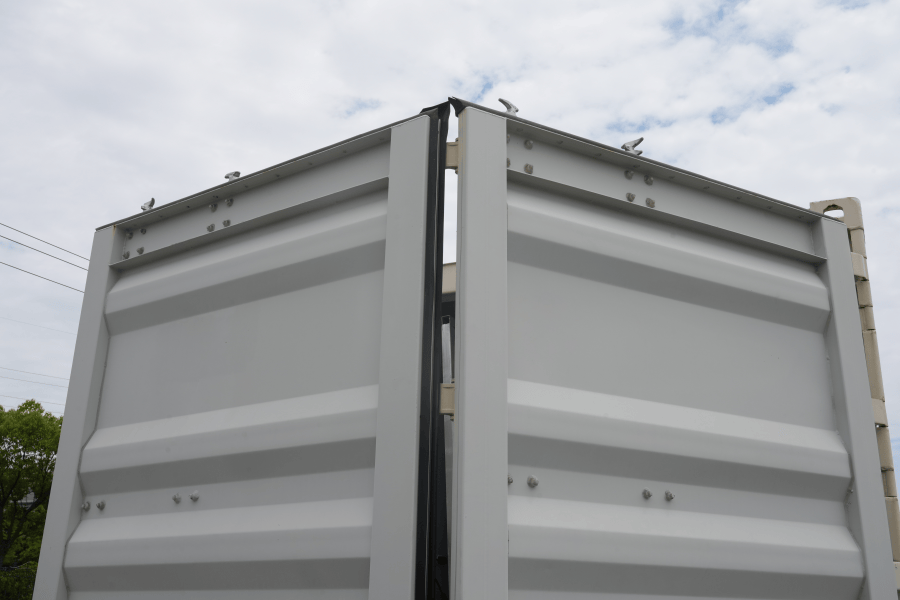
The Real-World Guide to Installing a Smart BESS Container in Your Industrial Park
Honestly, after two decades on sites from California to North Rhine-Westphalia, I've seen the same scene play out too many times. An industrial park manager is excited about their new battery storage container - it promises peak shaving, backup power, sustainability credits. But when that 40-foot container arrives on site, the excitement can quickly turn into anxiety. "Now what?" The gap between delivery and a fully operational, safe, and revenue-generating asset is where projects stumble, budgets inflate, and safety can get compromised if you're not meticulous. Let's talk about how to bridge that gap, step-by-step.
In This Article
- The Real Problem Isn't the Hardware, It's the "Day One"
- Why Your Installation Process Directly Impacts LCOE & Safety
- The Smart BMS: Your Digital Project Manager
- A Practical, Step-by-Step Breakdown
- Beyond Commissioning: The Long Game
The Real Problem Isn't the Hardware, It's the "Day One"
The industry often focuses on battery chemistry or inverter specs - and for good reason. But from my firsthand experience, the most critical, yet overlooked, phase is the installation and commissioning window. A report by the National Renewable Energy Laboratory (NREL) highlighted that project delays and integration issues can increase soft costs by up to 30%, eroding your planned return on investment. We're not just talking about a few days' delay; we're talking about complex interdependencies: local electrical code compliance (think NEC 2023 in the US, or VDE-AR-E 2510-50 in Germany), utility interconnection approvals, and the precise thermal management setup that your battery's lifespan depends on. Get any step wrong, and you're looking at re-work, failed inspections, or worse, a system that underperforms for its entire life.
Why Your Installation Process Directly Impacts LCOE & Safety
Let's get technical for a moment, but I'll keep it simple. Your Levelized Cost of Storage (LCOS) isn't just determined by the purchase price. It's a function of installation cost, system efficiency, degradation rate, and lifetime. A rushed site prep that leads to poor airflow around the container? That increases cooling loads and hurts efficiency. An improper commissioning of the Battery Management System (BMS) can cause cells to imbalance faster, accelerating degradation. And from a safety standpoint, which is non-negotiable, adherence to standards like UL 9540 (system level) and UL 1973 (batteries) isn't just about the product you buy - it's about how it's integrated on-site. I've witnessed how a perfectly certified container can face compliance headaches because of on-site wiring or grounding that didn't meet the same rigorous standard.
The Smart BMS: Your Digital Project Manager (and Lifelong Guardian)
This is where modern systems change the game. We're no longer talking about a basic BMS that just monitors voltage and temperature. A Smart BMS with integrated, cloud-connected monitoring is the cornerstone of a smooth installation. Think of it as having a expert embedded in every module. During the Step-by-step Installation of Smart BMS Monitored Energy Storage Container for Industrial Parks, this system transitions from a passive checker to an active guide.
For instance, at Highjoule, our platform provides real-time, step-by-step validation for the commissioning crew. As cables are connected, the Smart BMS can verify polarity and communication links before power is applied, preventing potentially catastrophic errors. It logs every parameter from day zero, creating a perfect digital birth certificate for the asset. This isn't just convenient; it's a massive risk mitigator. It turns what used to be a nervous, multi-day process of manual checks into a streamlined, documented procedure.

A Practical, Step-by-Step Breakdown for Industrial Parks
So, what does a robust process look like? Here's a distilled view from hundreds of deployments.
Phase 1: Pre-Arrival C The Foundation (Weeks 1-4)
Site Audit & Design Finalization: This goes beyond a civil engineer's plot plan. We conduct a joint review with the client's electrical team to finalize the single-line diagram, ensuring it's stamped for local compliance. Cable tray routes, utility meter location, and fire department access are all locked in.
Civil Works & Foundation: The container pad isn't just a slab of concrete. It must be level to extreme tolerances (we specify < 3mm over 10m) to prevent racking stress, and include embedded conduits and grounding rods per IEEE 80. This is where future water ingress or structural issues are prevented.
Utility & AHJ Coordination: All paperwork for the interconnection agreement and building permit is submitted. Having a dedicated project manager who speaks the language of the local Authority Having Jurisdiction (AHJ) is priceless.
Phase 2: Delivery & Positioning (Day 1)
The crane operation is a ballet of precision. The Smart BMS comes into play early here. Before the container is even powered, technicians can connect via a secure local network to the BMS to confirm no "transport mode" alarms are active and that all modules reported stable during transit. The container is placed within 50mm of its target position on the foundation.
Phase 3: Mechanical & Electrical Integration (Days 2-5)
- Anchoring & Weatherproofing: The container is seismically anchored. All cable penetrations are sealed with UL-listed fire stops.
- DC & AC Busbar Connection: This is a high-risk task. Teams use calibrated torque wrenches on every connection, with sequences verified by the Smart BMS. A connection log is automatically generated.
- Thermal Management System Startup: The HVAC/ liquid cooling loop is charged, leak-tested, and run independently. We verify the temperature gradient across the container is within 3C before batteries are activated.
Phase 4: Commissioning & Acceptance (Days 6-10)
This is the crescendo, guided by the Smart BMS.
| Step | Action | Smart BMS Role |
|---|---|---|
| 1. Initialization | Gradual power-up of control systems. | Performs self-diagnostics, reports health of every cell, module, and string. |
| 2. Functional Testing | Test communication between BMS, inverters, and site SCADA. | Validates protocol handshake (e.g., Modbus TCP, SunSpec). Simulates grid signals. |
| 3. Performance Verification | Execute a predefined charge/discharge cycle at various C-rates (e.g., 0.2C, 0.5C). | Measures actual capacity vs. nameplate, tracks efficiency (round-trip), and maps thermal performance. Flags any outlier cells instantly. |
| 4. Safety System Test | Manually trigger smoke detection, gas detection, and emergency stop circuits. | Confirms all alarms are reported locally and to the remote monitoring center. Verifies ventilation system failsafe activation. |
I remember a project in Texas where the Smart BMS caught a slight imbalance in one string during this phase - it was a single loose busbar bolt that manual checks missed. Finding it then saved weeks of troubleshooting later.
Beyond Commissioning: The Long Game
The Step-by-step Installation of Smart BMS Monitored Energy Storage Container for Industrial Parks doesn't end when the utility gives the "go-live." That's when its true value compounds. The Smart BMS shifts from a commissioning tool to a 24/7 financial and safety sentinel. It continuously optimizes charge/discharge cycles to your specific tariff, minimizes degradation by keeping every cell in its happy zone, and provides predictive alerts - like suggesting a filter change for the HVAC before it impacts cooling.
This proactive stance, backed by local service partners who can access the same data dashboard you do, is what turns a capital expense into a resilient, profit-generating asset. It's the difference between just having a battery and owning a reliable, intelligent energy asset.
So, when you're evaluating proposals, look beyond the $/kWh price tag. Ask the vendor: "Walk me through your day-one commissioning procedure. How does your system prove to me, on site, that every cell is balanced and safe before we push the start button?" The answer will tell you everything you need to know about the real cost and reliability of your storage investment.
Tags: UL Standard BESS LCOE Europe US Market Industrial Energy Storage Renewable Energy Smart BMS Energy Container
Author
James Zhang
20+ years agricultural energy storage engineer / Highjoule CTO