
Deploying Tier 1 Pre-Integrated BESS for Telecom: A US & EU Case Study
Quick Navigation
- The Silent Challenge for Telecom Operators
- Why This Hurts Your Bottom Line & Operations
- The Field-Tested Solution: Pre-Integrated, Tier 1 Power
- Case in Point: A Mountainous European Deployment
- What's Really in the Box? An Engineer's Breakdown
- Making It Real for Your Next Site
The Silent Challenge for Telecom Operators
Let's be honest. When we talk about powering remote telecom towers or even urban base stations needing backup, the conversation quickly turns to diesel gensets. It's the old reliable, right? But between rising fuel costs, maintenance headaches, noise complaints, and let's not forget carbon targets, that reliability is getting expensive. I've been on sites from the Arizona desert to the Scottish Highlands, and the pattern is the same: a scramble for cleaner, more resilient power that doesn't break the bank.
The logical pivot is solar-plus-storage. But here's the real-world snag I see constantly: the piecemeal approach. Operators source PV panels from one vendor, a battery rack from another, an inverter from a third, and then hire a local crew to wire it all together in a container. It sounds flexible, but on the ground, it's a recipe for integration headaches, extended commissioning times, and finger-pointing when something goes wrong. Safety certification becomes a labyrinth, especially when you're dealing with both North American (UL 9540, UL 1973) and European (IEC 62619, IEC 62477) markets. One mismatched component can hold up the entire project.
Why This Hurts Your Bottom Line & Operations
This isn't just an engineering nuisance. It directly hits your key metrics. The Levelized Cost of Energy (LCOE) for that site balloons with every day of delayed commissioning and every extra hour of engineering oversight. More critically, a non-optimized, "frankenstein" system often suffers in efficiency. The battery management system (BMS) might not communicate perfectly with the hybrid inverter, leading to suboptimal charging cycles. Thermal management - absolutely critical for both safety and cell longevity - can be an afterthought in a cobbled-together container.
According to the National Renewable Energy Laboratory (NREL), standardization and pre-integration can reduce BESS balance-of-system costs by up to 30%. That's not just hardware; it's the avoided soft costs of design, permitting, and interconnection. For a telecom network with hundreds of sites, that percentage translates into massive capital preservation.
The Field-Tested Solution: Pre-Integrated, Tier 1 Power
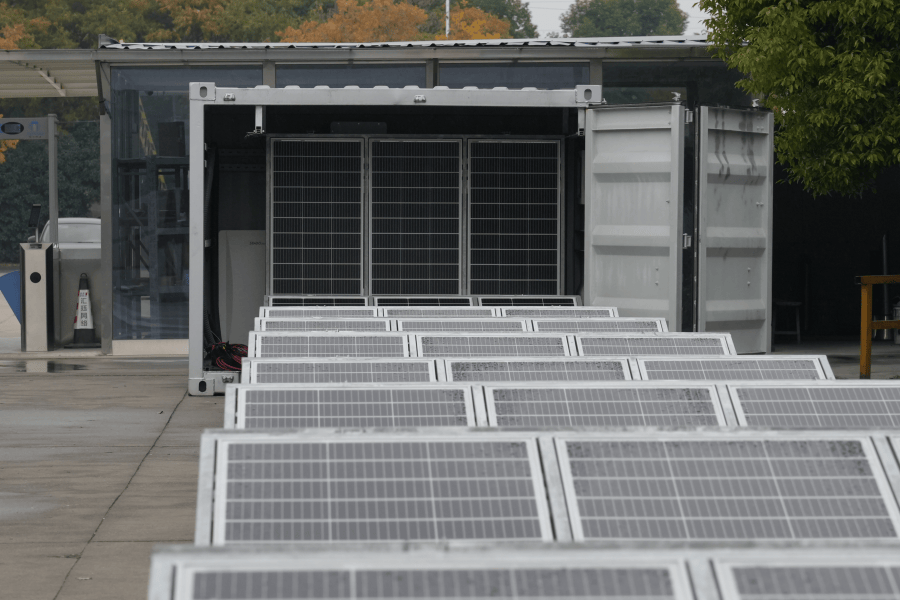
This is where the concept of a pre-integrated PV container, built from the ground up with Tier 1 battery cells, shifts from a brochure promise to a field engineer's best friend. We're not talking about putting parts in a box. We're talking about a system where the electro-chemistry, the power conversion, the thermal management, and the safety systems are designed as a single, cohesive unit. It arrives on your site as a "power plant in a box," with a single set of certifications and a single point of responsibility.
At Highjoule, our approach has always been to engineer out the site risks upfront. For our telecom clients, this means the container isn't just a shell; it's a climate-controlled, secure environment for the most valuable component: the battery. We spec only Tier 1 cells - think of the brands you see in top EVs - not just for performance, but for their traceability and proven degradation curves. This allows us to give realistic, bankable warranties that off-the-shelf assemblies often can't match.
Case in Point: A Mountainous European Deployment
Let me give you a real example from last year. A major operator in Central Europe needed to upgrade a critical but remote base station in the Alps. The challenges were classic: limited grid connection, harsh winters, expensive and unreliable fuel delivery for the legacy genset, and a strict environmental permitting process.
The solution was a 120kW solar array feeding into a pre-integrated 280kWh containerized BESS using Tier 1 NMC cells. Because the entire unit - solar inverters, battery racks, HVAC, fire suppression (UL 9540A test-informed design) - was assembled and tested in our facility, the on-site work was drastically simplified.

Here's what made the difference on the ground:
- Commissioning Time: From delivery to grid-sync took 3 days, not 3 weeks. The control system was pre-configured for peak shaving and backup priority.
- Compliance: Having the full IEC 62619 and IEC 62477 certification package smoothed the local utility interconnection process immensely.
- Winter Performance: The integrated liquid cooling/heating system maintained optimal cell temperature even at -15C, something a simple air-cooled rack would struggle with, preserving both immediate capacity and long-term life.
The site now runs on >90% renewable energy, with the genset relegated to a last-resort backup. The operator's regional manager told me the predictable OpEx was a bigger win than even the fuel savings.
What's Really in the Box? An Engineer's Breakdown
So, what should you look for inside that container? Let's move past the marketing.
- C-rate Isn't Just a Number: A 0.5C vs. a 1C battery isn't just about power. It's about cell selection and thermal design. For telecom, where discharge during a grid outage might be at a steady, moderate rate, a lower C-rate with Tier 1 cells often offers a better lifetime cost. The system must be engineered around the cell's sweet spot.
- Thermal Management is Life Management: Honestly, I've seen more battery degradation from poor temperature control than from cycling. A proper system doesn't just cool; it evenly heats in cold climates. Look for a dedicated, redundant HVAC system with direct-to-cell cooling channels, not just ambient air circulation.
- The "Brain" Matters: The Energy Management System (EMS) should be intuitive. Can your local crew, via a secure portal, easily set parameters for time-of-use shifting, state-of-charge limits for longevity, and genset trigger points? Or does it require a PhD? At Highjoule, we provide a simplified, role-based web interface for site managers alongside the full engineer's toolkit.
Making It Real for Your Next Site
The shift to pre-integrated solutions is more than a procurement change; it's an operational philosophy. It's about treating energy infrastructure as a mission-critical, plug-and-play asset, not a construction project.
For teams managing portfolios across the US and EU, this standardization is a game-changer. It means your maintenance crews train on one system. Your spare parts inventory simplifies. Your disaster recovery planning becomes more predictable.
Our role at Highjoule is to be that single-point expert - not just selling a container, but providing the local grid code analysis (be it California's Rule 21 or Germany's VDE-AR-N 4105), the deployment support, and the long-term performance monitoring to ensure your LCOE keeps falling year after year.
So, on your next site upgrade or greenfield project, ask yourself: are you buying components, or are you buying guaranteed, certified uptime? The answer might just redefine your project timeline and total cost. What's the one site in your network that keeps you up at night regarding power reliability? Maybe that's the perfect candidate for a new approach.
Tags: UL Standard BESS LCOE PV Container Tier 1 Battery Cells Microgrid Telecom Energy
Author
James Zhang
20+ years agricultural energy storage engineer / Highjoule CTO