
Step-by-step Installation of Smart BMS Monitored Off-grid Solar Generator for Telecom Base Stations
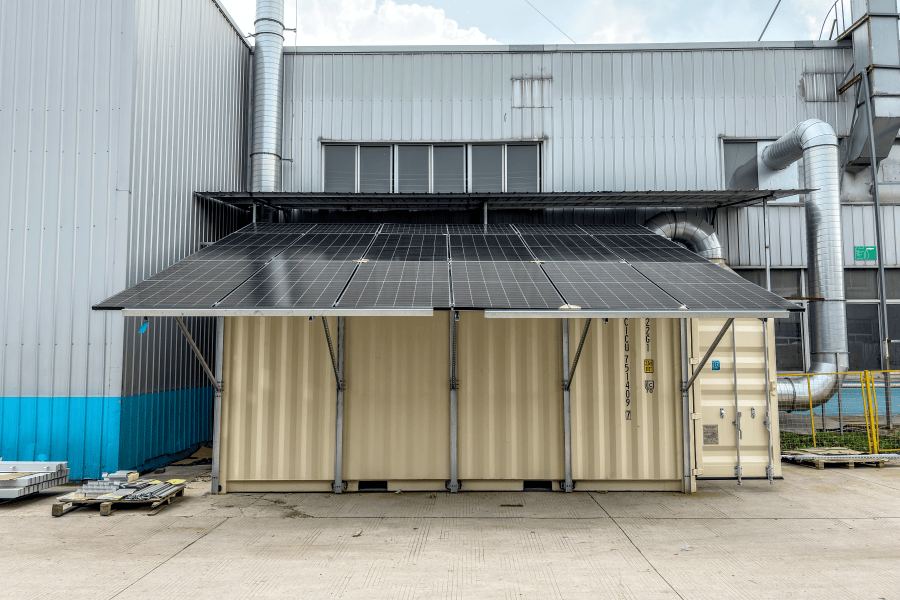
Table of Contents
- The Silent Threat to Your Network's Lifeline
- When the Grid Fails, the Real Costs Begin
- The Blueprint: A Smarter, More Resilient Power Plant
- From Blueprint to Reality: A Mountain-Top Case Study
- The Devil's in the Details: My On-Site Takeaways
- So, What's Your Power Resilience Plan?
The Silent Threat to Your Network's Lifeline
Let's be honest. For a telecom base station, especially those off-grid ones on a remote hilltop or serving a rural community, power isn't just a utility - it's the literal heartbeat. I've been to dozens of these sites across the US and Europe, and the story is often the same: an aging, overworked diesel generator groaning in a corner, a battery bank that's more of a decorative relic than a functional asset, and a creeping anxiety about what happens during the next storm or heatwave. The problem isn't just about having backup power; it's about having intelligent, reliable, and cost-effective power that you can trust without a second thought.
When the Grid Fails, the Real Costs Begin
We all know diesel is expensive and messy. But the real agitation point? It's the hidden operational nightmare. I've seen firsthand a site in Northern California where a failed starter battery on a genset led to a 14-hour outage. The maintenance truck took forever to get there, the fuel was stale, and the site revenue loss was staggering. It's not an isolated incident. According to the National Renewable Energy Laboratory (NREL), ensuring reliability in remote telecoms often leads to a levelized cost of energy (LCOE) that's 2-3 times higher than grid-connected sites. Every unscheduled maintenance visit, every gallon of diesel hauled up a mountain, and every minute of downtime chips away at your ROI. And with climate change driving more extreme weather, as noted in IEA reports, these events are becoming the rule, not the exception.
The Core Challenge: Blind Faith in Power
The biggest issue I encounter is a lack of visibility. Most traditional systems tell you if power is "on" or "off," but they don't tell you why a battery string is degrading faster than the others, or if a cell is running 10C hotter than its neighbors - a classic precursor to thermal runaway. You're flying blind until the system fails. That's a risk no network operator can afford today.
The Blueprint: A Smarter, More Resilient Power Plant
This is where a properly executed Step-by-step Installation of a Smart BMS Monitored Off-grid Solar Generator changes the game. It's not just slapping some panels on a roof and connecting batteries. It's about integrating a system where every component communicates, and the Smart Battery Management System (BMS) is the brain. Let me walk you through the critical phases, the way we do it at Highjoule Technologies.
Phase 1: Site Audit & Digital Twin Design
We never start with a generic kit. We model everything - solar irradiance, load profiles of the radio equipment, temperature extremes - to right-size the solar array and battery bank. The goal is to maximize solar self-consumption and minimize the generator's runtime (its "C-rate" or discharge rate), which drastically extends its life. This upfront modeling is the single biggest lever for reducing LCOE.
Phase 2: The Heart: Smart BMS Integration
This is the core. We install a UL 9540 and IEC 62619 listed BESS (Battery Energy Storage System) with a BMS that monitors each cell for voltage, temperature, and state of health. Honestly, this granularity is non-negotiable for safety and performance. The BMS doesn't just protect; it optimizes. It balances cells, manages charge/discharge cycles to prevent stress, and provides real-time data. I've seen systems where the BMS identified a faulty cell module before it impacted performance, allowing for a scheduled replacement during low-traffic hours - zero downtime.

Phase 3: Commissioning & Grid Forming
This is the moment of truth. We don't just flip a switch. We simulate grid failures, test the seamless handoff between solar, battery, and generator, and calibrate the system's "grid-forming" capability - its ability to create a stable, clean sine wave for sensitive telecom electronics. We validate every alarm and data point from the BMS against our remote monitoring platform. This rigorous commissioning is what separates a project that works on paper from one that works in a blizzard.
From Blueprint to Reality: A Mountain-Top Case Study
Let me give you a real example. We deployed a system for a carrier in the Bavarian Alps. The challenge: a site accessible only by a steep service road, prone to winter avalanches, with a terrible carbon footprint from diesel. The goal was 95%+ renewable uptime.
The Highjoule Solution: A containerized, all-in-one unit housing the solar inverter, a 100 kWh lithium-iron-phosphate (LFP) battery with our proprietary Smart BMS, and a compact, automated backup generator. The installation had to be meticulous: foundation leveling, HVAC for thermal management, and lightning protection all per strict German VDE and IEC standards.
The Outcome: The Smart BMS allowed for predictive maintenance. Last winter, it flagged a gradual increase in internal resistance on one battery string. Our team diagnosed it remotely as a minor connection corrosion issue - likely from high humidity - and addressed it on the next planned site visit. No outage. Diesel use dropped by over 90%. The client now has total visibility into their power plant's health from their headquarters in Munich.
The Devil's in the Details: My On-Site Takeaways
After 20+ years, here's my blunt advice for any telecom infrastructure manager:
- Thermal Management is Everything: A battery's worst enemy is heat. You can have the best cells, but poor cabinet ventilation or placement in full sun will kill your investment. We design for passive cooling first, with active backup, and the BMS constantly tracks temperature gradients.
- LCOE is Your True North: Don't just look at capex. The right system, with a smart BMS extending battery life and slashing fuel and maintenance ops, will have a much lower total cost over 10 years. That's the number that wins boardroom approval.
- Standards are Not Optional: For the US and EU markets, insisting on UL/IEC/IEEE certification isn't about red tape. It's your guarantee of safety testing for fire, electrical hazards, and grid interaction. I've walked away from projects that wanted to cut corners here. The risk is simply too high.
At Highjoule, our product philosophy is built around these insights. Our BESS units are designed from the ground up for these harsh, unattended environments, with the Smart BMS as the central nervous system. It's not an add-on; it's the core.
So, What's Your Power Resilience Plan?
The transition from a passive, reactive power source to an active, intelligent microgrid isn't just a tech upgrade - it's a business resilience strategy. The step-by-step process might seem detailed, but each step is a layer of risk mitigation and value creation. I've seen the relief on a network manager's face when they finally have clarity and control over their most critical remote sites.
What's the one remote site in your network that keeps you up at night? Imagine if you knew the exact health of its power system, and could predict its needs, from your desk. That's the peace of mind a properly installed smart system delivers.
Tags: UL Standard BESS LCOE Energy Storage Europe US Market Renewable Energy Off-grid Solar Smart BMS Telecom Power
Author
James Zhang
20+ years agricultural energy storage engineer / Highjoule CTO