
20ft Containerized BESS: The Key to Scalable, Safe Energy Storage in the US & Europe
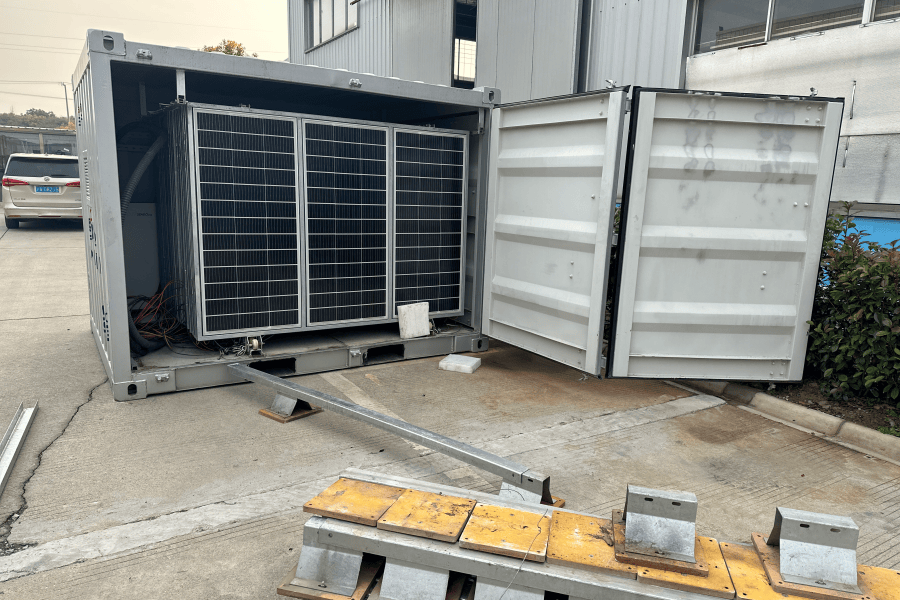
Table of Contents
- The Scaling Dilemma: When Your Storage Needs Outpace Your Site
- Safety Isn't Optional: The Hidden Costs of Compromise
- The Containerized Advantage: More Than Just a Box
- Lessons from the Field: A California Case Study
- Beyond the Spec Sheet: What Really Matters for Your ROI
The Scaling Dilemma: When Your Storage Needs Outpace Your Site
Honestly, one of the most frequent conversations I have with project developers in the US and Europe goes something like this: "We need to add 2 MWh of storage to support our solar farm/microgrid/peak shaving plan. But the available land is tight, permitting is a maze, and the budget has zero room for custom engineering." It's a classic scaling problem. You can't just keep adding rack after rack of batteries indefinitely. Space, both physical and in the interconnection queue, is a premium.
According to the National Renewable Energy Laboratory (NREL), the levelized cost of storage (LCOS) is highly sensitive to balance-of-system (BOS) costs and deployment time. Every week spent on custom site design and assembly is a week of lost revenue and added soft costs. I've seen firsthand on site how a "simple" storage expansion can balloon into a months-long civil and electrical rework nightmare if the solution isn't inherently modular and pre-engineered.
Safety Isn't Optional: The Hidden Costs of Compromise
This leads to the second, and frankly, more critical pain point: safety and compliance. The regulatory landscape here is non-negotiable. UL 9540, IEC 62933, NFPA 855 C these aren't just acronyms on a consultant's invoice; they're the bedrock of insurability and community acceptance. A containerized system isn't just about putting batteries in a shipping container. It's about an integrated, factory-tested safety ecosystem. The thermal runaway event you prevent through superior design and isolation is the million-dollar liability and reputational disaster you never have to face.
I recall a project in Germany where the local fire marshal halted deployment because the proposed indoor BESS layout didn't meet the strict compartmentalization requirements. The solution? A switch to pre-certified, containerized units with built-in fire suppression and gas venting. The delay still cost them, but it was far less than a full redesign. This is the reality. Safety standards are your first and most important site constraint.
The Containerized Advantage: More Than Just a Box
So, where does a product like our 20ft High Cube Energy Storage Container fit in? Let's be clear, the technical specifications developed for challenging environments C like rural electrification in the Philippines C directly address the core headaches we see in Ohio or Spain. That spec sheet is a blueprint for resilience and simplicity.
- Plug-and-Play Scalability: Need 1 MWh or 5 MWh? You're not designing from scratch. You're adding another standardized, pre-integrated unit. This modularity drastically cuts commissioning time from months to weeks.
- Factory-Baked Compliance: The entire container C from its C5 corrosion-resistant coating for coastal sites to its UL 9540A tested battery racks and NEMA 3R-rated HVAC C is built and certified as a single system. This turns a mountain of on-site compliance checks into a streamlined approval process.
- All-Weather, All-Site Resilience: These units are designed for off-grid, harsh environments. The IP54 rating, -20C to +50C operating range, and seismic design aren't overkill; they're assurance that your asset will perform in a Texas heatwave or a Nordic winter, year after year.

Lessons from the Field: A California Case Study
Let me give you a real example. We worked with a commercial developer in California's Central Valley. They had a 10-acre industrial site with a 1.5 MW rooftop solar array. Their goals were to reduce demand charges and provide backup power for critical cooling loads. The challenge? Limited space next to the main substation, strict local fire codes, and a need to be operational before the next summer peak.
The solution was two of our 20ft containers, each housing ~1 MWh of LFP batteries. Because they were pre-engineered with all safety systems, power conversion, and controls inside, we placed them on simple concrete pads. The interconnection was straightforward - essentially a single point of AC coupling. The project went from contract signing to commissioning in under four months. The key wasn't any one flashy tech spec; it was the certainty the pre-validated, containerized system provided to the developer, the utility, and the AHJ (Authority Having Jurisdiction).
Beyond the Spec Sheet: What Really Matters for Your ROI
As a technical expert, I always tell clients to look past the headline capacity number. The real value is in the details that drive down your lifetime cost (LCOE).
- Thermal Management is Everything: A precise, liquid-cooled or forced-air system isn't just about safety; it's about longevity and performance. Consistent temperature control means less degradation, higher round-trip efficiency, and the ability to sustain high C-rate discharges (like 1C for rapid frequency regulation) without derating. That directly translates to more revenue cycles over the asset's life.
- Intelligent Controls as Standard: The container shouldn't be a dumb box of batteries. Its built-in Energy Management System (EMS) should handle local control, diagnostics, and seamless communication with your plant controller. This turns a storage asset into a grid-responsive tool for energy arbitrage, frequency support, or solar smoothing.
- Serviceability by Design: Can a technician safely and easily access and replace a module? I've seen containers where maintenance was an afterthought, leading to hours of downtime. Our design prioritizes service aisles, hot-swappable components, and remote monitoring, which Highjoule's local support teams use to predict and prevent issues before they impact your revenue.
The conversation around energy storage is shifting from "Can we build it?" to "Can we deploy it reliably, safely, and profitably at scale?" The engineering principles proven in demanding global projects provide a robust answer. Maybe it's time to rethink your next storage project not as a construction site, but as a placement of proven, power-generating assets. What's the single biggest deployment risk your next project faces?
Tags: UL Standard LCOE Thermal Management Energy Storage Deployment BESS Container
Author
James Zhang
20+ years agricultural energy storage engineer / Highjoule CTO