
Mobile BESS for Coastal Salt-Spray: Highjoule's 20ft Container Solution
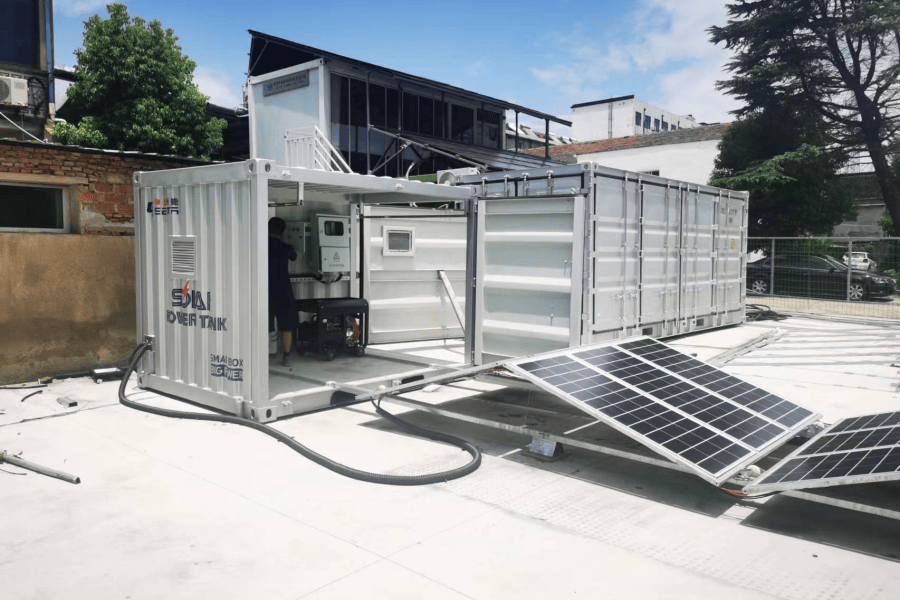
Table of Contents
- The Silent Killer on Your Shoreline Project
- Beyond the Sticker Price: The Real Cost of Corrosion
- Engineering for the Edge: What's Inside Our 20ft Coastal Warrior
- Case in Point: Florida's Resilient Microgrid
- The Thermal Balancing Act in a Salty Box
- Your Next Step: Asking the Right Questions
The Silent Killer on Your Shoreline Project
Honestly, if you're looking at deploying a mobile Battery Energy Storage System (BESS) anywhere near a coast in the US or Europe, I can tell you from two decades on site that your number one enemy isn't grid interconnection delays or even permitting. It's salt. That fine, almost invisible salt spray carried by the ocean breeze. I've seen firsthand what it can do to standard equipment in under 18 months. It creeps into every seam, attacks electrical contacts, and turns pristine aluminum and steel into a corroded, unreliable mess. It's a pervasive problem from the Gulf Coast to the North Sea, and it demands a specific kind of hardware.
Beyond the Sticker Price: The Real Cost of Corrosion
Let's agitate that pain point a bit. You might be looking at a standard mobile power container quote and thinking you've found a good deal. But here's the reality the spec sheet often misses. According to a NREL analysis on BESS O&M, unplanned maintenance due to environmental factors like corrosion can increase lifetime operational costs by up to 40% in aggressive environments. That's not just a repair bill; it's downtime. It's lost revenue from grid services or backup power. It's a safety audit finding because a corroded busbar decided to overheat. The Levelized Cost of Storage (LCOS) for that "cheaper" unit skyrockets when it's sitting idle, getting repaired, or worse, needing a full replacement years ahead of schedule.
What Standard Containers Miss
Most off-the-shelf containers are built to general ISO standards. Their paint, gaskets, and cooling system intakes aren't designed for constant salt-laden humidity. The electrical components inside? They might be top-tier, but if their enclosures aren't rated for the environment, you're asking for trouble. This isn't a theoretical risk. It's the reason why standards like UL 9540 for BESS safety and IEC 60068-2-52 for salt mist corrosion testing exist. The real question is: does your supplier design to pass these tests in a lab, or to survive for 15+ years in the field?
Engineering for the Edge: What's Inside Our 20ft Coastal Warrior
This is exactly why we developed our Technical Specification of 20ft High Cube Mobile Power Container for Coastal Salt-spray Environments. It's not a marketing gimmick; it's a field engineer's checklist turned into a product. The solution starts with the shell. We use marine-grade, hot-dip galvanized steel for the frame, coated with a multi-layer epoxy-polyurethane paint system that's frankly overkill for Kansas but just right for coastal Texas or Italy. All external hardware is stainless steel (grade 316, to be precise).
But the magic is in the sealing and the internal climate. We employ a positive pressure system with HEPA and salt-filtered air intakes. This keeps the internal atmosphere clean, dry, and slightly pressurized, so that salty, humid air just can't get in. Every cable entry is a sealed gland. Every door has a dual-seal gasket. It sounds simple, but getting this right on a mobile, modular unit that gets shipped and relocated is where the engineering depth comes in.

Case in Point: Florida's Resilient Microgrid
Let me give you a real example. We deployed two of these 20ft containers for a critical facility in Florida last year. The challenge was classic: provide backup power and peak shaving for a water treatment plant less than a mile from the coast. The previous generator-based system failed during a storm surge event due to - you guessed it - corroded controls. Our containers were sited on a concrete pad, but they're fully mobile for future reconfiguration.
The key was the integrated design. The battery racks, PCS, and HVAC were all specified from the start for the C5-M (Marine) corrosion category per ISO 12944. The thermal management system is a closed-loop liquid cooling for the battery racks, with external condensers that have a special coated fin design to resist salt buildup. Eighteen months in, during a routine service visit I led, the internal components looked as clean as the day they were installed, while the exterior had weathered a few hurricanes without issue. That's reliability you can bank on.
The Thermal Balancing Act in a Salty Box
This brings me to a crucial insight. Thermal management in a sealed, salty environment isn't just about cooling the batteries. It's about consistency and preventing condensation. A fluctuating internal temperature will cause moisture to form on cold surfaces - a death sentence for electronics. Our system maintains a tight temperature band, which not only extends battery life but also prevents this internal "rain."
We also talk a lot about C-rate - the speed at which you charge and discharge the battery. In these demanding applications, we often advise a slightly conservative C-rate. Why? Because pushing the limits generates more heat, stressing the thermal system and, over time, degrading the battery faster. By optimizing the system design for a sustainable C-rate, we actually improve the long-term LCOE. You get more total cycles over the system's life. It's a classic case of going slower to go farther, which is a philosophy that makes total sense when your asset is parked in a harsh environment for a decade or more.

Where Highjoule Fits In
Our role isn't just to sell you a box. It's to bring this level of forensic detail to your project's specification phase. We ensure the entire system, from the main breaker to the communication cables, is aligned with the environmental class. And because we handle both the containerization and the BESS integration under one roof, the compliance trail for standards like UL 9540 or the upcoming IEC 62933-5-2 is clean and single-source. Our local teams in the EU and US understand the nuances of national codes, saving you headaches during commissioning.
Your Next Step: Asking the Right Questions
So, when you're evaluating mobile BESS solutions for a coastal site, move beyond the basic capacity and duration specs. Ask your potential suppliers: What is the specific corrosion protection category? Can you show me the test reports for salt mist compliance on the integrated system? What is the design life of the external coatings? How does the thermal system prevent condensation? The answers will tell you everything you need to know about whether they've truly built for the edge - or just for the brochure.
What's the one environmental challenge at your project site that keeps you up at night? Maybe we've already engineered a solution for it.
Tags: UL Standard BESS LCOE Europe US Market Renewable Energy Corrosion Protection Mobile Energy Storage
Author
James Zhang
20+ years agricultural energy storage engineer / Highjoule CTO