
ROI Analysis of Liquid-cooled Industrial ESS Containers for Eco-Resorts
Beyond the Sticker Price: A Real-World ROI Look at Liquid-Cooled ESS for Your Eco-Resort
Honestly, if I had a dollar for every time a resort developer or manager told me they loved the idea of a large battery storage system but got stuck on the upfront cost... well, let's just say I wouldn't be writing this blog post from my office. I'd be on a beach, probably at one of your resorts. The hesitation is real, and frankly, it's understandable. You're in the business of creating unforgettable experiences, not becoming a power plant operator. But after two decades of deploying these systems from the deserts of California to the islands of Greece, I've seen the math work, and work spectacularly, when you look beyond just the purchase order. Let's talk about the real Return on Investment for a liquid-cooled industrial Energy Storage System (ESS) container, specifically for the unique world of eco-resorts.
Quick Navigation
- The Real Problem Isn't Just Cost, It's Predictability
- Why This Hurts Your Bottom Line & Brand
- Liquid Cooling: The Engine of Your ROI
- A California Case Study: From Grid Anxiety to Asset
- Making Sense of the Tech: C-Rate, Thermal Runaway, and LCOE
- What Should Your Next Step Be?
The Real Problem Isn't Just Cost, It's Predictability
Here's the phenomenon I see constantly. Eco-resorts are often in breathtaking, remote, or grid-constrained locations. You're committed to sustainability, so you've invested in solar PV, maybe some wind. But the sun sets, the wind calms, and you're left at the mercy of a noisy, expensive diesel generator or an unreliable grid connection. Your energy costs aren't just high; they're unpredictable. A spike in fuel prices or a grid outage during peak season doesn't just affect your utility bill - it threatens guest comfort, operational continuity, and your hard-earned green reputation.
Why This Hurts Your Bottom Line & Brand
Let's agitate that pain point a bit. Unpredictable energy equals unpredictable budgeting. How do you plan for the next year when your largest operational expense can swing by 20-30%? Furthermore, in many European and North American markets, grid operators are increasingly implementing time-of-use rates and demand charges. According to the National Renewable Energy Laboratory (NREL), demand charges can constitute 30-70% of a commercial customer's electricity bill. For a resort with spas, pools, and air conditioning all kicking on at the same time, that monthly demand peak is a killer.
And then there's the silent brand risk. Imagine promoting a "back-to-nature, sustainable getaway" while the constant drone of a diesel generator fills the air. I've been on site for that awkward conversation with a guest. It's not a good look. The financial and reputational exposure is real.
Liquid Cooling: The Engine of Your ROI
So, where does the ROI analysis for a liquid-cooled industrial ESS container start? It starts by redefining the asset. This isn't just a battery box; it's a revenue protection and generation engine.
Air-cooled systems have their place, but for the high-duty cycle, high-power demands of a resort - where you need to slash that demand charge, arbitrage time-of-use rates, and ensure backup power - liquid cooling is the game-changer. Here's why it directly impacts ROI:
- Higher Power & Longer Life: Liquid cooling manages cell temperature far more evenly and efficiently than air. This allows the system to sustain higher discharge rates (C-rates) safely and, most importantly, reduces degradation. A battery that lasts 15 years instead of 10 dramatically lowers your Levelized Cost of Storage (LCOS).
- Safety & Insurance: Thermal runaway prevention is paramount. A liquid-cooled system, especially one built with UL 9540 and IEC 62933 standards in mind from the ground up (like our Highjoule H2O-Cool series), maintains a tight temperature envelope, drastically reducing risk. This isn't just a safety win; it's often an insurance premium win.
- Density & Footprint: You're in the land business. A liquid-cooled container packs more energy and power into a smaller footprint, preserving valuable real estate for guest cabins or gardens.
The ROI calculation then shifts from "how much does this cost?" to "how much does this save and earn?" Add up: reduced demand charges, avoided fuel costs, revenue from grid services (where markets allow), extended asset life, and protected brand equity.
A California Case Study: From Grid Anxiety to Asset
Let me give you a real example from a project we completed last year. A high-end eco-lodge in Northern California was entirely off-grid, reliant on a large solar array and a bank of diesel generators. Their goals were to eliminate generator run-time during the day, reduce nighttime fuel use by 90%, and ensure total silence for guests.
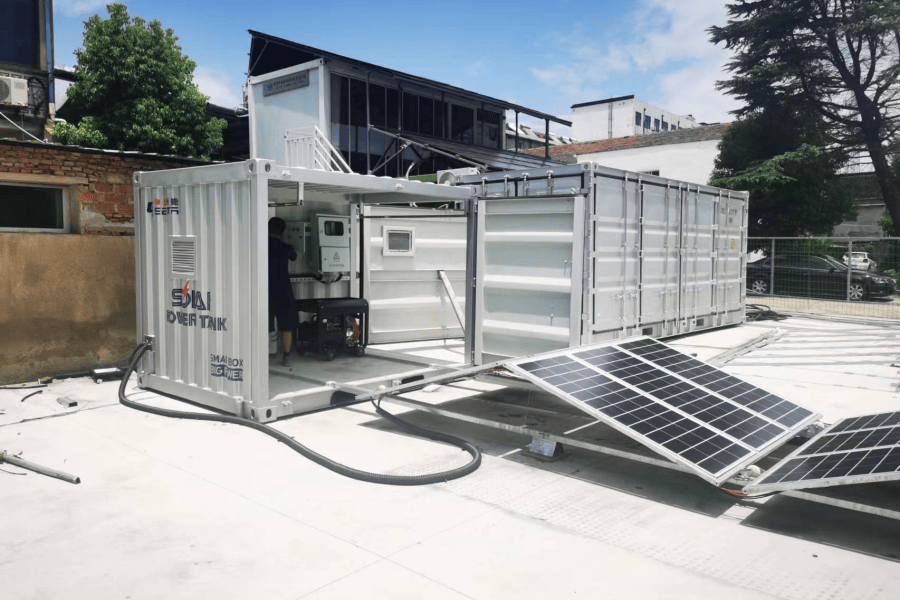
We deployed a 1.5 MWh liquid-cooled ESS container, integrated with their existing solar. The challenges were the site's high ambient temperature swings and the need for flawless, remote monitoring. The liquid cooling system handled the thermal management effortlessly. The result? They achieved their fuel reduction target in the first month. The system's reliability, backed by our remote ops center, gave the owners peace of mind. The ROI period, factoring in California's SGIP incentive, was under 5 years. But more importantly, they now market themselves as "100% renewable, 100% silent," which, frankly, you can't put a price on.

Making Sense of the Tech: C-Rate, Thermal Runaway, and LCOE
I promised to keep this jargon-light, but these three concepts are crucial for your ROI analysis.
- C-Rate: Think of this as the "sprinting ability" of your battery. A 1C rate means a 1 MWh battery can discharge 1 MW in one hour. For cutting a sharp demand charge peak, you need a high C-rate - you need to sprint. Liquid cooling enables safer, sustained high C-rates.
- Thermal Runaway: This is the chain reaction battery failure you hear about in the news. Proper thermal management via liquid cooling is the best defense. It's non-negotiable for safety and long-term ROI.
- LCOE/LCOS (Levelized Cost of Energy/Storage): This is the real cost metric. It's the total lifetime cost of the system divided by the energy it will store over its life. A cheaper upfront system that degrades fast has a higher LCOE. A robust, liquid-cooled system with a 15-20 year life often has a lower LCOE, making it the smarter financial choice.
At Highjoule, when we design a system for a resort, we model all of this. We look at your local utility rates, your load profile, your solar generation, and even future expansion plans. The goal isn't to sell you a container; it's to build you a predictable, optimized energy asset.
What Should Your Next Step Be?
Don't start by asking for a quote on a battery. Start by asking your team for 12 months of utility bills. Then, have a coffee with someone who's been on site and seen what works (and what doesn't) over the long haul. The conversation should be about your specific pain points and revenue goals, not just kilowatts and kilowatt-hours.
What's the one energy cost you wish you could eliminate tomorrow?
Tags: UL Standard BESS LCOE Liquid Cooling Industrial ESS Energy Storage ROI Eco-resort Sustainability
Author
James Zhang
20+ years agricultural energy storage engineer / Highjoule CTO