
Off-grid Power in High Altitudes: The 20ft Container BESS Solution for Remote Sites
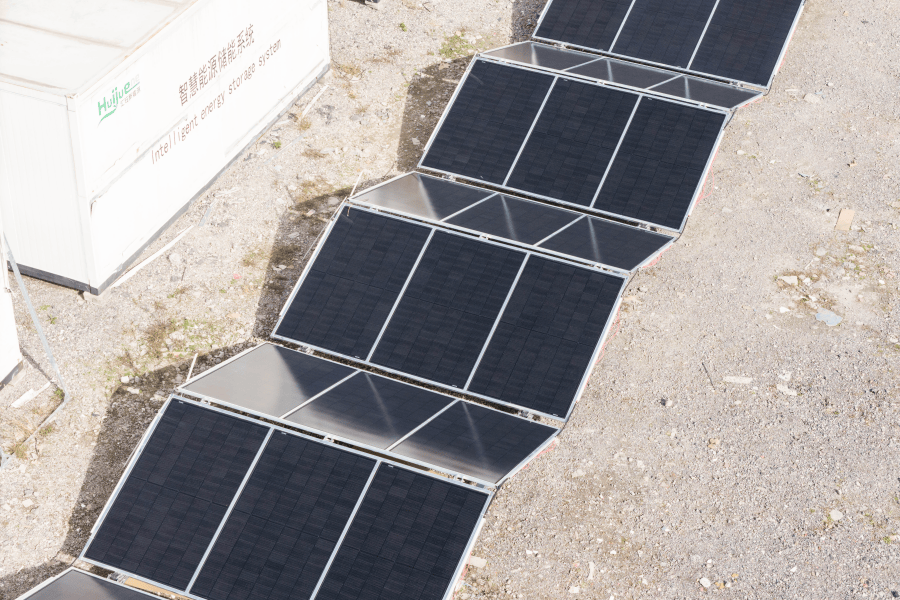
Navigating the Thin Air: Why Standard BESS Units Struggle at High Altitudes
Let's be honest, when you're planning an off-grid power system for a remote telecom tower, a mining operation in the Rockies, or a research station up in the Alps, the last thing you want is a nasty surprise six months in. You've done the math on solar irradiance, you've sized your load profile, but if your battery energy storage system (BESS) isn't built for the environment, you're setting yourself up for premature failure, safety risks, and a total nightmare for your OPEX. I've seen this firsthand on site: a container that worked perfectly at sea level becoming a temperamental, derated liability at 3,000 meters.
In This Article
- The High-Altitude Conundrum: More Than Just a View
- The Real Cost of Getting It Wrong
- Engineering for the Edge: The 20ft High-Cube Spec Deep Dive
- From Blueprint to Mountain Top: A Real-World Deployment
- The Expert's Notebook: Thermal, Pressure, and Lifetime
The High-Altitude Conundrum: More Than Just a View
The core problem isn't the cold, though that's a big part of it. It's the combination of factors that standard, off-the-shelf containerized BESS units simply aren't rated for. According to the National Renewable Energy Lab (NREL), temperatures can drop by about 6.5C for every 1,000-meter gain in elevation. At 3,000m, you're easily looking at ambient temps 20C lower than the valley floor. But it's not just about the air being colder.
Atmospheric pressure drops significantly. This affects two critical things: the cooling capability of your thermal management system (air is less dense, so it carries away less heat) and the internal pressure differentials on your container. Seals can fail, and more critically, the risk of partial discharge within electrical components increases in thinner air, a major fire safety hazard that keeps engineers like me up at night.
The Real Cost of Getting It Wrong
So what happens if you ignore these specs? It's not pretty. First, your battery's usable capacity plummets in the cold. Lithium-ion chemistry slows down. You might have a 500 kWh system on paper, but at -20C, you're only effectively accessing 350 kWh, and the strain of pulling that power at low temps accelerates degradation. Your Levelized Cost of Energy (LCOE) - the metric every CFO cares about - skyrockets.
Then there's safety. A thermal runaway event in a standard container is catastrophic; in a remote, high-altitude location, it's unthinkable. Fire suppression systems need to account for lower oxygen levels. Maintenance becomes a heroic expedition, not a routine site visit. Downtime isn't just an inconvenience; it can mean shutting down an entire remote operation.
Engineering for the Edge: The 20ft High-Cube Spec Deep Dive
This is where a purpose-built solution, like the Technical Specification of a 20ft High Cube Off-grid Solar Generator for High-altitude Regions, transitions from a nice-to-have to a non-negotiable. It's not a standard container with a heater slapped in. It's a system engineered from the ground up for harsh conditions.
At Highjoule, when we design for these scenarios, every component is vetted. The battery cells are selected for wide temperature tolerance (-30C to 55C operation). The HVAC isn't just a heater; it's a precision climate control system that maintains optimal temperature and humidity uniformly throughout the container, preventing condensation. The entire electrical enclosure is rated for the lower dielectric strength of high-altitude air, a requirement embedded in standards like UL 9540A when deployed above 2000m.
Honestly, the "High Cube" part is crucial. That extra foot of vertical space isn't for comfort; it allows for overhead ducting for superior air circulation, ensuring not a single cell bank sits in a cold or hot spot. It also gives our technicians the room to perform safer, easier maintenance when they're on site, which is a huge operational benefit.
From Blueprint to Mountain Top: A Real-World Deployment
Let me give you a concrete example from a project we completed last year in Colorado, USA. The client was a utility needing backup power for a critical substation serving a ski resort community, located at 2,800m. The challenge was extreme snow load, temperatures down to -35C, and access limited to a 4-month window.
The standard container spec failed on three counts: insufficient roof structural rating, a thermal system that couldn't maintain above 0C at that delta-T, and inverters not certified for the altitude. Our solution was a modified 20ft High Cube unit.
- Structural: Reinforced roof (for 500 psf snow load), corrosion-resistant coating for melt-freeze cycles.
- Thermal: Redundant, low-temperature-rated heat pumps with integrated battery pad heaters, all housed in an insulated, sealed compartment. We oversize the system by 40% for altitude derating.
- Electrical: All switchgear and inverters were high-altitude models (certified per IEEE 1547 for operation up to 3000m).
The unit was pre-commissioned at our facility, shipped in the fall, and was online before the first snowfall. It's been performing flawlessly, providing peak shaving and backup through one of the harshest winters on record. The key was treating the entire container as an integrated system, not a box of parts.

The Expert's Notebook: Thermal, Pressure, and Lifetime
If you take away one technical insight, let it be this: thermal management is everything at altitude. It's not just about heating; it's about uniform heat distribution and avoiding moisture. A poorly managed system creates "microclimates" inside the container. Some cells are warm, some are cold. This imbalance forces the BMS to constantly limit charge/discharge rates (the C-rate) to protect the cold cells, crippling your system's power when you need it most.
We design for a maximum 3C delta across all cells, even at full load. This requires computational fluid dynamics modeling to design the airflow, not guesswork. This precision directly translates to longer cycle life and a lower LCOE. You're not replacing batteries in 7 years; you're stretching that to 12+.
Finally, compliance isn't a checkbox; it's your safety net. A unit built to this high-altitude spec inherently meets and exceeds UL 9540, IEC 62933, and IEEE 2030.2 for grid-edge storage. For a commercial or industrial decision-maker, this isn't just technical jargon - it's what gets the project insured, permitted, and financed.
So, the next time you're evaluating an off-grid storage solution for a challenging site, look beyond the basic kWh and kW ratings. Ask the harder questions about the environment. What's the real Technical Specification for your specific region? Because in the world of high-altitude power, the standard spec is a recipe for failure, and the right engineering is the only thing that stands between you and the elements.
What's the most extreme environment you're considering for a BESS deployment? Let's talk about the specs that actually matter for your site.
Tags: Energy Storage Container UL Standard BESS Off-grid Power High-altitude Deployment
Author
James Zhang
20+ years agricultural energy storage engineer / Highjoule CTO