
High-Altitude BESS Deployment: Manufacturing Standards for Rapid Industrial ESS Containers
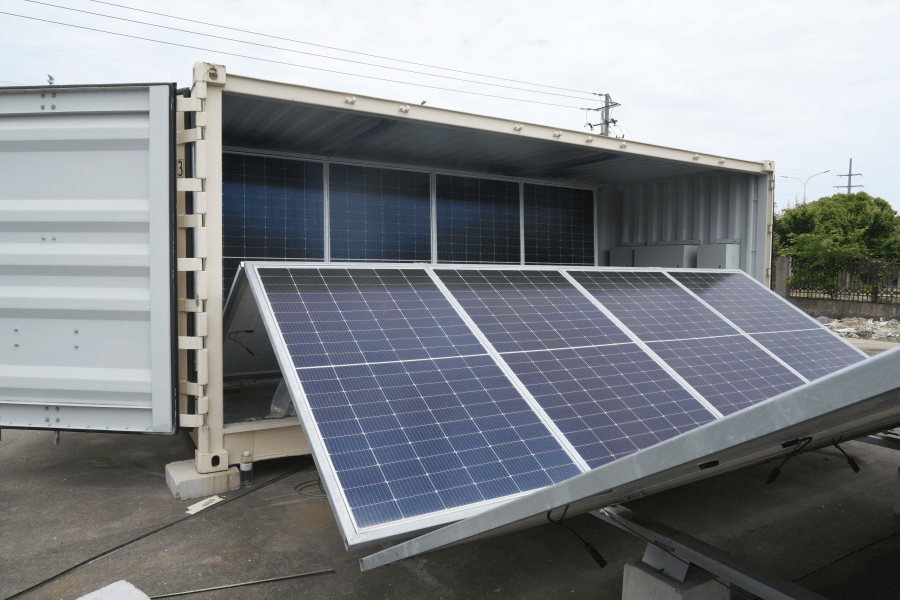
Table of Contents
- The Thin Air Problem: It's Not Just About Breathing
- The Real-World Cost of Getting It Wrong
- The Solution Isn't a Product, It's a Blueprint
- Case Study: When the Rockies Needed Megawatts, Fast
- Beyond the Checklist: What "Rapid Deployment" Really Demands
- Your Next Step: The Right Questions to Ask
The Thin Air Problem: It's Not Just About Breathing
Let's be honest. When most of us in the industry think about deploying a containerized Battery Energy Storage System (BESS), we're running mental checklists for flat, temperate sites. Permitting, grid connection, foundation. But here's a scenario I've seen firsthand: a client needs 20 MW of storage to support a remote microgrid at 3,000 meters, and they need it operational before the heavy snow hits. The standard ISO container that works perfectly in Texas or Bavaria suddenly becomes a liability.
The core problem isn't the battery chemistry itself - it's the manufacturing standards of the containerized system as a whole. At high altitudes, three things happen that generic industrial BESS units aren't built for:
- Thermal Management Goes Haywire: Thin air is a terrible coolant. The fans and cooling systems designed for sea-level air density become inefficient, leading to hot spots. Honestly, I've seen BESS units derate themselves to 70% capacity just to avoid overheating, killing your project's ROI from day one.
- Electrical Insulation Stress: Lower air pressure reduces the dielectric strength of air. What's safely insulated at ground level can arc or corona at altitude, posing a real fire risk. This isn't theoretical; it's a daily calculation for engineers in the Andes or the Alps.
- Mechanical & Safety System Strain: From the motors on fire suppression doors to the sensors themselves, everything designed for standard atmospheric pressure has to work harder, or might not work at all in an emergency.
The Real-World Cost of Getting It Wrong
So you try to adapt a standard unit on-site. Maybe you oversize the HVAC, tweak the software. This is where costs spiral. According to a National Renewable Energy Laboratory (NREL) analysis, retrofitting BESS for non-standard environments can increase balance-of-system costs by 15-25%. But the bigger cost is time.
That "rapid deployment" promise? Gone. You're now in a cycle of field modifications, re-testing, and hoping your insurer and local authority having jurisdiction (AHJ) still sign off on a system that's been modified away from its UL or IEC certification. I've sat in site trailers watching weeks of schedule buffer evaporate over a cooling system that couldn't pass its performance validation at elevation. The levelized cost of energy (LCOE) for that storage asset just takes a permanent hit.
The Solution Isn't a Product, It's a Blueprint
This is why the conversation needs to shift from "What BESS should we buy?" to "By what manufacturing standards was this rapid-deployment industrial ESS container built?" For high-altitude regions, the solution is baked into the design and assembly process, long before the unit ships.
True rapid deployment for these challenging sites means the container is a pre-certified, pre-validated power plant in a box. The key standards framework must address:
- UL 9540 & IEC 62933-5-2: These are your base safety and performance tickets to the game. But for altitude, you need to look for the specific derating and testing certifications under these umbrellas. Did the manufacturer test the entire container assembly, not just the battery racks, in a thermal chamber simulating 3000m?
- IEEE C57.154 (Transformers) & Related Gear Standards: All ancillary equipment inside must be rated for the same service altitude. A transformer that isn't, is a single point of failure.
- Thermal Management by Design: This is where C-rate - the speed at which a battery charges/discharges - meets reality. A system designed for high-altitude doesn't just have bigger fans; it has a redundant, multi-zone cooling system with controls that dynamically manage C-rate based on actual cooling efficiency, not textbook values. This preserves asset life and guarantees nameplate capacity.
Case Study: When the Rockies Needed Megawatts, Fast
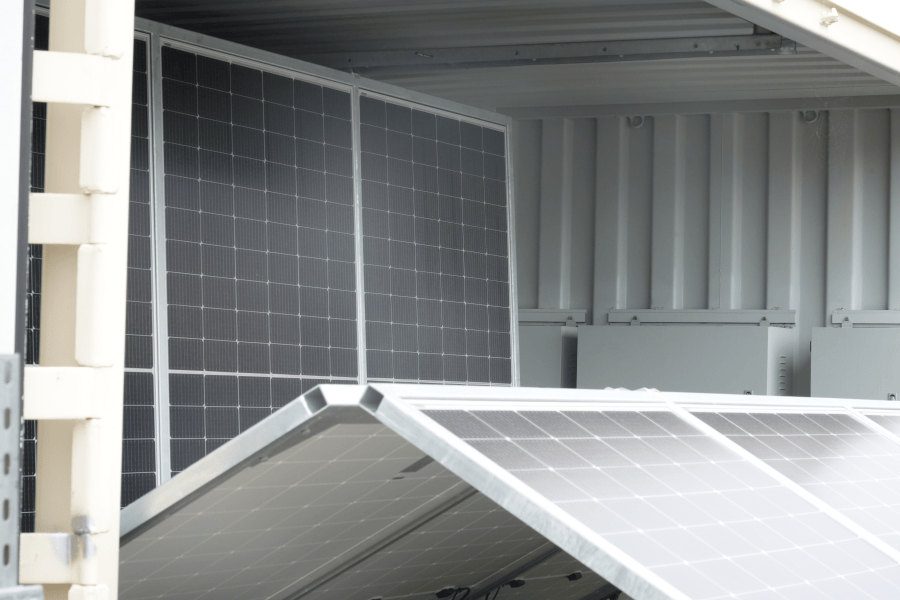
A few years back, we worked with a mining operation in Colorado, USA, sitting at around 2,800 meters. They had critical load and volatile diesel costs. They needed a 5 MW/10 MWh system to firm up solar, and the window between thaw and first snowfall was tight - a classic rapid deployment challenge.
The pivot point was insisting on containers manufactured to a spec that integrated UL 9540 with altitude-specific clauses from IEC 60068-2-13 (low-pressure testing). Because our Highjoule units are built with that integrated standard from the ground up, the deployment wasn't a field engineering puzzle. It was a logistics exercise: foundation, placement, cable connection, commissioning. The thermal system, with its pre-derated performance curves, managed the thin air without a hiccup. The project was online in weeks, not months, and has been delivering full capacity through temperature swings from -25C to +30C. That's the power of standards done right.
Beyond the Checklist: What "Rapid Deployment" Really Demands
My insight from two decades in the field? True rapid deployment in harsh environments is about eliminating on-site uncertainty. When you're evaluating a supplier, dig into their manufacturing quality control (QC) protocols. Ask them:
- "Show me the altitude testing report for the integrated container system, not just the battery cells."
- "How is your battery management system (BMS) logic adjusted for the reduced cooling efficiency at my site's specific altitude?"
- "Can you provide the stamped drawings and certification packs that my local AHJ in [say, Germany or California] will need, proving compliance for this specific high-altitude configuration?"
At Highjoule, this philosophy is core. Our containers aren't adapted; they're conceived for a range of environments from the start. This means your LCOE is predictable, your financing is secure, and your timeline is reliable. The "rapid" part comes from all the hard engineering work being finished before the manufacturing line even starts.
Your Next Step: The Right Questions to Ask
The market for storage in mountainous regions, from the Swiss Alps to the Sierra Nevadas, is exploding. The difference between a project that's a showcase and one that's a headache often comes down to the rigor of the manufacturing standards applied to that steel box full of batteries.
So, when you're scoping your next high-altitude BESS project, what's the first document you'll request from your potential supplier? Is it just a generic datasheet, or is it a detailed certification package that turns site deployment into a simple, repeatable process? The answer will tell you everything you need to know about your timeline, your budget, and your risk.
Tags: UL Standard BESS Rapid Deployment Energy Storage Manufacturing Industrial ESS IEC Standard High-altitude Energy Storage
Author
James Zhang
20+ years agricultural energy storage engineer / Highjoule CTO