
Black Start BESS for Industrial Resilience: Lessons from Philippine Electrification
Contents
- The Real Problem Isn't Just Backup, It's a Cold, Dark Restart
- The Staggering Cost of "Waiting for the Grid"
- A Lesson from the Philippines: Black Start as a Core Service
- Bringing It Home: Why This Matters for Your Industrial Site in Ohio or Bavaria
- It's More Than Just a Battery: The Engineering Behind Reliable Black Start
- What's Your Plan for a True Blackout?
The Real Problem Isn't Just Backup, It's a Cold, Dark Restart
Honestly, after two decades on sites from Texas to Thailand, I've seen a common, costly misconception. Many of my clients in manufacturing, data centers, and large commercial facilities think they're covered because they have a backup generator or a basic UPS. And sure, those systems kick in during a brief utility flicker. But what happens after a complete grid collapse - a blackout that takes everything offline? Your diesel genset needs a starting signal and power for its controllers. Your factory's PLCs, motor drives, and safety systems are dead. You're left in the dark, literally and operationally, waiting for the grid to come back before you can even think of restarting. That waiting time? That's pure, unmitigated financial bleed.
The Staggering Cost of "Waiting for the Grid"
Let's agitate that pain point with some numbers we all understand. The U.S. Department of Energy estimates that power outages cost the American economy tens of billions annually. For a single industrial plant, downtime can run $100,000 to $500,000 per hour or more, depending on the sector. It's not just lost production; it's spoiled materials, missed contracts, and equipment damage from an uncontrolled shutdown (or a rough re-start). I've been on site after a regional fault, and the atmosphere isn't just tense - it's a boardroom-level crisis. The real question isn't "if" you have backup, but "how quickly and independently can you recover?"
A Lesson from the Philippines: Black Start as a Core Service
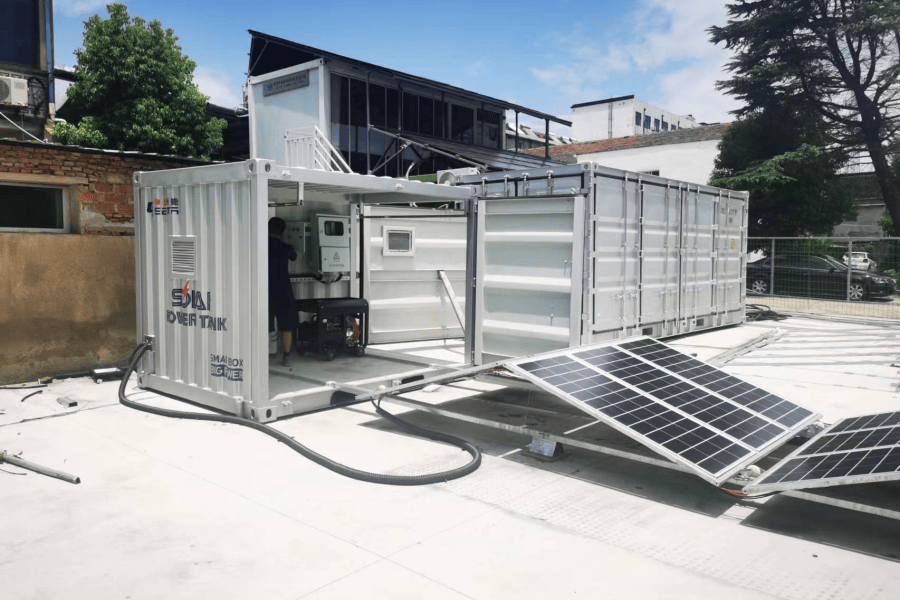
This is where a real-world project from a seemingly different context offers a brilliant solution. We supported a rural electrification project in the Philippines where the grid, frankly, was unreliable and often just?- gone. The community needed a system that could not only store solar energy but also create its own grid from zero - a "black start" capability. We deployed a containerized BESS that was more than just a battery. It was a standalone power source with advanced inverters that could establish voltage and frequency on dead lines, then sequentially re-energize the local microgrid and even support the reconnection of the main grid. The result? The community gained true energy independence and resilience.

Now, you might think, "That's great for a remote village, but my plant is connected to a robust grid in Germany or Ohio." But that's the insight: the capability is what's transferable. The extreme conditions of rural Philippines validated a system design that is arguably more valuable for a high-value industrial facility.
Bringing It Home: Why This Matters for Your Industrial Site in Ohio or Bavaria
Think about a chemical processing plant in North Rhine-Westphalia or an automotive parts factory in the U.S. Midwest. A black start-capable BESS changes your resilience equation completely. Instead of being a passive victim of grid restoration timelines, your facility becomes an active island. The system can:
- Initiate Recovery in Seconds: The BESS instantly establishes a stable "grid" for your critical loads, allowing your generators to start smoothly and in a controlled sequence.
- Protect Sensitive Equipment: By managing the voltage and frequency ramp-up, it prevents the surge damage that can occur when the utility grid suddenly re-energizes your equipment.
- Generate Revenue: When the grid is up, this same system performs peak shaving, demand charge management, and frequency regulation. The Levelized Cost of Storage (LCOS) plummets because the asset is working and paying for itself every single day, not just sitting idle for emergencies.
We've adapted this philosophy for the North American and European markets. For instance, in a recent deployment for a food cold storage facility in California - a state no stranger to grid warnings - the primary ask was demand charge savings. But by designing the system with UL 9540-certified containers and inverters capable of grid-forming (the tech behind black start), we future-proofed their investment. Now, during a Public Safety Power Shutoff (PSPS), they can island critical refrigeration units without a hiccup. It's peace of mind that also boosts their quarterly EBITDA.
It's More Than Just a Battery: The Engineering Behind Reliable Black Start
I need to get technical for a second, but stay with me - this is the crucial part most sales brochures gloss over. A black start isn't a checkbox feature; it's a system-level engineering achievement. It demands:
- Grid-Forming Inverters: Unlike typical grid-following inverters, these can create a stable voltage waveform without an external reference. It's the difference between following a conductor and being one.
- Robust Thermal Management: A black start sequence pulls high power (a high C-rate) to energize transformers and motors. If the battery's cooling system isn't designed for that, you risk overheating and shutdown mid-recovery. Our designs use liquid cooling for precise, uniform temperature control - something I've seen fail on site with air-cooled units under stress.
- Deep System Integration & Controls: The BESS must communicate seamlessly with your onsite generation and load panels. The sequencing logic - what turns on first, how much load to add and when - is where 20 years of field experience gets coded into the software. It's not magic; it's meticulous planning and testing.
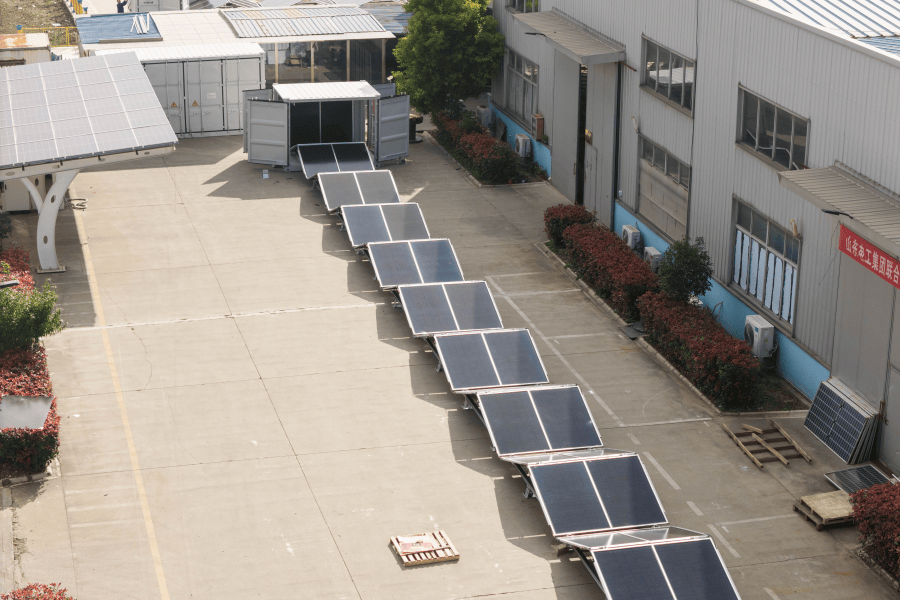
At Highjoule, this is where our focus lies. We don't just sell battery racks; we deliver a UL 9540 / IEC 62933-compliant power system in a container, with all the safety controls, fire suppression, and grid-interactive capabilities baked in. The goal is to give you a tool that works silently in the background to save money daily, and stands ready to perform heroically when everything else fails.
What's Your Plan for a True Blackout?
So, let's have that coffee chat. When you look at your facility's business continuity plan, does it include a step for "restart without grid power"? Or is there an assumption that the utility will always be there to give you a starting push? The case from the Philippines isn't just a feel-good story about rural power; it's a stress test for a technology that directly answers the most severe vulnerability in modern industrial operations. The data shows the cost of downtime is rising. The standards (UL, IEEE 1547) are evolving to support islanding and grid-forming functions. The technology, proven in harsh conditions, is here. The real question is, how much is waiting for the grid costing you?
Tags: UL Standard BESS Black Start Industrial Energy Storage Grid Resilience Microgrid Philippines Case Study
Author
James Zhang
20+ years agricultural energy storage engineer / Highjoule CTO