
Real-world Case Study of LFP Mobile Power Container for Public Utility Grids
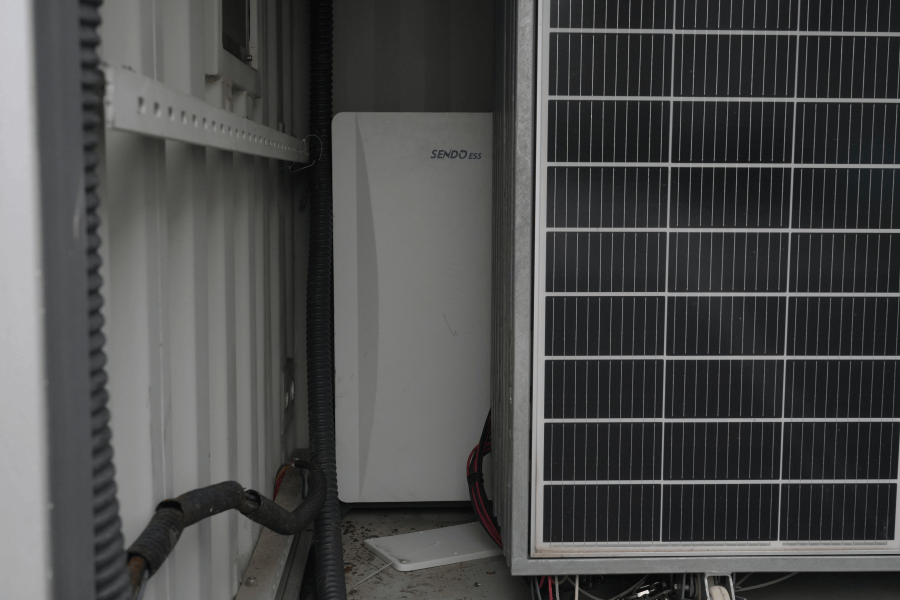
Table of Contents
- The Grid Flexibility Problem We All Face
- Why "Stationary" Isn't Always the Answer
- The Mobile Container Solution: Power Where You Need It, When You Need It
- Case Study: Easing Congestion in California's Renewable Corridor
- The LFP Advantage: It's More Than Just Chemistry
- What to Look for in a Mobile BESS: An Engineer's Checklist
- Where Do We Go From Here?
The Grid Flexibility Problem We All Face
Let's be honest, if you're managing a public utility grid in Europe or North America right now, you're juggling three massive challenges simultaneously: integrating record-breaking amounts of intermittent solar and wind, managing aging infrastructure that wasn't built for bidirectional power flow, and trying to keep consumer costs in check. The International Energy Agency (IEA) states that grid-scale battery storage capacity needs to expand dramatically C we're talking about 44 times 2022 levels by 2030 C to hit our net-zero goals. That's a staggering number, and it tells a simple story: our grids need to become more flexible, and fast.
The traditional answer has been to build large, stationary Battery Energy Storage Systems (BESS). And don't get me wrong, they're crucial. But I've been on enough site visits and planning meetings to see the limitations firsthand. Permitting for a permanent site can take years, especially near sensitive areas or existing infrastructure. The ideal location from an electrical engineering perspective is often a nightmare from a zoning and community relations perspective. You're locked in. What if grid needs shift in five years? That multi-megawatt asset is staying put.
Why "Stationary" Isn't Always the Answer
This is where the real agitation kicks in. You have a substation that's overloading every summer afternoon due to solar backfeed. The traditional reinforcement C new transformers, upgraded lines C is a $5 million capital project with an 18-month timeline. Or, you have a critical fault that takes a transmission line down for a week, and you need temporary power to maintain reliability while repairs happen. A diesel genset fleet is the old-school answer, but honestly, the noise, emissions, and fuel logistics are a public relations and operational headache you just don't need.
The pain point is temporal and spatial mismatch. The problem isn't always everywhere, all the time. It's in specific places, at specific times. And our solutions need to be as agile as the problems themselves.

The Mobile Container Solution: Power Where You Need It, When You Need It
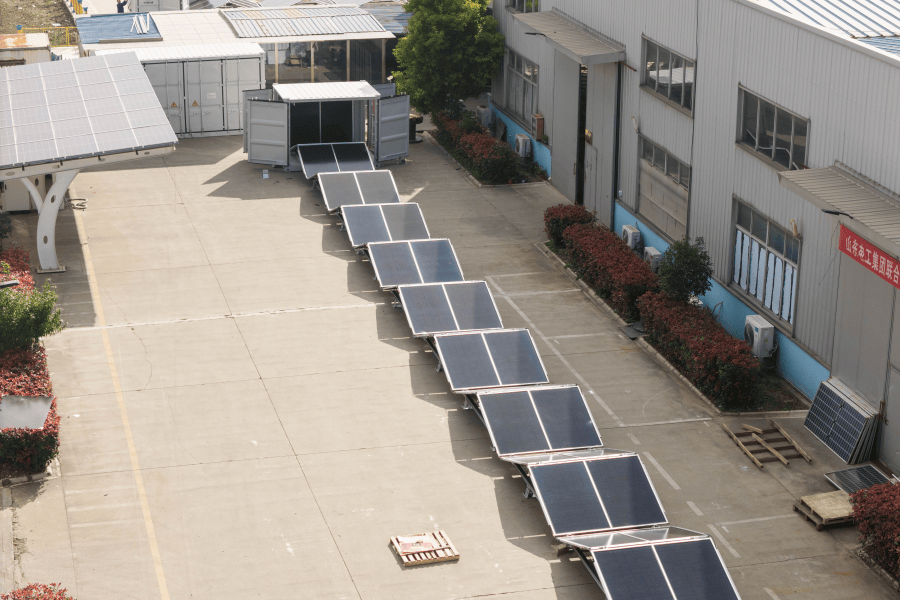
This is why the concept of the LFP (LiFePO4) Mobile Power Container isn't just a neat idea; it's becoming a critical grid operations tool. Think of it as a "storage-as-a-service" unit on wheels. It's a fully integrated, grid-ready battery system housed in a standard ISO container, built around the inherently stable Lithium Iron Phosphate chemistry. The core solution it provides is deployable flexibility.
Instead of building storage for a single, fixed use-case, you own or lease an asset that can serve multiple needs across your service territory over its lifetime. Peak shaving in a suburban neighborhood this summer, providing black-start capability for a remote microgrid next year, deferring a transformer upgrade for a few years while you secure funding C the same asset does it all. This drastically improves your capital utilization. At Highjoule, when we design these mobile systems, we don't just see a battery in a box. We see a Swiss Army knife for grid engineers.
Case Study: Easing Congestion in California's Renewable Corridor
Let me give you a real-world example from the field. A utility client in California was facing severe congestion on a specific 69kV transmission line every afternoon, primarily caused by excess solar generation in the region. The line was frequently hitting its thermal limits, requiring costly and inefficient curtailment of clean solar power. The permanent BESS solution was stuck in the interconnection queue.
Our team deployed a 4 MWh LFP Mobile Power Container system on a leased plot of land near a key substation along the constrained corridor. Because it was classified as a temporary generation source, the permitting process was significantly streamlined C we're talking months, not years. The container was pre-certified to UL 9540 and IEEE 1547 standards, so interconnection studies were focused on impact, not re-engineering the unit itself.
Within six weeks of contract signing, the system was online, charging during the midday solar peak and discharging during the evening ramp, effectively "shaving" the congestion peak. The result? A 92% reduction in solar curtailment events on that line during the pilot period and deferred the need for a $2.5 million line upgrade by at least 3-5 years. The utility now plans to rotate the unit to another trouble spot next year. That's the mobile advantage in action.
The LFP Advantage: It's More Than Just Chemistry
Now, why LFP? For a mobile, multi-application asset, safety and longevity are non-negotiable. You're moving this unit over public roads and placing it in varied, sometimes unstaffed, locations. The thermal runaway characteristics of LFP are far more forgiving than other NMC chemistries. This isn't just a datasheet claim; it's a fundamental design benefit that affects everything from insurance costs to community acceptance.
From a total cost of ownership (TCO) and Levelized Cost of Storage (LCOS) perspective, LFP shines. It might have a slightly lower energy density, but for a containerized solution, that's a manageable trade-off. What you gain is a cycle life that routinely exceeds 6,000 cycles with minimal degradation. This means the container can be deployed, cycled hard, redeployed, and still have a decade-plus of useful life. The economics work because the asset is constantly working.
What to Look for in a Mobile BESS: An Engineer's Checklist
Based on our deployments from Germany to Texas, here's my practical checklist for evaluating a mobile power container:
- True Plug-and-Play Design: It should have a fully integrated MV transformer, switchgear, and climate control. Look for a "grid connection point" that's literally a single cable hookup.
- Ruggedization for the Road: This isn't a stationary unit. Ask about seismic bracing for the racks, shock absorbers, and connector designs that can handle vibration. The IEEE and UL have guidelines, but real-world testing is key.
- Thermal Management That Can't Fail: The cooling system must be robust and redundant. I prefer liquid cooling for mobile LFP systems - it handles heat spikes better and maintains cell uniformity, which is critical for longevity when you don't control the ambient environment.
- C-Rate Flexibility: A 1C continuous rating is good, but a 2C peak capability for 30 minutes is even better. It gives you the headroom for those critical grid support functions like frequency regulation or short-duration congestion relief.
Where Do We Go From Here?
The future grid is dynamic, and its tools must be too. The LFP Mobile Power Container is proving it's not a niche product but a strategic asset for modern utilities. It turns grid challenges from multi-year capital projects into manageable, operational deployments.
So, the next time you're looking at a grid congestion map or a daunting infrastructure upgrade estimate, ask yourself: "Is this a permanent problem, or a temporary one that might move? Could a mobile, flexible storage asset buy us the time and data we need to make the perfect permanent decision later?" The answer might just save you millions and keep your grid reliable today.
What's the most pressing temporal grid challenge in your service area that could benefit from a mobile solution?
Tags: UL Standard BESS LFP Battery Utility-Scale Energy Storage Grid Stability IEC Standard Mobile Power Container
Author
James Zhang
20+ years agricultural energy storage engineer / Highjoule CTO