
Corrosion-Resistant Hybrid Solar-Diesel BESS for Coastal Sites | UL/IEC Compliant
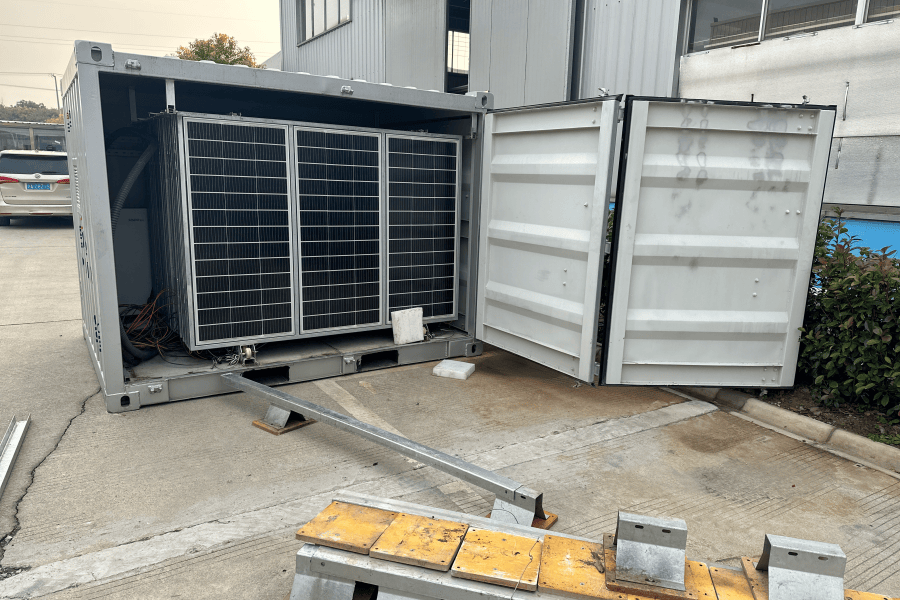
When Your Battery Storage System Starts to Rust: The Coastal Challenge for Renewable Energy
Hey there. Let's be honest for a minute. Over my twenty-plus years hopping between project sites from the North Sea to the Gulf of Mexico, I've seen a pattern that keeps decision makers up at night. You invest in a state-of-the-art battery energy storage system (BESS), pair it beautifully with solar PV, maybe even have a diesel genset for backup. The financials look great on paper. Then you deploy it near the coast for a seafood processing plant, a port microgrid, or a coastal community project. Six months in, you get the call: "We're seeing corrosion alerts on the battery cabinet hinges" or "The inverter cooling fans are sounding rough." The salt-laden air, that constant, fine mist, is doing its silent work. It's not just an aesthetic issue; it's a multi-million dollar reliability and safety risk waiting to happen.
Quick Navigation
- The Hidden Cost of Salt Spray
- Beyond the Spec Sheet: What Really Fails
- The Integrated Answer: More Than Just a Coating
- Making It Real: A Case from the Field
- Your Next Steps
The Hidden Cost of Salt Spray: It's Not Just Metal That Corrodes
The problem with coastal salt-spray environments is that they attack on multiple fronts. We all think about the steel enclosures, sure. But honestly, the bigger headaches come from the subtler stuff. I've seen firsthand on site how salt crystals creep into connector seals, degrading electrical insulation. They clog air filters for thermal management systems, forcing fans and cooling pumps to work harder, which spikes your parasitic load and kills your system's round-trip efficiency. The Levelized Cost of Energy (LCOE) - that holy grail metric for any project - starts to creep up way faster than your financial model predicted because of unscheduled downtime and accelerated component replacement.
This isn't a niche issue. The International Energy Agency (IEA) highlights the massive push for coastal and offshore renewable integration. And with that comes storage. A system built for a nice, dry inland industrial park simply won't survive where the air itself is an electrolyte. The standard UL 9540 and IEC 62933 series set the baseline for safety and performance, but they don't prescribe how to fight salt-induced corrosion day in, day out for 15+ years. That's where the specification gets real.
Beyond the Spec Sheet: What Really Fails (And Why It Matters)
So, what should you be looking for in a spec for these harsh environments? Let's move past marketing fluff.
- Thermal Management is Everything: If your system relies on air-to-air cooling with external vents, you're pulling salt-laden air directly over your battery cells and power electronics. It's a death sentence. The spec must mandate a closed-loop liquid cooling system or a highly sophisticated, sealed air-handling unit with corrosion-resistant coils. This isn't optional; it's the heart of long-term reliability.
- The C-Rate Compromise: In perfect conditions, you might push a high C-rate for quick bursts of power. But in high heat and humidity (common with coastal sites), pushing those limits increases heat stress. A robust system for these environments will often specify a slightly derated, continuous C-rate to keep temperatures in a safer, more stable zone, extending cycle life dramatically.
- Materials Science, Not Just Paint: It's not about slapping on some extra zinc. We're talking about stainless-steel fasteners for all external fittings, polymer composites for non-critical housings, and conformal coating on printed circuit boards inside the inverters and battery management systems. Every gasket, every cable gland, needs an IP66 or higher rating, tested specifically for salt fog corrosion (think IEC 60068-2-52).
This is where the Technical Specification of All-in-one Integrated Hybrid Solar-Diesel System for Coastal Salt-spray Environments transitions from a document into a design philosophy. It forces the question: "Is every component in this container chosen and tested for this specific, brutal enemy?"

The Integrated Answer: More Than Just a Coating
An "all-in-one integrated" system is the key here. Why? Because when the solar MPPT charge controllers, the battery racks, the diesel genset sync module, and the power conversion system (PCS) are all housed in a single, environmentally controlled enclosure designed from the ground up for this duty, you eliminate weak links. At Highjoule, our approach has always been to build the fortress around the entire energy ecosystem, not just the batteries.
This means the HVAC system is sized not just for peak battery heat, but for the solar inverter load and the residual heat from the genset interface on a still, 95F day. The seismic bracing (crucial for many coastal zones) is calculated for the weight of the diesel fuel day tank if integrated. The real-time monitoring doesn't just track state-of-charge; it tracks ambient corrosion sensors and internal humidity levels, giving you predictive alerts long before a failure occurs. This holistic integration is what actually delivers the low LCOE promised on day one, because it prevents the cascade of small failures that drive up operational costs.
Where the Standards Come Alive
We don't just comply with UL 9540 for the BESS; we ensure the entire integrated system's electrical assembly meets UL 891 for switchboards. The diesel integration follows IEEE 1547 for grid interconnection seamlessly. But again, we go beyond. We subject the full container to extended salt-spray chamber testing, not just samples. You'd be surprised how many "hardened" systems fail at the weld seams or door seals. Seeing a system pass 1000 hours of that test is what gives me, as an engineer who has to support these assets for decades, real confidence.
Making It Real: A Case from the Field
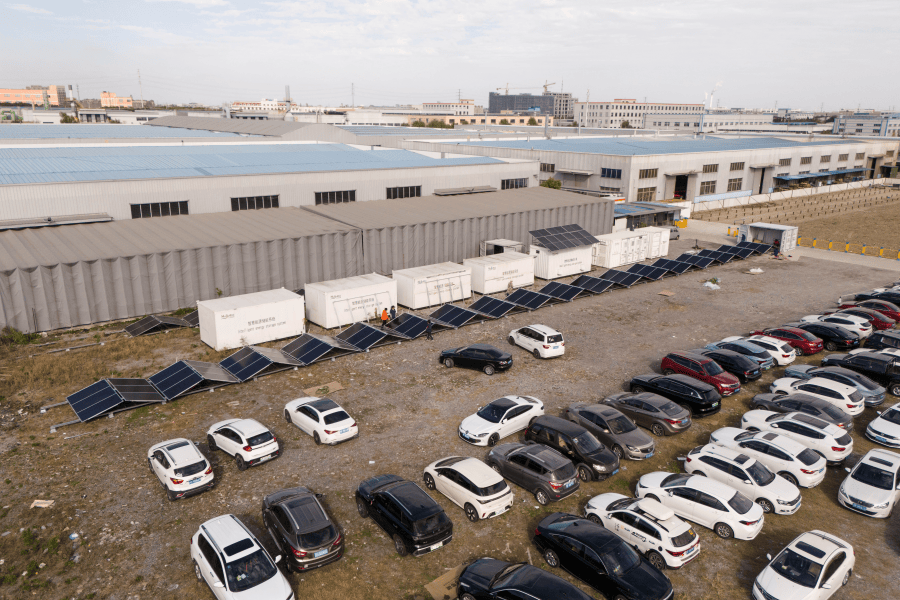
Let me give you a non-proprietary example from a project we supported in the Baltic Sea region. A remote island community was using old, inefficient diesel generators 24/7. They wanted to integrate a large solar farm and cut fuel use by 70%. The challenge? Brutal, wet winters with salty winds and limited space.
The solution was a pre-integrated hybrid container housing a 500 kWh BESS, dual PV inverters, and a controls system that could seamlessly manage the existing diesel gensets. The spec was brutal: all external metalwork was 316-grade stainless; the cooling was a closed-loop glycol system with an external dry cooler coated with a proprietary anti-corrosion polymer; every wire entry was via marine-grade gland plates.
Two years on, the performance data is telling. The fuel savings hit 72%, and the system availability is at 99.8%. The only maintenance has been routine air filter changes for the internal air circulation (which draws from the clean, controlled air inside the container). The local team sleeps easy during storm season. That's the power of a spec written for the environment, not just the application.
Your Next Steps: Asking the Right Questions
If you're evaluating systems for a coastal site, move the conversation beyond capacity and price per kWh. Ask your vendor:
- "Can you show me the salt-spray certification reports for the enclosure and the internal cabinet assemblies?"
- "What is the derating curve for the PCS and battery C-rate at 40C and 95% relative humidity?"
- "How is the thermal management system isolated from the corrosive external air?"
- "Walk me through the corrosion monitoring points in your SCADA system."
The right partner won't just email you a generic spec sheet. They'll have a engineer - maybe someone like me who's been on those soggy, salty sites - walk you through the details that make the difference between a project that's a trophy and one that's a workhorse for the next 20 years. So, what's the biggest corrosion challenge you're facing in your upcoming projects?
Tags: UL Standard BESS LCOE Europe US Market Renewable Energy Corrosion Protection Hybrid System
Author
James Zhang
20+ years agricultural energy storage engineer / Highjoule CTO