
Black Start & Hybrid Power: The Resilient EV Charging Solution for US & Europe
Beyond the Grid: Building EV Charging Stations That Never Sleep
Hey there. Let's grab a virtual coffee. I want to talk about something that keeps a lot of my clients up at night: building EV charging infrastructure that's both profitable and bulletproof. Honestly, after two decades on sites from California to Bavaria, I've seen the best-laid plans for EV hubs get derailed by one old-school problem - unreliable power. The grid's getting more congested, and simply plugging in a row of fast chargers is a recipe for demand charges, downtime, or worse. The real question we should be asking isn't just "how many chargers?" but "where is the power coming from, and what happens when it stops?"
Quick Navigation
- The Real Problem: More Than Just Outages
- The Staggering Cost of "Waiting for the Grid"
- The Hybrid Answer: Solar, Storage, and a Smart Backup
- Key Specs Decoded: What "Black Start Capable" Really Means
- Case in Point: A German Logistics Hub
- Making It Work: The On-the-Ground Essentials
The Real Problem: More Than Just Outages
When we talk about power for EV charging, a brief outage is bad enough. A driver gets stranded, you lose revenue, and your brand takes a hit. But the deeper, more chronic issue is grid weakness. I've been on sites where the local transformer is already at 90% capacity. Adding a 350 kW fast-charging array? The utility might say it needs a two-year lead time and a six-figure upgrade cost. Even without a full blackout, voltage sags and frequency fluctuations can trip your sensitive power electronics, leading to constant nuisance shutdowns. You're not just building a charging station; you're becoming a small power operator, whether you planned to or not.
The Staggering Cost of "Waiting for the Grid"
Let's agitate that pain point with some numbers. The National Renewable Energy Lab (NREL) has shown that public fast-charging stations need near-100% uptime to be economically viable. Every minute of downtime is lost revenue. But it's bigger than that. Think about a fleet depot for electric trucks or buses. If they can't charge overnight due to a fault, the entire next day's logistics chain collapses. The financial exposure shifts from kilowatt-hours to thousands in lost operational productivity. Furthermore, in many regions, demand charges - fees based on your peak power draw - can constitute up to 70% of your monthly electricity bill. A few simultaneous fast-charging sessions can create a devastating peak that destroys your margin.
This is where the classic diesel generator-only backup fails. It can't react in milliseconds to shave those demand peaks. And if the grid is completely down, a standard generator can't restart a "dead" charging station - the power electronics need a stable, clean grid signal to boot up. You're left with a silent generator and a row of useless, expensive chargers. I've seen this firsthand.
The Hybrid Answer: Solar, Storage, and a Smart Backup
So, what's the solution? It's not a single magic box. It's an integrated system designed with one goal: autonomous resilience. This is where the technical specification for a Black Start Capable Hybrid Solar-Diesel System becomes your blueprint. This isn't just theory; it's the operational model for the most reliable charging hubs we're deploying today.
The core idea is elegant: you have solar PV for clean, low-cost energy. You have a battery energy storage system (BESS) as the brain and the buffer - it smooths solar output, shaves demand peaks, and provides instant power. And you have a diesel generator as the long-lasting fuel-based backup. The "black start capable" part is the critical glue. It means the BESS can act as a mini-grid former. If everything goes dark, the battery can restart itself and create a perfect, stable "grid" (at the right voltage and frequency, compliant with IEEE 1547 and UL 1741 standards), then sequentially power up the charging station's control systems, and finally, if needed, "soft-start" the diesel generator to recharge it. No utility truck required.

Key Specs Decoded: What "Black Start Capable" Really Means
Reading these specs, focus on these three things:
- BESS C-rate & Power Quality: The battery's discharge rate (C-rate) determines how much punch it has to restart loads. For black start, you need a high-power battery (often with a C-rate of 1C or higher) that can deliver a large surge to energize equipment. More importantly, its inverter must produce a pure sine wave that meets IEC 61000-3-2 for harmonics. You're essentially creating a pristine microgrid.
- Sequential Load Restoration Logic: This is the software intelligence. A good system won't just throw power at everything. It will prioritize: first, the critical control and safety systems; then, maybe one charger lane for emergency use; then, the generator for recharge. This staged approach is crucial for stability.
- Thermal Management: This is an unsung hero. A containerized BESS doing peak shaving and black start duties generates heat. The spec should mandate a N+1 redundant cooling system. I've been in a Texas container in August - if the AC fails, the system derates or shuts down in minutes. Proper thermal design, often following UL 9540 test criteria for thermal propagation, is non-negotiable for safety and longevity.
Case in Point: A German Logistics Hub
Let me give you a real example. We worked with a logistics company in North Rhine-Westphalia, Germany. They converted their depot to electric delivery vans. Their challenge: limited grid connection, high demand charges, and a strict requirement for 24/7 availability for night-shift charging.
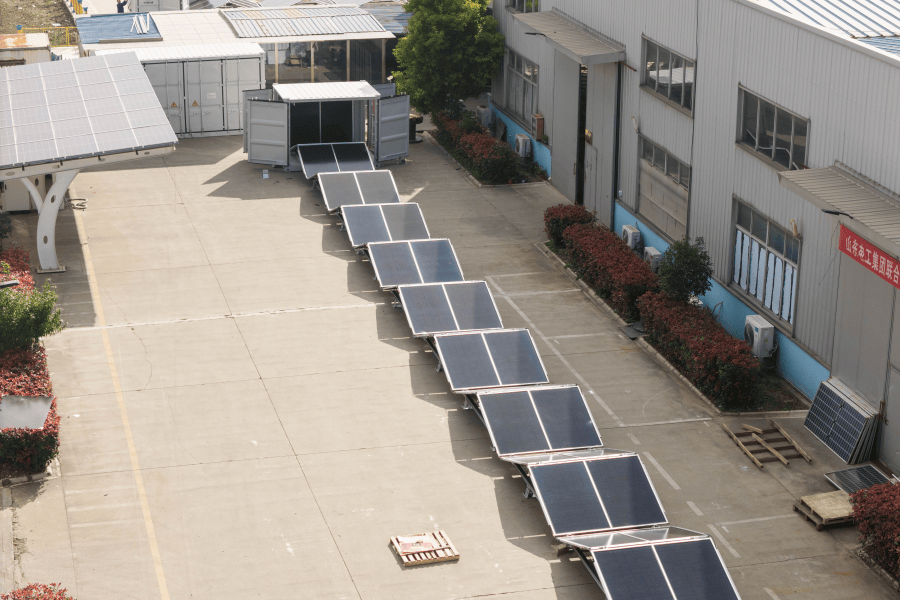
The solution was a 500 kW solar canopy, a 1 MWh BESS with black-start capability, and an existing 800 kVA diesel generator. The BESS handles daily peak shaving, cutting their grid demand by over 40%. At night, it powers the chargers at a steady rate. During a planned grid outage for utility work, the system performed a flawless black start. The BESS established the microgrid, powered the depot's lighting and security, and enabled a reduced number of chargers. The generator auto-started later to top up the battery, all without a single service call. The client's operational continuity was maintained, which for them, was the ultimate ROI.
Making It Work: The On-the-Ground Essentials
Your success with such a system hinges on a few practicalities. First, local compliance is king. In the US, that means UL (like UL 9540 for ESS) and NEC Article 706. In the EU, it's IEC standards and local grid codes. A good provider doesn't just sell you a container; they handle the interconnection studies and permit paperwork. Second, think about Levelized Cost of Energy (LCOE). This hybrid model isn't a capital expense; it's an energy asset. By reducing demand charges, leveraging solar, and using the generator only as a last resort, you achieve a lower, more predictable LCOE over 15 years than grid-only power with its volatile rates.
At Highjoule, this is where our two decades of field experience translate into design. We build our BESS units from the cell up with black-start capability and seamless generator integration as a core function, not an add-on. Our thermal management and safety systems are designed to the highest UL and IEC tiers because we know what extreme weather and tough duty cycles do to equipment. And perhaps most importantly, we provide the local project management and long-term performance monitoring to ensure the system on paper is the system that delivers on your site, year after year.
So, as you plan your next EV charging project, I'll leave you with this: Are you just buying chargers, or are you building a resilient, future-proof power asset? The difference in your specs will make all the difference on the ground.
Tags: UL Standard BESS Black Start Renewable Energy Microgrid IEC Standard EV Charging Hybrid Power System
Author
James Zhang
20+ years agricultural energy storage engineer / Highjoule CTO