
Industrial Black Start: Solar Container BESS for Grid Resilience
Contents
- The Silent Problem in Our Industrial Backbone
- Beyond the Numbers: The Real Cost of Downtime
- A Self-Starting Solution: More Than Just a Battery Box
- Case in Point: A German Factory's Wake-Up Call
- The Tech That Makes It Work (Without the Engineering Jargon)
- Your Next Step Towards Energy Independence
The Silent Problem in Our Industrial Backbone
Let's be honest. When we talk about energy resilience for factories and industrial parks, most conversations start and end with backup diesel generators. I've been on sites from Texas to North Rhine-Westphalia, and the story is eerily similar: a roaring genset in the corner, spewing fumes, waiting for a grid failure. It's a 20th-century solution for a 21st-century problem. The real, unspoken pain point isn't just about having any backup power; it's about having instantaneous, clean, and controllable power that can not only keep the lights on but actually reboot your entire operation from a dead stop. That's what grid operators call "black start" capability, and honestly, most industrial sites simply don't have it.
Think about a modern automotive parts plant or a data center annex in an industrial park. A sudden outage, whether from a storm, a fault, or public safety power shutoffs (like those we've seen in California), doesn't just halt production. It collapses the entire internal electrical ecosystem. When grid power tries to return, it can't just slam into a cold, unpowered facility. You need a sophisticated source of power to first energize your own internal circuits, then synchronize perfectly with the returning grid. A diesel genny? It might keep a few critical loads running, but it can't perform that delicate restart ballet. That's the gap.
Beyond the Numbers: The Real Cost of Downtime
We all know downtime is expensive. But let's agitate that a bit with some real data. According to a NREL analysis on grid resilience, a single sustained outage can cost a large industrial facility tens of thousands of dollars per minute in lost production, spoiled materials, and contractual penalties. The International Energy Agency (IEA) has highlighted that increasing frequency of extreme weather events is making these disruptions more common, not less.
But the cost isn't just financial. On site, I've seen the scramble. The safety risks when emergency lighting fails. The damage to sensitive process machinery from an uncontrolled power return. The hours lost waiting for a specialized crew to manually sequence systems back online. Your traditional "solar-plus-storage" container might offset some daytime energy costs, but when the grid goes dark and stays dark, it often goes silent too, waiting for an external signal to wake up. That's a critical vulnerability. You're left with a significant capital asset that's useless at the very moment you need it most.
A Self-Starting Solution: More Than Just a Battery Box
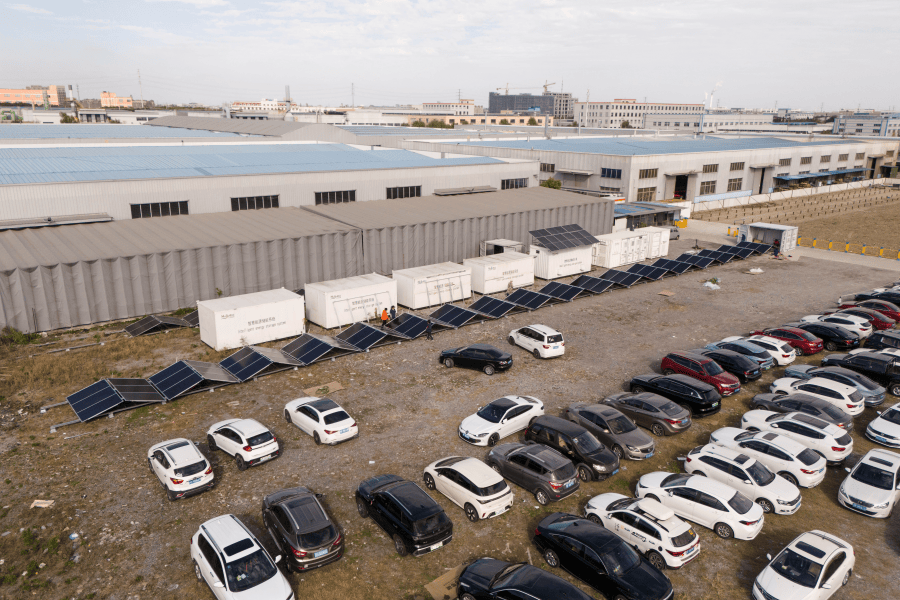
This is where the specification for a true Black Start Capable Solar Container becomes the game-changer. We're not just talking about a battery in a box with some solar panels on top. We're talking about an integrated, self-aware power island designed specifically for industrial parks. The core solution lies in a fundamental redesign of the power conversion and control system.
At Highjoule, when we engineer these systems, the black start capability is baked into the DNA. It means the container houses a battery storage system (BESS) with a grid-forming inverter, not just a grid-following one. Think of it as the difference between a follower and a leader. When the grid disappears, this system doesn't freeze. It can instantly establish a stable, clean voltage and frequency reference - creating its own "mini-grid" right there in your park. It uses its stored solar energy (or any stored energy) to sequentially power up your facility's internal distribution system, from control rooms to motor starters, preparing everything to seamlessly re-accept utility power. It's the ultimate insurance policy.

Case in Point: A German Factory's Wake-Up Call
Let me share a recent project that brings this to life. We worked with a mid-sized chemical processing plant in Germany's industrial heartland. Their challenge was twofold: reduce their sky-high peak demand charges and protect a continuous, 72-hour polymerization process from grid instability. A standard storage system would have solved the first problem. But after a near-miss with a regional fault, they knew they needed black start capability.
The deployment was a 1.5 MWh solar-integrated container solution, built to the strictest IEC 62933 and local VDE standards. The real test came just eight months after commissioning during planned grid maintenance. The utility cut power. Our system detected the outage in milliseconds, islanded the factory's critical load circuit, and maintained perfect power quality. When the utility signal was restored 4 hours later, the system gently synchronized and transferred back without a single process interruption. The plant manager told me it was the first planned outage in 30 years that didn't result in a full-day production loss. That's the tangible value.
The Tech That Makes It Work (Without the Engineering Jargon)
So, what's under the hood that makes this possible? Let's break down two key specs in plain English.
First, C-rate and Thermal Management. You might hear "we use a 0.5C battery." All that really means is how fast you can safely pull energy from the battery. For black start, you need a high pulse of power to energize transformers and motors. We spec our systems with batteries and thermal management (liquid cooling, in our case) that can handle that surge without breaking a sweat or degrading prematurely. It's about having power on tap, not just in storage.
Second, and this is crucial, is the overall Levelized Cost of Energy (LCOE). A black start system isn't a one-trick pony. By day, it's slashing your energy bills by storing cheap solar or off-peak power. It's providing peak shaving and grid services. The black start capability is the high-value resilience layer on top. When you calculate the LCOE - the total lifetime cost divided by the energy it provides - adding black start actually improves it. How? By preventing those massive, multi-million dollar downtime events. It transforms the system from a cost center into a strategic, revenue-protecting asset.
And none of this works without a fanatical focus on safety and standards. Every component, from the cell-level fusing to the container-level fire suppression, is designed to meet and exceed UL 9540 and IEC 62619. This isn't just about compliance; it's about trust. You're placing this system in the middle of your valuable industrial asset. It has to be inherently safe.
Your Next Step Towards Energy Independence
The conversation is shifting. It's no longer "if" you need storage, but what kind of storage you need. For any industrial operator looking at the next decade - facing volatile energy prices, an aging grid, and climate-driven disruptions - a black start capable system is the logical endpoint. It's the convergence of economic efficiency and operational resilience.
I'd encourage you to look at your own facility's risk assessment. What is one hour of total blackout worth? Then, think about the specification we've discussed. Does your current plan or vendor offer true, UL/IEC-certified black start, or just basic backup? The difference is everything when the lights go out.
What's the single biggest vulnerability in your plant's power chain today?
Tags: UL Standard BESS LCOE Europe US Market Black Start Solar Container Renewable Energy Microgrid
Author
James Zhang
20+ years agricultural energy storage engineer / Highjoule CTO