
Grid-forming BESS for Remote Islands: A Pre-Integrated Solution
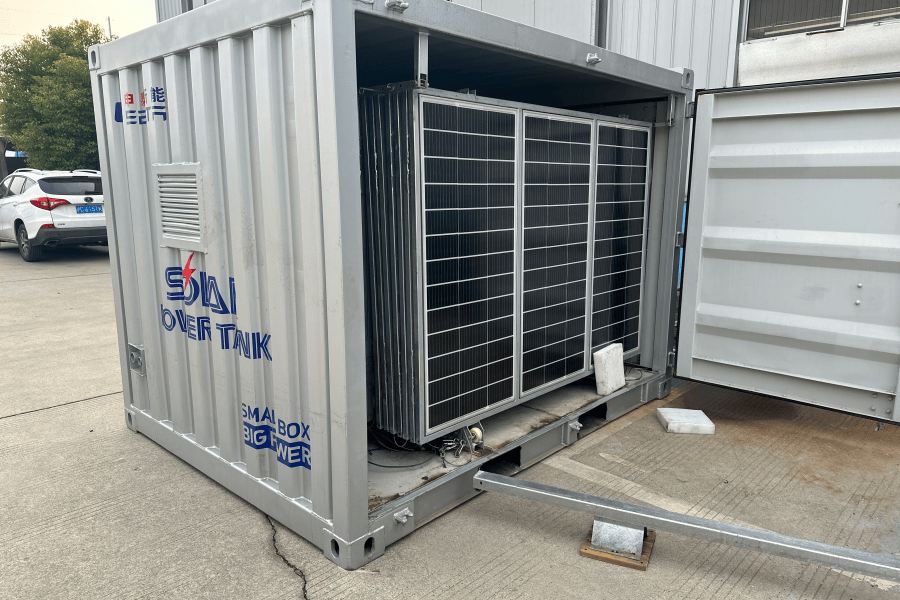
Beyond Backup: Why Your Remote Island Microgrid Needs a Grid-Forming Heart
Hey there. If you're reading this, chances are you're wrestling with a tough energy puzzle: how to power a remote community or industrial site reliably, affordably, and sustainably. Maybe you're looking at a diesel bill that's eating your budget alive, or you're trying to integrate more solar but the grid gets shaky. I've been on-site for these conversations, from the coast of Maine to islands in the Mediterranean, and the challenges are surprisingly similar. Today, I want to chat about a shift in thinking - from just adding storage to building a resilient energy foundation. It all comes down to the technical specs of a truly modern, grid-forming, pre-integrated PV container system.
Quick Navigation
- The Real Cost of "Just Making Do"
- More Than a Box: The Core Specs That Matter
- A Story from the Field: Grid Stability in the Aegean
- Your Next Step: Asking the Right Questions
The Real Cost of "Just Making Do"
Let's be honest. For years, the approach for many remote locations has been a patchwork: a diesel genset as the backbone, maybe some solar panels tacked on, and perhaps a basic battery for short-term backup. The problem? This isn't a system; it's a collection of parts that often work against each other. I've seen control systems from different vendors that simply won't talk to each other, leading to inefficient cycling, wasted fuel, and premature battery wear. The International Energy Agency (IEA) points out that for isolated systems, the levelized cost of electricity (LCOE) is often 2-3 times higher than mainland grids, with fuel volatility being a massive factor.
The agitation comes when you realize the hidden expenses. It's not just the diesel. It's the logistics of getting technicians and parts to a remote island. It's the safety risks of cobbling together high-voltage components in the field. It's the operational headache of managing three different equipment warranties when something goes down. You end up with a microgrid that's fragile, expensive to run, and frankly, a constant source of anxiety.
More Than a Box: The Core Specs That Matter
This is where the concept of a pre-integrated, grid-forming container changes the game. We're not talking about a simple battery in a shipping container. We're talking about a self-contained power plant engineered as a single, cohesive unit. When you look at the technical specification for such a system, here's what you should focus on:
- Grid-Forming Inverter Technology: This is the brain and the brawn. Unlike traditional grid-following inverters that need an existing grid signal to sync, grid-forming inverters create the grid. They provide voltage and frequency stability from scratch. This means your microgrid can start "black-start" after an outage and can handle a high penetration of solar without becoming unstable.
- True C-Rate and Thermal Management: Spec sheets love to tout energy capacity (kWh). But the power (kW) and how fast you can safely charge/discharge (C-rate) are what determine if you can crank up a large load or absorb a surge of solar. A high, sustainable C-rate requires military-grade thermal management. I've opened containers where the cooling was an afterthought, and the battery degradation within the first year was shocking. At Highjoule, we design for the ambient temperature of the site - whether it's a desert island or a Nordic outpost - with liquid cooling and climate control that's integral to the design, not a retrofit.
- Safety by Design, Certified from Day One: This is non-negotiable. The entire container - battery racks, power conversion systems, HVAC, fire suppression - must be designed and tested as a single unit to standards like UL 9540 and IEC 62933. It shouldn't be a collection of certified parts hoping they play nice together. This integrated safety approach is what gives utilities and insurance companies the confidence to approve the project.
Honestly, the pre-integrated aspect is what makes the economics work. By doing 95% of the engineering, wiring, and testing in a controlled factory environment, we slash deployment time and on-site risk. You're not paying for a crew of specialized electricians to figure it out on a windy cliff for weeks. You get a lower LCOE because the system is optimized to work together from the start.
A Story from the Field: Grid Stability in the Aegean
Let me give you a real example. We worked on a project for a small hotel group on a Greek island. Their challenge was classic: they had expanded their solar, but the local mini-grid couldn't handle the variability. Diesel was still running daily for stability, and they were facing voltage fluctuations that annoyed guests and worried the equipment.
The solution wasn't just more batteries. We deployed a pre-integrated container housing a 500 kWh lithium iron phosphate (LFP) battery system with a grid-forming inverter. The key spec was its ability to provide instantaneous reactive power support and frequency regulation. From day one, it allowed them to turn off the diesel gensets for 18+ hours a day. The system seamlessly formed the grid for their property, smoothing the solar output and providing perfect power quality.

The deployment took days, not months. Because everything was pre-wired and tested, our team only needed to connect the AC and DC feeds and commission the system. That's the power of a true plug-and-play design. The hotel now boasts 85% renewable energy penetration, a predictable energy cost, and a unique sustainability story for its guests.
Your Next Step: Asking the Right Questions
So, if you're evaluating solutions for a remote microgrid, move beyond the basic kWh and kW numbers. Start asking your potential suppliers these questions:
- "Is your system UL 9540 certified as an entire Energy Storage System (ESS), or just the components?"
- "Can your inverter provide black-start and form a stable grid without any external support?"
- "How does the thermal management system ensure battery longevity and performance in my specific climate?"
- "What is the expected round-trip efficiency and degradation rate over 10 years, and how is that guaranteed?"
At Highjoule Technologies, we've built our last decade on answering these questions with robust, field-proven hardware. Our focus is on delivering not just a container, but a guaranteed outcome: resilience. We handle the complex integration so you can focus on your community or your business.
The energy landscape for remote locations isn't about enduring high costs and complexity anymore. It's about choosing a foundation that's smart, safe, and simple to operate from the get-go. What's the one operational headache in your current system that keeps you up at night?
Tags: UL Standard BESS Europe US Market Renewable Energy Microgrid Grid-forming Remote Island
Author
James Zhang
20+ years agricultural energy storage engineer / Highjoule CTO