
High-Voltage DC 1MWh Solar Storage for Military Bases: Solving Grid Resilience & Cost Challenges
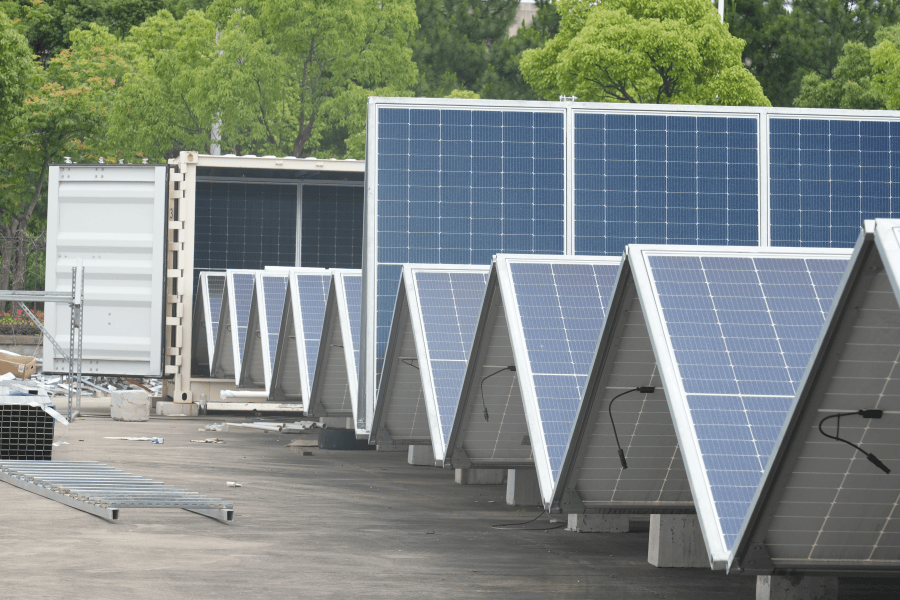
Table of Contents
- The Silent Problem: When the Grid Goes Down on a Critical Site
- Why This Hurts: More Than Just Lost Power
- A Better Way: Rethinking the Technical Spec for Military-Grade Storage
- Beyond the Spec Sheet: What We've Learned On-Site
- Making It Real: A Glimpse into a Deployed System
The Silent Problem: When the Grid Goes Down on a Critical Site
Let's be honest. For years, the conversation around energy storage for critical infrastructure, especially military installations, has followed a pretty standard script. The focus was often on capacity first C "We need X megawatt-hours" C and sometimes the finer points of the technical specification got lost in the procurement shuffle. I've been on site for commissioning and, let me tell you, that's where the real story unfolds. The common industry phenomenon? A system that meets the basic bid requirements on paper but struggles with real-world demands: slow response during a grid failure, complex and costly AC coupling with existing solar, or thermal management that can't handle a desert summer or a northern winter. The result is a potential vulnerability, not the ironclad resilience you're paying for.
Why This Hurts: More Than Just Lost Power
Why does this matter so much? It's not just about lights staying on. A report by the National Renewable Energy Lab (NREL) highlights that power outages cost the U.S. economy billions annually, and for military operations, the cost is measured in mission readiness and national security. When you amplify the basic problem, you see a cascade of issues:
- Cost Spiral: Inefficient systems have a higher Levelized Cost of Storage (LCOS). Every cycle of energy in and out that's lost to heat or conversion inefficiency adds up. You're paying for energy you can't use.
- Safety Compromises: A poorly managed thermal system doesn't just reduce battery life; it's a safety risk. Standards like UL 9540 and UL 9540A are there for a reason, and a spec that doesn't prioritize this from the cell level up is building in future headaches.
- Integration Headaches: Trying to bolt a standard, low-voltage AC-coupled storage system onto a large-scale military solar array often means extra inverters, more points of failure, and energy losses at every conversion stage (DC to AC, then back to DC for storage, then back to AC). It's clunky.
A Better Way: Rethinking the Technical Spec for Military-Grade Storage
This is where a focused look at a Technical Specification of High-voltage DC 1MWh Solar Storage for Military Bases changes the game. It's not just a product; it's a systems-level approach. The core idea is elegant: match the high-voltage DC output of your solar PV field directly with a high-voltage DC battery system. You're cutting out multiple, redundant power conversion steps. Honestly, from an engineering perspective, it's just simpler and more robust. At Highjoule, when we design for these specs, we're thinking about:
- UL & IEC as the Baseline, Not the Goal: Compliance is non-negotiable. Our systems are built to exceed the requirements of UL 9540, IEC 62619, and IEEE 1547 for grid interconnection. It's baked into the design from day one.
- Thermal Management as a Mission-Critical System: We don't use off-the-shelf cooling units. Our liquid thermal management system is designed for -30C to 50C ambient operation, keeping the battery in its optimal 25C 3C zone. I've seen this firsthand on site in Texas and Scandinavia C consistency is key for longevity and safety.
- Understanding the "C-Rate" in Practice: A spec sheet might boast a high C-rate (charge/discharge speed). But sustaining that without degrading the battery or tripping on temperature is the trick. Our 1MWh HV DC system is engineered for sustained, high-power output when it's needed most, not just a short burst.

Beyond the Spec Sheet: What We've Learned On-Site
Here's the expert insight you won't get from a datasheet. The biggest factor in long-term project success isn't just the hardware; it's how the system's software manages degradation and local grid codes. A battery's state of health (SOH) declines over time. A good system doesn't just passively record this; its energy management system (EMS) actively adapts charge/discharge patterns to minimize stress, effectively optimizing the LCOS over the 15+ year lifespan. We also build in massive redundancy in our monitoring and safety comms loops. If one path fails, three others are ready to take over. That's the kind of resilience you need for a base, not a commercial warehouse.
Making It Real: A Glimpse into a Deployed System
Let me give you a non-proprietary example from a project in a European NATO country. The challenge was a forward operating base with a 2MW solar array that needed guaranteed backup power for communications and command centers. The old solution was diesel gensets and some scattered small battery units. The grid was unreliable. The new solution centered on a containerized Highjoule 1MWh HV DC system.
The deployment was streamlined because the HV DC bus from the solar inverters plugged directly into our storage system. We saved weeks of integration work. The local EMS was programmed to prioritize solar self-consumption, then charge the batteries, and only then export C all while maintaining a "black start" capability. In its first major test, a grid outage occurred at 03:00. The system transitioned to island mode so seamlessly that the load didn't even flicker. The batteries carried the critical load until sunrise, when solar seamlessly took over. That's the outcome a proper technical specification enables.
So, the question for any planner or decision-maker isn't just "Do we need storage?" It's "What is the technical specification of our storage system truly built to do?" Is it built to check a box, or is it built, from the cell up, to provide unwavering, cost-effective, and safe resilience for the next two decades? That's the conversation we're here to have.
Tags: UL Standard BESS Europe US Market Energy Storage Systems High-voltage DC Military Energy Resilience
Author
James Zhang
20+ years agricultural energy storage engineer / Highjoule CTO