
Air-Cooled BESS Environmental Impact: Sustainable Irrigation Storage
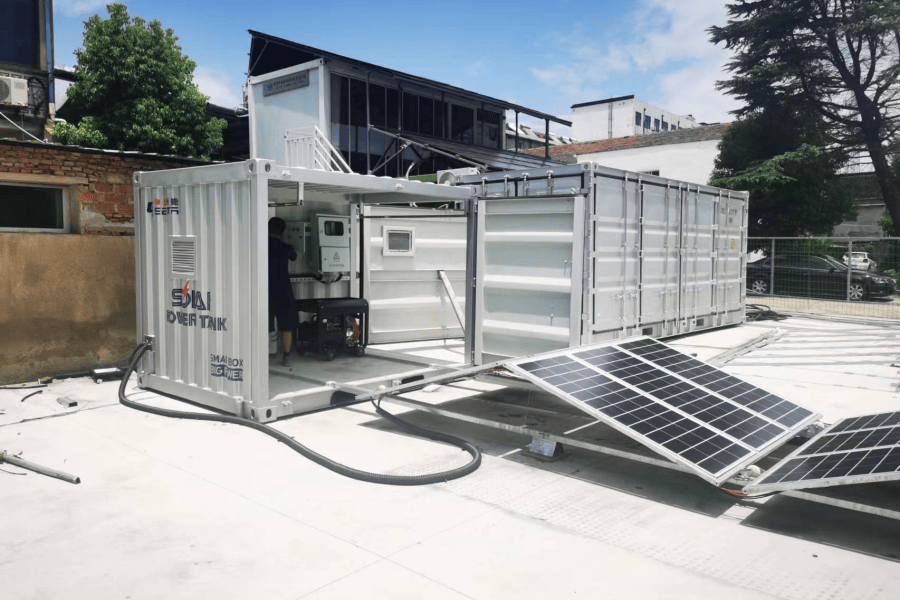
Let's Talk About Powering Your Farm's Future (And Its Footprint)
Honestly, after two decades on sites from California's Central Valley to rural Germany, I've seen a quiet revolution. Farmers and agribusinesses are getting serious about energy independence. Solar panels are a no-brainer. But the real game-changer? Pairing them with a battery. The question I get over coffee isn't just about cost anymore. It's, "Okay, but what's the real environmental impact of putting one of these battery containers on my land?" Especially for critical, water-dependent operations like irrigation. Let's break it down, not with marketing fluff, but with the kind of straight talk you'd give a neighbor.
Quick Navigation
- The Real Problem: It's More Than Just Carbon
- Why This Matters: Efficiency, Longevity, and Your Bottom Line
- The Air-Cooled Advantage: Simplicity as a Sustainability Strategy
- Case in Point: A Win in Washington State
- Making the Right Choice: What to Look For
The Real Problem: It's More Than Just Carbon
When we discuss environmental impact, carbon reduction is the headline. And rightly so - using stored solar to run irrigation pumps instead of diesel gensets is a massive win. The International Energy Agency (IEA) highlights that integrating renewables with storage is key to decarbonizing off-grid and rural industrial operations. But on the ground, the full lifecycle impact of the storage system itself is what keeps savvy operators up at night.
I've walked fields with farm managers worried about water usage for cooling, about potential coolant leaks contaminating soil, and about the energy needed just to keep the battery itself happy. A complex, maintenance-heavy system can quietly eat into the green benefits it's supposed to provide. It's like driving an electric truck but having to charge it with a diesel generator half the time - you're not getting the full picture.
Why This Matters: Efficiency, Longevity, and Your Bottom Line
Let's agitate that pain point a bit. The thermal management system of a Battery Energy Storage System (BESS) isn't just a technical spec; it's the heart of its environmental and economic efficiency. Poor thermal control leads to accelerated degradation, meaning you might need to replace batteries sooner - a huge hit in terms of embodied carbon from manufacturing and a financial setback. It also forces the system to waste energy on cooling, lowering your round-trip efficiency. When every kilowatt-hour counts for pumping water, that loss hurts.
This directly ties to your Levelized Cost of Storage (LCOS) - the true measure of what your stored energy costs over the system's life. A less efficient, shorter-lived system has a higher LCOS, undermining the economic case for your sustainable investment.
The Air-Cooled Advantage: Simplicity as a Sustainability Strategy
This is where the inherent design of a modern, air-cooled lithium battery storage container becomes a powerful solution. For agricultural irrigation sites, which are often remote, dusty, and operated by teams focused on farming, not complex machinery, simplicity is reliability. And reliability is sustainability.
An air-cooled system uses fans and clever internal ductwork to manage temperature with the ambient air. No liquid coolant loops, no chillers, no external water source. This means:
- Zero Risk of Fluid Contamination: You can deploy it right near your wellhead or in a corner of your field without a second thought about leaks polluting your land or water table.
- Minimal Parasitic Load: The system uses far less energy for cooling compared to liquid systems, especially in moderate climates. More of your solar harvest goes to pumping water.
- Robustness & Low Maintenance: I've seen firsthand how less complexity means fewer failure points. It's built for harsh environments. You're not scheduling coolant swaps or dealing with pump failures.
Now, the classic question: "But is it as effective?" For the vast majority of agricultural storage applications, absolutely. Irrigation cycles are demanding but predictable. Modern, UL 9540-certified air-cooled containers like the ones we engineer at Highjoule are designed with advanced cell chemistry and smart battery management systems (BMS) that precisely control C-rate (the speed of charge/discharge) and cell-level temperatures. This prevents hotspots and ensures even degradation, maximizing lifespan. We design for the real-world duty cycle of a farm, not just lab conditions.

Case in Point: A Win in Washington State
Let me give you a real example. We worked with a hops farm in Washington. Their challenge: high peak-demand charges from the grid during irrigation season and a desire to use their existing solar array more effectively. They needed a "set-it-and-forget-it" solution that could handle daily, deep cycles.
The solution was a 500 kWh air-cooled BESS, UL 9540 and IEC 62619 compliant, paired with their solar. The container was placed on a simple concrete pad at the edge of a field. The environmental wins were clear:
- Resource Use: No water used for cooling, period.
- Efficiency: The system's low parasitic load meant 97%+ round-trip efficiency was consistently achieved, making every sunbeam count.
- Longevity Projection: Based on the stable thermal management and controlled C-rate, the degradation curve is outperforming projections, pushing that LCOS lower every year.
The farm manager's feedback was the best kind: "After the first week, my team just treats it like a piece of the landscape. It does its job, and we do ours."
Making the Right Choice: What to Look For
So, when you're evaluating the environmental impact of an air-cooled lithium battery storage container for agricultural irrigation, move beyond the brochure. Ask your provider these grounded questions:
| Your Question | What It Reveals |
|---|---|
| "Can you show me the projected parasitic load at 35C (95F) ambient?" | Tests the cooling efficiency under your real peak summer conditions. |
| "How does the BMS ensure cell-level temperature uniformity?" | Gets to the heart of longevity and safety, beyond just cabinet temperature. |
| "What is the embodied carbon data for the unit, and what end-of-life recycling partners do you work with?" | Shows commitment to a full lifecycle view, not just operation. |
| "Is the system certified to UL 9540 for the specific market (US or EU)?" | This is non-negotiable. It's your guarantee of safety and performance tested to the highest local standards. |
At Highjoule, we bake these principles into our Agri-Stack containers. The design starts with thermal modeling specific to agricultural load profiles, uses components with verified low embodied carbon where possible, and our local service teams are trained to support the system for its entire 15+ year life. The goal isn't just to sell you a container, but to deliver a lower LCOS and a genuinely positive environmental footprint for your operation.
Ultimately, the greenest kilowatt-hour is the one you don't waste. And choosing a storage system that is inherently efficient, durable, and simple might just be one of the most sustainable decisions you make for your land. What's the one concern about on-farm storage you haven't found a clear answer to yet?
Tags: UL Standard BESS LCOE Thermal Management Agricultural Energy Storage Sustainable Agriculture
Author
James Zhang
20+ years agricultural energy storage engineer / Highjoule CTO