
The Ultimate Guide to LFP (LiFePO4) Photovoltaic Storage System for Rural Electrification in Philippines
Beyond the Grid: What the Philippines' Rural Electrification Journey Teaches Us About Next-Gen Energy Storage
Let's be honest for a second. When we talk about energy storage in the US or Europe, we often get caught up in megawatt-scale projects, complex revenue stacking, and grid service markets. It's high-stakes, for sure. But sometimes, the most profound lessons in reliability, simplicity, and true value come from places where the grid isn't a given. Having spent two decades on sites from Texas to Tanzania, I've seen this firsthand. The ongoing transformation in the Philippines, using LFP (LiFePO4) based photovoltaic storage systems for rural electrification, isn't just a humanitarian story - it's a masterclass in deploying resilient, cost-effective storage that we, in developed markets, should be paying close attention to.
Quick Navigation
- The Real Problem Isn't Just "No Grid"
- Why LFP Wins in the Real World (And It's Not Just Cost)
- Lessons for US & EU Commercial & Industrial Projects
- Making It Work: The Nuts and Bolts of a Robust System
- The Future is Modular and Scalable
The Real Problem Isn't Just "No Grid"
Sure, the core challenge in off-grid Philippine communities is the absence of traditional infrastructure. But the deeper, more universal pain point is the total cost of ownership and operational risk. Early solar-diesel hybrid systems often used whatever battery chemistry was cheapest upfront. I've walked into containerized systems where thermal runaway was a constant worry, where cycle life was so poor the economics collapsed within a few years, and where maintenance required a PhD in electrochemistry. This isn't unique to rural Asia. I've seen similar shaky economics in remote cell towers in the US Midwest and backup power for critical agri-processing facilities in Southern Europe. The problem is universal: deploying storage in logistically challenging, cost-sensitive environments where failure is not an option.
Why LFP Wins in the Real World (And It's Not Just Cost)
This is where the shift to Lithium Iron Phosphate (LFP) chemistry changes the game. The International Energy Agency (IEA) notes the rapid cost decline and performance improvements of LFP, making it the dominant chemistry for stationary storage in many regions. But from an engineer's boots-on-the-ground perspective, here's why it's winning:
- Inherent Safety: The phosphate-based cathode is fundamentally more stable. It has a much higher thermal runaway threshold. Honestly, when you're deploying a system hours from the nearest fire station, that's not a feature - it's a requirement. This same principle is why we at Highjoule Technologies insist on LFP for our commercial and microgrid solutions; safety isn't a premium add-on.
- Longevity That Makes Sense: LFP batteries routinely deliver 6,000+ cycles to 80% depth of discharge. For a rural microgrid running daily charge/discharge, that's over 15 years of service. This directly slashes the Levelized Cost of Storage (LCOS), which is the metric that actually matters to a project's bankability, whether in a Philippine village or a California winery.
- Forgiving Performance: They tolerate a wider state-of-charge range and have a flatter voltage curve. This means the battery management system (BMS) doesn't have to work as hard to keep every cell perfectly balanced, leading to simpler, more reliable overall system design.

Lessons for US & EU Commercial & Industrial Projects
The Philippines' experience is a blueprint for distributed, resilient power. Think about a manufacturing plant in Germany's North Rhine-Westphalia facing grid congestion charges, or a dairy farm in Wisconsin vulnerable to outages. The core need is the same: predictable, self-managed power. A project I advised on in a remote industrial park in Texas mirrored many "off-grid" challenges. The site needed peak shaving and backup, but grid connection upgrades were prohibitively expensive. We deployed a containerized LFP system, UL 9540 and IEC 62619 certified, that now provides 4 hours of critical runtime. The key learning? The system's simplicity and passive safety design drastically reduced insurance costs and operational overhead - a direct benefit of the LFP chemistry choice.
Making It Work: The Nuts and Bolts of a Robust System
Choosing LFP is just the start. The system integration is where you win or lose. Let me break down two critical aspects we focus on:
Thermal Management: It's Not Just About Cooling
In the Philippines' heat, or in a sealed container in Arizona, thermal management is everything. LFP's better thermal stability is a great start, but you need a system that maintains an optimal 20-30C operating range with minimal energy use. We use passive cooling designs where possible, coupled with low-speed fans, to avoid the complexity and power drain of massive HVAC systems. This directly boosts the system's overall round-trip efficiency.
Understanding C-Rate (In Plain English)
You'll hear engineers throw around "C-rate." Simply put, it's how fast you charge or discharge the battery relative to its capacity. A 1C rate means discharging the full battery in one hour. For rural electrification and most C&I applications, you don't need ultra-high C-rates. An LFP system optimized for a 0.5C discharge is more than adequate for solar smoothing or backup power, and it's gentler on the battery, extending its life. Overspec'ing for a high C-rate is a common, costly mistake. It's about right-sizing for the duty cycle.
The Future is Modular and Scalable
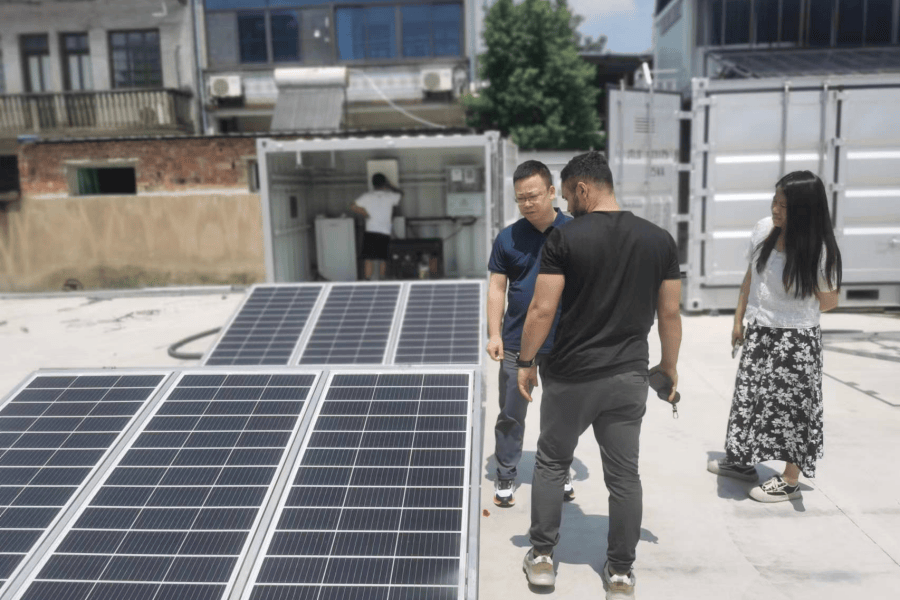
The most successful projects in the Philippines use a modular, building-block approach. Start with a 20-foot container that can power a community center and a few dozen homes. As demand grows - maybe a small business opens or a clinic adds equipment - you simply add another pre-integrated battery rack or even another container. This "pay-as-you-grow" model de-risks the initial investment. We've applied this same philosophy to our Highjoule EverScale series for commercial clients. A factory can start with a 250 kWh system for peak shaving and later expand to 1 MWh to incorporate solar PV or participate in a demand response program, all with minimal site re-engineering.
The journey to electrify rural Philippines with LFP storage is more than a case study. It's a validation of a technology and a deployment model that prioritizes long-term value, safety, and simplicity over short-term specs. For any business leader or project developer looking at energy storage - whether for resilience, cost savings, or sustainability - the question isn't just "what battery should we use?" It's "what system will still be working safely and profitably 15 years from now, with minimal fuss?" From what I've seen on the ground, from Southeast Asia to North America, the answer is increasingly clear. So, what's the one operational risk in your energy profile that a simpler, more resilient storage solution could eliminate?
Tags: UL Standard BESS LCOE Renewable Energy LFP Battery Rural Electrification Microgrid
Author
James Zhang
20+ years agricultural energy storage engineer / Highjoule CTO