
Hybrid Solar-Diesel BESS for Mining: Mauritania Case Study & UL Standards
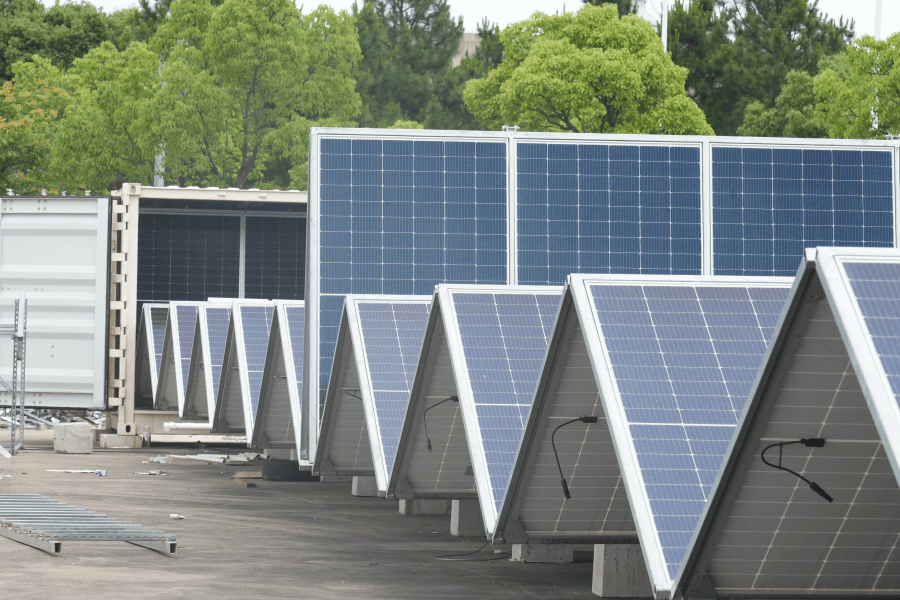
Table of Contents
- The Remote Power Dilemma: More Than Just Fuel Bills
- Beyond the Spreadsheet: The Real Cost of Unreliable Power
- A Blueprint from the Desert: The Mauritania 215kWh Hybrid Solution
- Engineering for the Extreme: What This Case Teaches Us About Standards
- Your Power, Your Control: The Practical Path Forward
The Remote Power Dilemma: More Than Just Fuel Bills
Honestly, if I had a dollar for every time a site manager told me their biggest headache was "fuel logistics," I'd have retired years ago. We all know the story: remote industrial operations, whether it's mining in West Africa, a data center in Texas, or a processing plant in Australia, are shackled to the diesel generator. The cost is staggering C the International Energy Agency (IEA) points out that in some off-grid industrial settings, fuel can constitute over 60% of total operating expenses. But let's be real, sitting here over coffee, the problem isn't just the line item on the budget. It's the volatility. One geopolitical hiccup, one supply chain delay, and your entire operational margin can vanish overnight. You're not just managing a mine or a factory; you're running a high-stakes logistics company for a flammable liquid.
Beyond the Spreadsheet: The Real Cost of Unreliable Power
Let's agitate that pain point a little. The fuel cost is visible. What's often hidden is the inefficiency. Diesel gensets running at low load are terribly wasteful, leading to more maintenance and shorter lifespans. Then there's the noise, the emissions (and the increasing carbon taxes in many jurisdictions), and the sheer risk of having all your eggs in one brittle, fuel-dependent basket. I've seen this firsthand on site: a generator hiccup during a critical process doesn't just pause production; it can damage equipment, create safety hazards, and derail a project timeline by weeks. You're paying for energy, but what you're really buying is reliability. And when that reliability is tied to a convoy of fuel trucks snaking through difficult terrain, you're on borrowed time.
This isn't just a developing-world issue. Look at microgrids in California or resilience-focused projects in Germany's industrial heartland. The core challenge is identical: how to create a stable, controllable, and cost-effective power island. The solution architecture emerging globally is hybridisation. Integrating solar PV or wind with battery storage and existing diesel generators isn't just "greenwashing"; it's a fundamental re-engineering of site power for resilience and lower Levelized Cost of Energy (LCOE).

A Blueprint from the Desert: The Mauritania 215kWh Hybrid Solution
This brings me to a project that perfectly encapsulates this shift C our deployment of a 215kWh Cabinet Hybrid Solar-Diesel System for a mining operation in Mauritania. The challenge was textbook: a remote site with punishingly high fuel costs, an urgent need to decarbonize, and zero tolerance for power downtime that could halt extraction and processing.
The solution we architected wasn't about ripping and replacing. It was about smart integration:
- The Solar Array: A sizable PV field to capture the abundant desert sun, acting as the primary power source during daylight.
- The 215kWh BESS Cabinet: This is the brain and the buffer. It stores excess solar, smooths out PV generation dips, and most critically, allows the diesel gensets to be switched off for long periods or run at their optimal, efficient load when needed.
- The Advanced Controller: The real magic. It seamlessly orchestrates the three sources - solar, battery, diesel - prioritizing renewable energy, maintaining perfect grid frequency and voltage, and ensuring not a millisecond of interruption.
The outcome? Fuel consumption slashed by over 40% in the first year. Generator runtime reduced by nearly 70%, translating directly into lower maintenance costs and longer asset life. The system paid for itself faster than the financial models predicted, simply because it turned wasted sun and inefficient generator cycles into stored, reliable kilowatt-hours.
Why This Case Matters for Markets
You might think, "That's a great story for off-grid Africa, but we have grid power." Do you, though? I've worked on projects in the Midwest US where grid connection upgrades were quoted in the millions and took years. I've seen factories in Europe facing punitive demand charges and seeking independence from volatile spot markets. The Mauritania case is a pure, distilled example of the hybrid principle. The technology stack - high-cycle life batteries, UL 9540-certified enclosures, advanced power conversion systems - is the same we deploy in Nevada or North Rhine-Westphalia. The core value proposition shifts from "avoiding fuel trucks" to "optimizing energy costs and ensuring business continuity," but the engineering heartbeat is identical.
Engineering for the Extreme: What This Case Teaches Us About Standards
Deploying a 215kWh system in the Mauritanian desert isn't a lab experiment. It's a brutal test of every component. This is where abstract standards like UL, IEC, and IEEE become your best friend. Let me break down two critical aspects in plain language:
1. Thermal Management is Non-Negotiable: In a desert, ambient temperatures can swing wildly. Batteries hate extreme heat; it ages them prematurely. Our cabinet design for that project used a closed-loop liquid cooling system, independent of the dusty outside air. This isn't a luxury feature. For any BESS, especially one expected to perform frequent, high-C-rate cycles (think of C-rate as how "hard" you're charging or discharging the battery), managing the internal temperature is the single biggest factor in achieving the 10+ year lifespan on the datasheet. A system built to UL 9540 standards has been torture-tested for these scenarios.
2. The LCOE Mindset: When we talk to clients, we shift the conversation from "battery cost per kWh" to Lifetime Cost of Energy. The Mauritania system's LCOE is a fraction of the diesel-only LCOE. Why? Because the assets (solar, battery) have near-zero marginal cost after installation. The battery's value isn't just in stored energy; it's in time-shifting solar energy and protecting the diesel generators. A well-integrated hybrid system lowers LCOE by maximizing the use of free fuel (sun/wind) and turning capital-intensive thermal assets into occasional-use insurance policies.

Your Power, Your Control: The Practical Path Forward
So, what's the takeaway from a desert mining site for a decision-maker in Houston or Hamburg? The technology to create resilient, cost-optimal power systems is here, proven, and standardized. The question is no longer "if" but "how."
The first step is an honest audit of your energy profile. What's your real load shape? Where are your pain points - fuel, demand charges, grid instability, carbon targets? From there, the solution isn't one-size-fits-all. It might be a 215kHz cabinet supporting a critical process line, or a multi-megawatt containerized system for an entire campus.
At Highjoule, our approach is rooted in this on-the-ground reality. We don't just sell cabinets; we deliver a predictable energy outcome. That means systems designed from day one to meet the strictest safety and interoperability standards (UL, IEC, IEEE) you require, coupled with controls smart enough to handle the complex dance of multiple energy sources. It means providing not just a product, but the localised support and performance analytics to ensure it delivers that lower LCOE for its entire life.
The mine in Mauritania took a leap to control its energy destiny. What's the first bottleneck in your power system you'd like to solve?
Tags: BESS LCOE UL Standards Off-grid Power Mining Operations Hybrid Power Systems Solar-Diesel
Author
James Zhang
20+ years agricultural energy storage engineer / Highjoule CTO