
High-Voltage DC BESS for Construction Sites: Cutting Costs & Boosting Reliability
Contents
- The Silent Site Killer: Unreliable & Expensive Power
- Why Your Diesel Generators Are Falling Short (And Costing You More)
- A Better Way to Power Up: The High-Voltage DC 5MWh BESS
- Case in Point: A Texas Megasite Gets Smart Power
- Beyond the Spec Sheet: What Really Matters On Site
- Making the Switch: It's About More Than Just a Battery
The Silent Site Killer: Unreliable & Expensive Power
Let's be honest. When you're managing a major construction project in the US or Europe, your primary headaches are usually schedule, budget, and labor. Power? That's supposed to be a given, right? You bring in a couple of massive diesel generators, fuel them up, and you're golden. I've seen this mindset on countless sites over the years. But here's the reality I've witnessed firsthand: treating temporary power as a simple checkbox is the silent killer of project efficiency and profitability.
The problem isn't just about having some power; it's about having clean, reliable, and cost-predictable power. Modern construction sites are power-hungry beasts. We're not just talking about lighting anymore. We're talking about electric vehicle fleets for material handling, high-precision welding equipment, fully electrified site offices, and even charging for the heavy machinery that's going electric. The traditional diesel gen-set setup struggles with the volatile, high-demand loads these activities create, leading to fuel waste, excessive maintenance, and a carbon footprint that's increasingly hard to justify to clients and communities.
Why Your Diesel Generators Are Falling Short (And Costing You More)
Let's agitate that pain point a bit. Why is the old way breaking down? First, efficiency. A diesel generator running at a partial load is incredibly inefficient. I've logged data on sites where gensets were operating below 30% load for significant periods, burning fuel but not doing useful work. According to the National Renewable Energy Laboratory (NREL), mismatched power generation can lead to a 15-30% waste in fuel costs alone. That's money literally going up in smoke.
Second, reliability and power quality. Sensitive equipment like CNC machines or data centers for prefab construction don't like the voltage fluctuations and harmonic distortion from generators. A sudden dip can ruin a batch of materials or crash a system, causing delays that ripple through your critical path. Third, and let's not mince words, the noise and emissions. In populated areas of California or across the EU, local regulations and community pressure are making 24/7 diesel operation a non-starter. The cost of permits, sound barriers, and potential fines is becoming a real line-item expense.
A Better Way to Power Up: The High-Voltage DC 5MWh BESS
So, what's the solution? This is where the Technical Specification of a High-voltage DC 5MWh Utility-scale BESS for Construction Site Power comes off the page and into the real world. Honestly, it's not just a battery in a box. It's a paradigm shift in how we think about temporary power.
Think of it as a giant, silent, ultra-efficient power bank for your entire site. The "High-voltage DC" part is key. By operating at a higher DC voltage (typically in the 1000-1500V range), the system drastically reduces electrical losses compared to traditional low-voltage AC systems. This means more of the energy you store or generate from, say, a temporary solar array, actually makes it to your tools and equipment. The 5MWh capacity is the sweet spot for most large-scale commercial and infrastructure projects - enough to shave peak demand, provide backup for critical phases, or even run quiet night shifts without firing up a single generator.

Case in Point: A Texas Megasite Gets Smart Power
Let me give you a real example from last year. We worked with a developer on a massive logistics warehouse project outside Houston. The challenge? Grid connection was delayed, and the site needed to run 18-hour days to meet an aggressive deadline. Running six large diesel generators around the clock was the initial plan, but the fuel logistics and cost were staggering.
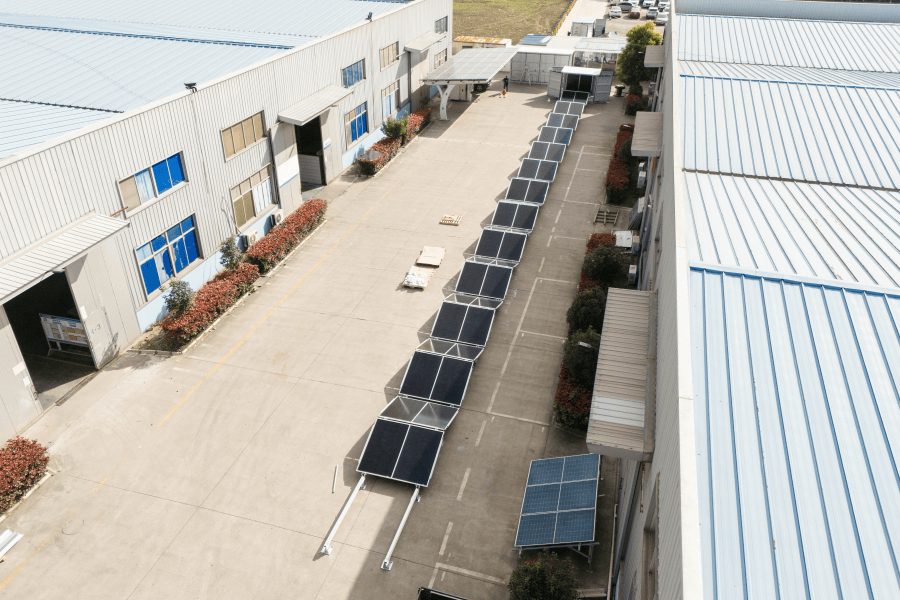
We deployed two of our 5MWh HighJoule HV DC BESS units, coupled with a temporary 1MW solar canopy over the material staging area. The system was designed to UL 9540 and IEC 62933 standards, which was non-negotiable for the project's insurance and safety team. Here's what happened: The BESS handled the base load and peak shaving, allowing the generators to run only at their optimal, efficient points or be switched off entirely during solar peaks. The result was a 58% reduction in diesel consumption in the first month. The project manager told me the noise reduction alone improved worker morale and communication on site. The LCOE - the Levelized Cost of Energy for that temporary setup - came in 40% lower than the pure-generator forecast.
Beyond the Spec Sheet: What Really Matters On Site
When you look at a technical specification, it's easy to get lost in numbers. Let me translate the crucial ones from an engineer's perspective.
C-rate: This tells you how fast the battery can charge or discharge. A 1C rate means the 5MWh system can be fully discharged in one hour. Our systems are optimized for construction, with a C-rate that allows them to handle the sudden, high-power demand of a crane start-up without breaking a sweat, while also being gentle enough on the cells for long cycle life.
Thermal Management: This is the unsung hero. A battery working hard on a Texas summer day needs to stay cool. A liquid-cooled thermal management system, which we insist on, is like having a precision air-conditioning system for each battery cell. It prevents hotspots, ensures consistent performance, and is the single biggest factor in long-term safety and durability. I've seen air-cooled systems derate (reduce power) on hot days right when you need them most - not acceptable on a time-sensitive job site.
Grid-Forming Capability: This is a game-changer for sites with weak or no grid. It means the BESS can create its own stable, clean "grid" for the site to run on, something a standard generator struggles with. It's what allows you to seamlessly integrate solar and handle sensitive loads.
Key Specs at a Glance
| Usable Capacity | 5 MWh |
| DC Voltage | 1500 V |
| Peak Power | 2.5 MW (0.5C) |
| Safety Standards | UL 9540, IEC 62933, IEEE 1547 |
| Thermal System | Liquid Cooling |
| Enclosure | IP54, 20ft ISO Container |
Making the Switch: It's About More Than Just a Battery
Adopting this technology isn't just a procurement decision; it's an operational upgrade. The real value from a company like Highjoule comes from the whole package: the engineering support to right-size the system for your specific load profile, the local service teams who understand regional codes from California to North Rhine-Westphalia, and the remote monitoring that lets you see your site's power health from your office. We treat the BESS as a temporary asset with a long life, often offering lease-to-own or buyback options that turn a capital expense into a manageable operational one.
The conversation is shifting. It's no longer "Can we afford to try this?" but "Can we afford not to?" With fuel price volatility, stringent emissions targets from the IEA, and the sheer demand for cleaner, quieter sites, the high-voltage DC BESS is moving from an innovative alternative to a standard best practice. What's the one power-related delay or cost overrun on your last project that this approach could have prevented?
Tags: Construction Site Power UL Standard BESS LCOE Europe US Market Renewable Energy
Author
James Zhang
20+ years agricultural energy storage engineer / Highjoule CTO