
Novec 1230 Fire Suppression for Military Base BESS: The Ultimate Safety & Uptime Guide
Contents
- The Silent Threat on Base: When Your BESS Isn't Just About Power
- Beyond the Spec Sheet: The Real-World Cost of a "Standard" Fire Event
- Novec 1230 Explained: Why It's the Go-To for Mission-Critical Assets
- A Case in Point: How a Forward Operating Base in Germany Upgraded Its Resilience
- Key Considerations for Your Deployment: It's More Than Just the Fluid
- Making the Right Choice for Your Base's Energy Future
The Silent Threat on Base: When Your BESS Isn't Just About Power
Let's be honest. When you're planning an energy storage system for a military installation, the conversation starts with capacity, discharge duration, and integration with microgrid controls. That's the engineering side of my brain talking. But the part of me that's spent decades on site, in all kinds of conditions, always circles back to one thing: what's the worst-case scenario? For a Battery Energy Storage System (BESS), especially in a confined, mission-critical environment like a base, the single biggest operational risk isn't cycle life degradation - it's thermal runaway and fire.
I've seen this firsthand. A standard commercial container, even with some basic smoke detection, isn't designed for the unique constraints of a military setting. You have proximity to other critical infrastructure, personnel safety, and the absolute non-negotiable need for uptime. A fire event here isn't just a financial loss; it's a direct threat to operational readiness and national security. The standard sprinkler system? It might save the building, but it will permanently destroy your multi-million dollar battery asset and likely cause cascading failures. Water and lithium-ion batteries don't mix, period.
Beyond the Spec Sheet: The Real-World Cost of a "Standard" Fire Event
We need to agitate this point because the stakes are so high. Let's talk numbers. The National Renewable Energy Laboratory (NREL) has published analyses showing that the levelized cost of storage (LCOS) isn't just about capex and cycles. A single major safety incident can increase the lifetime cost of a project by 30% or more when you factor in asset loss, site remediation, and downtime. For a base running on a microgrid, that downtime means switching to diesel gensets - fuel logistics, noise, emissions, and a glaring vulnerability.
The industry is waking up. Standards like UL 9540A and the upcoming NFPA 855 provide a framework, but they set the floor, not the ceiling. Compliance is the bare minimum. For a military application, you need a solution engineered for the ceiling - for the absolute assurance that a single cell failure is contained, suppressed, and does not become a mission-aborting catastrophe. This is where passive, clean agent fire suppression, specifically systems designed around Novec 1230 fluid, transitions from a "nice-to-have" to the core of your BESS specification.
Novec 1230 Explained: Why It's the Go-To for Mission-Critical Assets
So, what is Novec 1230, and why is it the solution we at Highjoule Technologies specify for our most demanding containerized BESS projects, especially for secure sites? In simple terms, it's a clean agent fire suppression fluid that puts out fires primarily by removing heat, not by smothering with foam or drenching with water. Here's the crucial part for you as a decision-maker: it's electrically non-conductive, leaves no residue, and has a remarkably low global warming potential.
Think about the aftermath. With a water-based system, you're looking at a total write-off. Every module, busbar, and inverter is a corrosion nightmare. With Novec 1230, the system discharges the agent directly into the battery enclosure or container, knocking down the fire in seconds and cooling the cells to prevent re-ignition. Honestly, the beauty of it is in the cleanup - or lack thereof. Once the gas dissipates (it's designed to be safe for occupied spaces post-discharge when used properly), you can assess the damage, replace the affected module rack, and potentially have the rest of the system back online in a timeframe that's orders of magnitude faster. This is about preserving asset value and uptime above all else.

A Case in Point: How a Forward Operating Base in Germany Upgraded Its Resilience
Let me give you a real-world example from a project we were involved with in Northern Germany. The challenge was a forward operating base with a growing reliance on on-site solar. Their existing lead-acid battery bank was failing, and they needed a high-power, lithium-ion BESS to provide peak shaving and black-start capability. The catch? The container had to be placed within 50 meters of a communications hub and living quarters. The local fire department's requirements were stringent - zero risk of propagation.
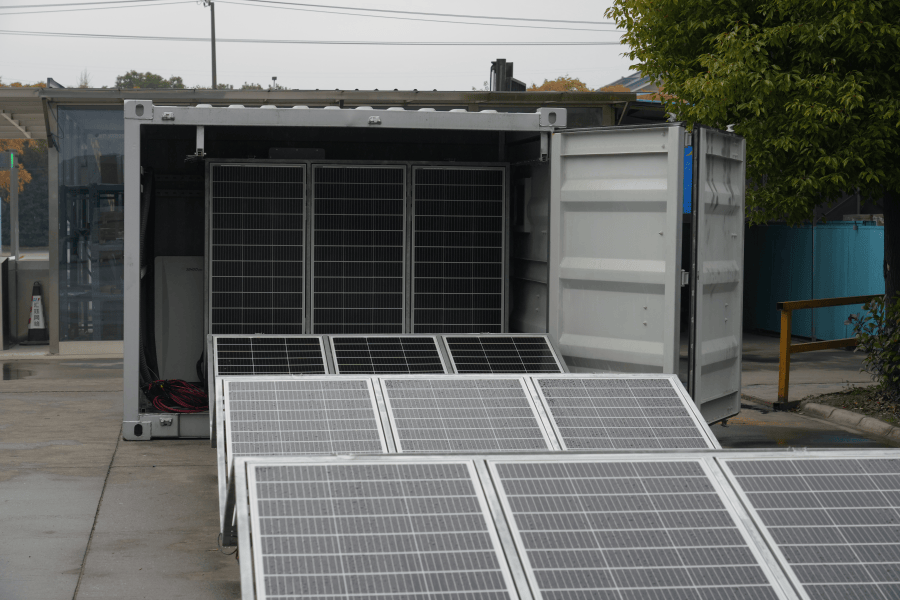
The solution was a 1.5 MWh Highjoule container built from the ground up with Novec 1230 as the centerpiece. We didn't just bolt a suppression tank onto a standard unit. The entire thermal management system was integrated with the fire detection. Advanced gas sensors (way faster than smoke or heat) were placed within each battery rack. The logic was simple: upon detecting the specific gases that precede thermal runaway, the system could initiate targeted cooling and, if thresholds were breached, a full suppressant discharge. This "pre-emptive" capability was the key to passing the safety review. Two years on, the system has had zero safety events, and the base commander sleeps better knowing their primary power backup won't become their primary liability.
Key Considerations for Your Deployment: It's More Than Just the Fluid
Specifying Novec 1230 is a great start, but the implementation is everything. Based on my 20+ years, here's what you need to scrutinize in any vendor's proposal:
- Total System Design: The suppression system must be fully integrated with the BESS management system (BMS). A standalone fire panel isn't enough. The BMS needs to see a suppression event and safely shut down strings and contactors.
- Container Integrity & Agent Retention: Military sites can have rough terrain. The container must be built to a higher structural standard to maintain integrity. For Novec to work, it needs to be contained at the right concentration for a minimum period (typically 10 minutes). Leaky doors or poor seals render the system useless.
- Thermal Management Synergy: This is a big one. Your cooling system (liquid or air) and your fire suppression must work in tandem. At Highjoule, we design our cooling loops to also act as a first-stage heat sink, potentially delaying or preventing the conditions that lead to a suppression event, thereby extending the life of the Novec charge and the battery itself.
- Local Service & Agent Recharge: You must have a service plan with a vendor who can guarantee a rapid response for inspection and, if ever needed, recharge of the system. This is part of our standard service-level agreement for military clients - we maintain a certified partner network across key regions.
Making the Right Choice for Your Base's Energy Future
The conversation around energy security is evolving from simple redundancy to intelligent, resilient infrastructure. Your BESS is a key pillar of that. Choosing a container with a purpose-built, integrated Novec 1230 fire suppression system isn't an added cost; it's an investment in the total lifecycle value and risk mitigation of your entire energy portfolio. It's what allows you to confidently deploy the high-density, high-performance battery technology you need, right where you need it most.
What's the one vulnerability in your current microgrid or backup power plan that keeps you up at night? Is your existing storage solution truly designed for the unique safety and operational demands of a military environment?
Tags: UL Standard BESS Military Energy Storage Energy Security Novec 1230 Fire Suppression IEEE
Author
James Zhang
20+ years agricultural energy storage engineer / Highjoule CTO