
High-voltage DC Industrial ESS Container: The Key to Cost-Effective Rural Electrification
Let's Talk About Powering Remote Areas: It's Harder Than It Looks
Hey there. If you're reading this, you're probably thinking about energy storage, maybe for a remote community, an industrial site off the beaten path, or a microgrid project. You've got the renewable generation figured out - solar, maybe some wind - but making that power reliable, day and night, that's the real puzzle. Honestly, I've been on-site for more of these deployments than I can count, from the deserts of Arizona to remote islands, and the challenges are always the same, just dressed up differently.
The dream is simple: clean, stable, affordable power for places the grid forgot. The reality? It's often a battle against high costs, complex engineering, and logistical headaches that can make a project's economics shaky before it even starts.
Quick Navigation
- The Real Problem: It's Not Just About "Having Batteries"
- Why It Hurts: The Cost and Complexity Spiral
- A Cleaner Way: The High-Voltage DC Industrial Container
- Case in Point: Learning from a German Microgrid
- The Tech Made Simple: C-Rate, Thermal Management & LCOE
- What This Means for Your Project
The Real Problem: It's Not Just About "Having Batteries"
When we talk rural or remote electrification, especially from an industrial or large commercial perspective, we're not talking about a few rooftop panels and a small battery bank. We're talking about megawatt-scale needs for factories, agricultural processing, water treatment, or entire villages. The core problem here is system-level efficiency and balance-of-plant (BOP) costs.
Traditional setups often involve low-to-medium voltage battery racks, which then require a small army of power conversion systems (PCS) - inverters, transformers, combiner boxes - to step up the voltage to something usable for the local mini-grid or heavy machinery. Every conversion step, from DC to AC and back, or stepping up voltage, loses energy. According to the National Renewable Energy Laboratory (NREL), these conversion and transmission losses can eat up 5-10% of your generated energy before it even does any work. In an off-grid setting where every kilowatt-hour is precious, that's a massive hit.
Why It Hurts: The Cost and Complexity Spiral
Let me agitate this a bit based on what I've seen firsthand. More components don't just mean higher initial capex. They mean:
- A bigger footprint: More containers, more cabling, more space needed.
- Higher installation & integration costs: More skilled labor hours, more complex commissioning.
- Reduced reliability: More potential points of failure. That inverter hall is a high-maintenance area.
- Thermal management nightmares: All those power electronics generate heat, requiring sophisticated and energy-hungry cooling systems.
You end up with a system where a significant portion of your budget and operational effort is spent on managing the infrastructure around the batteries, not the energy storage itself. It pushes the Levelized Cost of Energy Storage (LCOES) up, making projects harder to justify.

A Cleaner Way: The High-Voltage DC Industrial Container
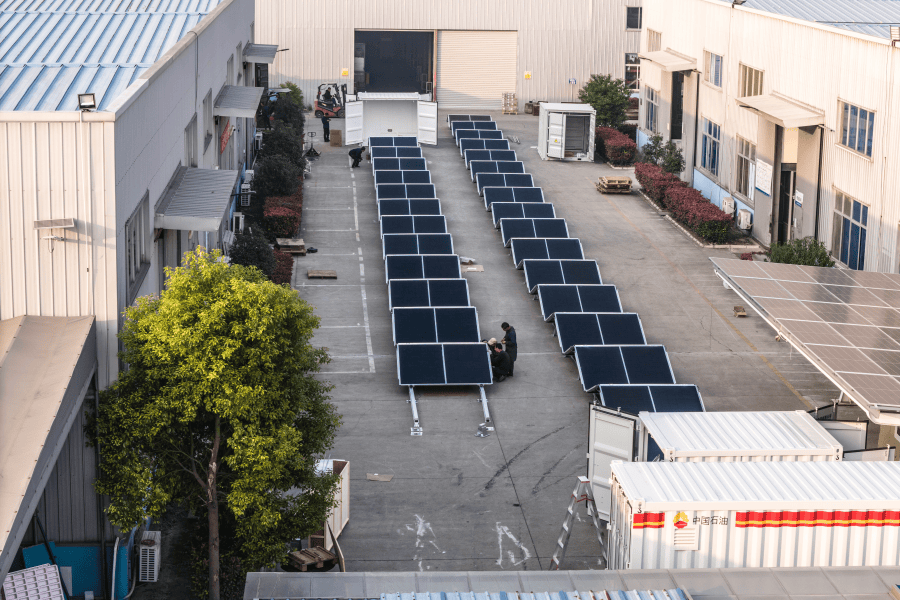
This is where the concept of the integrated, high-voltage DC industrial energy storage container becomes a game-changer. It's not just a box of batteries; it's a pre-engineered, pre-tested power plant in a shipping container. The core idea is elegant in its simplicity: minimize conversions, maximize density, and ship it ready to work.
Instead of distributing low-voltage battery racks, this approach integrates battery modules that area to achieve a DC bus voltage of 1500V or even higher. This high-voltage DC output can then directly interface with large solar PV arrays (which also operate at high DC voltages) and connect to the grid or microgrid through far fewer, and much larger, centralized inverters. The reduction in components is dramatic.
At Highjoule, when we design these systems, we build them from the ground up to meet the strictest safety and performance benchmarks like UL 9540 and IEC 62933. It's not an afterthought. The entire container - from the battery management system (BMS) and thermal management to the fire suppression - is certified as a single, unified energy storage system. This massively simplifies permitting and insurance, a huge hurdle in both the US and European markets.
Case in Point: Learning from a German Microgrid
Let's look at a project in Northern Germany, supporting an agro-industrial cooperative. They had a 5 MW solar farm but needed stable power for their refrigeration and processing plants 24/7. The initial design used a traditional low-voltage BESS setup, requiring multiple power conversion skids.
The challenge was space constraints and a tight budget for ongoing maintenance. The solution we helped pivot to was a single 2.5 MWh high-voltage DC container. By accepting the high-voltage DC input directly from part of the solar array and using a single, large inverter, they cut their BOP footprint by nearly 40%. The thermal management system, a liquid cooling solution designed for the high-density pack, actually uses less auxiliary power than the forced-air cooling required for the scattered, older design. The result? A lower installed cost per kWh and a projected 15% improvement in round-trip efficiency. That's real money saved, every single day.
The Tech Made Simple: C-Rate, Thermal Management & LCOE
I know these terms get thrown around. Let me break down why they matter for this solution, in plain English.
C-Rate: Think of this as the "speed" of the battery. A 1C rate means you can charge or discharge the full battery in one hour. For rural industrial use, you often don't need ultra-fast discharge (like for grid frequency regulation). You need sustained, steady power. A high-voltage DC system is often optimized for a moderate C-rate (like 0.5C), which is gentler on the battery cells, extends their life, and is perfectly matched for daily solar charge/discharge cycles. Longer life directly lowers your LCOE.
Thermal Management: This is the unsung hero. Batteries perform best and last longest within a tight temperature range. In a pre-fabricated container, we can engineer a superior, uniform cooling system - like liquid cooling plates that touch each cell module. I've seen the difference on site: a liquid-cooled container in the Texas heat holds its performance where air-cooled systems start to throttle output. Consistent temperature means predictable performance and longevity.
LCOE (Levelized Cost of Energy): This is the ultimate scorecard. It's the total cost of owning and operating the system over its life, divided by the total energy it delivered. By cutting BOP costs, improving efficiency (less energy lost to conversion), and extending battery life through better thermal management and optimized C-rate, the high-voltage DC container directly attacks every variable in the LCOE equation. The International Renewable Energy Agency (IRENA) consistently highlights system integration and standardization as key LCOE reduction levers, and that's exactly what this approach delivers.
What This Means for Your Project
So, when you're looking at a rural electrification or industrial off-grid project, the question shouldn't be "how many battery modules do we need?" It should be "what is the most efficient, reliable, and cost-effective system to deliver power?" The high-voltage DC industrial container is a compelling answer to that second question.
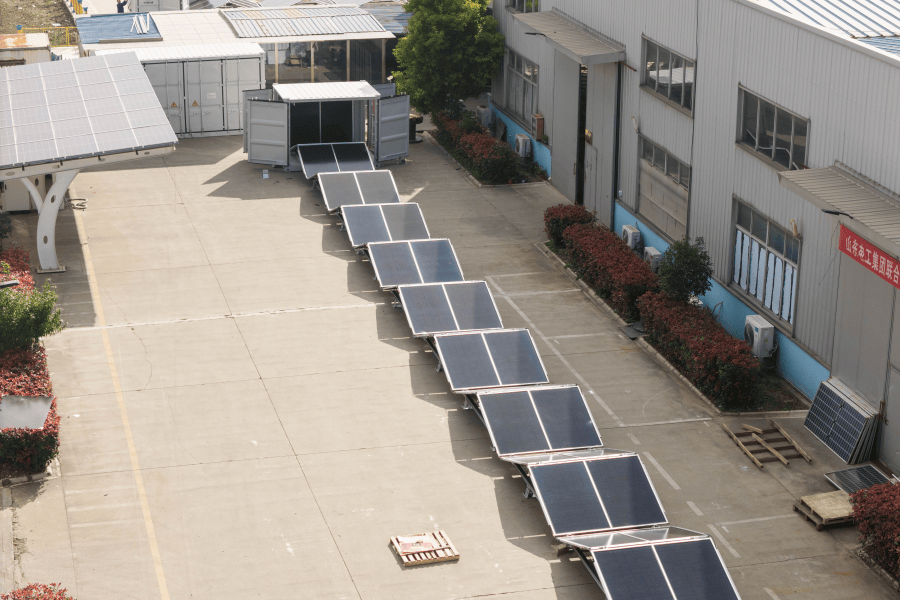
It brings a utility-scale, standardized approach to decentralized projects. For us at Highjoule, it's about providing a product that isn't just a commodity, but a validated, safe, and optimized power asset. We handle the complex integration in our factory, under controlled conditions. What arrives on your site - whether in the Philippines, Poland, or Pennsylvania - is a container you position, connect, and commission with far less hassle. Your focus can stay on your core project, not on becoming a power systems integrator.
What's the biggest logistical challenge you're facing in your upcoming remote power project? Is it permitting, total installed cost, or long-term serviceability?
Tags: UL Standard BESS LCOE Energy Storage Rural Electrification ESS Container High-voltage DC
Author
James Zhang
20+ years agricultural energy storage engineer / Highjoule CTO