
High-voltage DC BESS for Rural Electrification: A Blueprint for Cost-Effective Grid Resilience
Contents
- The Real Cost of Grid-Edge Storage
- The Safety Tightrope: More Than Just a Checklist
- Scalability That Actually Works
- A Case in Point: Learning from the Front Lines
- Why High-Voltage DC Matters (And It's Not What You Think)
The Real Cost of Grid-Edge Storage
Let's be honest. When we talk about deploying battery storage at the grid edge - think industrial parks, remote communities, or bolstering weak distribution lines - the conversation in boardrooms quickly turns to Levelized Cost of Storage (LCOS). It's the king metric. But here's the thing I've seen firsthand on site: the upfront CapEx number on the spec sheet often lies. Or at least, it hides the real story. The true cost gets buried in complex balance-of-system components, miles of heavy AC cabling, oversized inverters, and the sheer physical footprint needed for lower-voltage systems. The NREL has shown how system architecture directly impacts LCOS, and too often, we're optimizing the wrong variable.
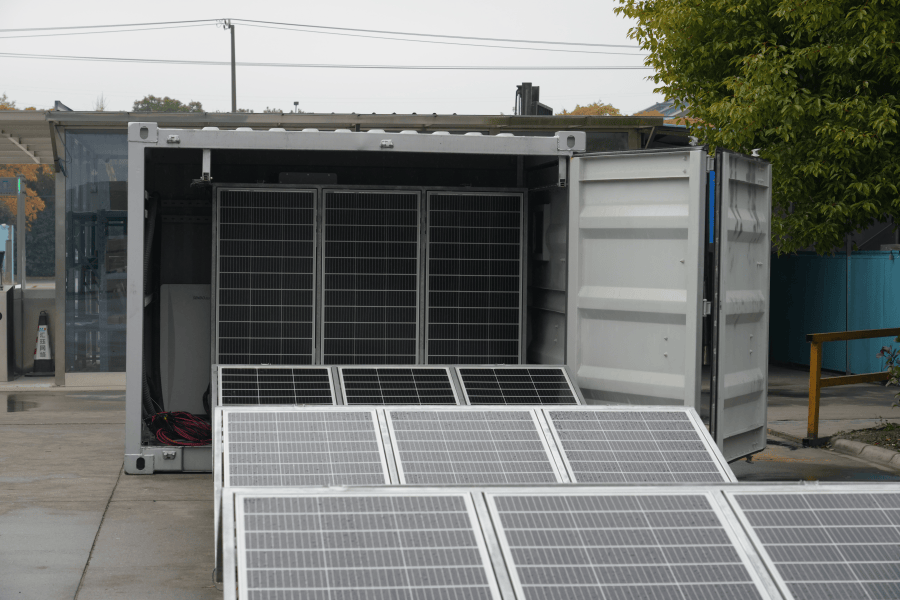
I was reviewing a project specification recently, one designed for rural electrification in the Philippines. On the surface, it was for a challenging, off-grid environment. But as I dug into the Technical Specification of High-voltage DC Energy Storage Container, something clicked. This wasn't just a solution for a tropical archipelago; it was a blueprint for solving the nagging, expensive problems we face right here in North America and Europe.
The Safety Tightrope: More Than Just a Checklist
Safety is non-negotiable. We all lead with UL 9540, IEC 62619, and the like. Compliance is the ticket to play. But true safety isn't just a certificate on the wall; it's baked into the design philosophy. One of the biggest operational risks in containerized BESS is thermal runaway propagation. In a high-density, containerized system, how you manage heat isn't an afterthought - it's the central nervous system.
The spec I looked at mandated a liquid-cooled thermal management system with independent channels per battery rack. Honestly, that's what you want for a system meant to operate reliably in 40C+ ambient temperatures with minimal maintenance. This approach directly limits thermal propagation risk. For our markets, this translates to lower insurance premiums, easier permitting (fire marshalls love clear, passive safety designs), and ultimately, peace of mind. It's about designing for the worst-case scenario from day one, not just meeting the baseline standard.
Scalability That Actually Works
Here's another common headache: you start with a 500 kWh system for a factory's peak shaving. It works great. Six months later, the business expands, and they need 2 MWh. With a traditional low-voltage AC-coupled design, you're often looking at a whole new container, new inverters, and a complex re-wiring and synchronization project. The "modular" promise falls apart at the construction phase.
The high-voltage DC approach flips this script. By stacking battery racks in series inside the container to achieve a DC bus voltage of 1500V or higher, you're essentially creating a single, large "battery block." Scaling up often means paralleling more of these pre-integrated, pre-tested containers on a common DC bus. The power conversion system (PCS) is sized for the total capacity from the start. This isn't just neater; it drastically reduces installation time, commissioning errors, and balance-of-system costs. The scalability is in the design DNA.

A Case in Point: Learning from the Front Lines
Let me give you a real example, close to home. We worked with a mining operation in Northern Canada - about as remote and demanding as it gets. Their challenge was pure economics: diesel generation costs were astronomical, and grid connection was a 200km dream. They needed a solar-plus-storage microgrid to cut fuel use by 70%. The initial designs using standard low-voltage storage containers showed a payback period that was, frankly, too long.
We pivoted to a design inspired by the principles in that Philippines spec: a high-voltage DC-coupled BESS. By eliminating multiple, distributed AC-DC conversion steps and using a centralized, high-efficiency inverter, we boosted the round-trip efficiency from ~86% to over 92%. The higher system voltage meant thinner, lighter, less expensive copper for the DC cabling runs across the large site. The container itself was a pre-fabricated, all-in-one unit with integrated fire suppression and cooling, certified to both UL and IEC standards for global acceptance. The result? The project's LCOS dropped by nearly 20%, turning the economics from questionable to an obvious win. The client got a system that was simpler to operate and maintain in a harsh environment.
Why High-Voltage DC Matters (And It's Not What You Think)
So, let's demystify the tech a bit. When I talk about high-voltage DC (like 1500V), I'm not just talking about a higher number for the sake of it. Think of it like plumbing. Moving a large amount of water (energy) requires either a huge pipe (thick, expensive cables) or high pressure (voltage). High voltage lets us use smaller, more manageable "pipes," reducing material costs and energy losses over distance.
Then there's C-rate. A spec might say a battery has a 1C continuous discharge rate. Simply put, that means a 100 kWh battery can deliver 100 kW for one hour. But in a grid-support application, you might need short, high-power bursts - like 200 kW for 15 minutes to prevent a voltage dip. That's a 2C pulse. The battery's internal design and, crucially, the thermal management system must support that without degrading the cells. A system designed for the variable, heavy cycling of rural microgrids, like the one in the Philippines spec, inherently builds in that robust C-rate capability and thermal headroom. It's built for duty, not just demonstration.
At Highjoule, we've taken these lessons from extreme deployments and baked them into our standard product lines. Whether it's for a Californian community seeking resilience against Public Safety Power Shutoffs or a German industrial park optimizing its energy costs under EU regulations, the principles are the same: design for real-world LCOS, bake in safety beyond compliance, and ensure scalability without surprises. Our containers aren't just boxes with batteries; they're pre-engineered grid assets, tested to the relevant UL, IEC, and IEEE 1547 standards, and supported by a team that understands deployment from the ground up.
The next time you're evaluating a storage solution, look beyond the headline kWh number. Ask about the system voltage. Dig into the thermal management details. Question the true path to scaling. You might find that the most cost-effective, resilient blueprint for your project was forged solving challenges half a world away. What's the one design constraint in your next project that's driving your costs up?
Tags: Energy Storage Container UL Standard BESS LCOE Grid Resilience Rural Electrification IEEE 1547 High-voltage DC
Author
James Zhang
20+ years agricultural energy storage engineer / Highjoule CTO