
High-Voltage DC Industrial ESS for EV Charging: Solving Grid & Cost Challenges
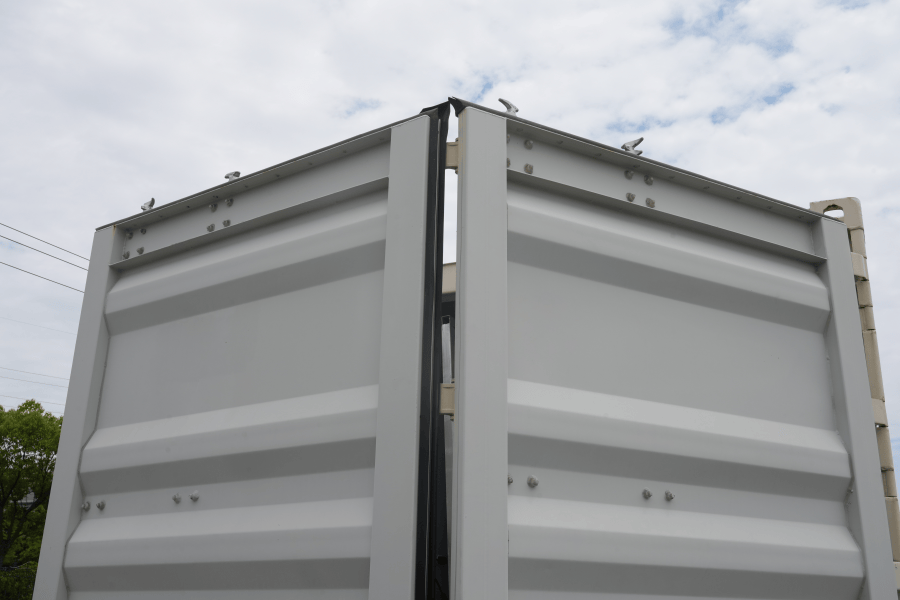
Table of Contents
- The Real Problem Isn't Just Power, It's the Grid
- When Demand Charges and Upgrades Make Your Business Case Vanish
- A Different Approach: Thinking in DC, Not AC
- Beyond the Brochure: The Specs That Actually Matter On-Site
- A Case in Point: The 2 MW Truck Stop in Ohio
- Your Next Step: Asking the Right Questions
The Real Problem Isn't Just Power, It's the Grid
Let's be honest. If you're planning a high-power EV charging hub - whether for fleet depots, public fast-charging corridors, or heavy-duty truck stops - you've already run the numbers on power demand. You know you need megawatts. But here's what I've seen firsthand, from California to Bavaria: the biggest hurdle isn't the charger technology itself. It's the grid connection.
That 1 MW or 2 MW you need doesn't just appear. Local utilities are overwhelmed with interconnection requests. The queue for grid studies and upgrades can stretch for years, according to NREL. And even if the capacity is theoretically there, the demand charges from pulling that much power all at once can obliterate your operating margins. You end up paying a premium for the privilege of stressing the local transformer, honestly.
When Demand Charges and Upgrades Make Your Business Case Vanish
Let's agitate that pain point a bit. I was on a site in Texas last year for a proposed 12-stall charging plaza. The utility came back with a quote: $850,000 for a new substation feeder and transformer upgrade, with an 18-month lead time. The projected monthly demand charges? Another $30,000 on the low end. The project's ROI simply disappeared overnight. This isn't an outlier; it's the new normal.
The traditional band-aid has been slapping on a standard AC-coupled battery system. It helps, sure. But you're adding extra conversion steps: DC battery to AC grid, then back to DC for the charger. Every conversion is a loss - heat and wasted energy, typically 3-5% per step. For a 24/7 operation, that adds up to a massive amount of lost revenue over a 10-year lifespan. You're also dealing with more complex controls and a larger physical footprint.

A Different Approach: Thinking in DC, Not AC
This is where the conversation needs to shift. Instead of seeing the grid as the sole source, we should see it as a baseline replenishment source. The core solution for high-power EV charging is a high-voltage DC industrial ESS container designed specifically for this duty cycle.
The logic is beautifully simple. Modern battery racks output high-voltage DC. EV fast chargers need high-voltage DC input. So why convert to AC in the middle? A purpose-built DC-coupled ESS container acts as a massive buffer. It trickle-charges from the grid at a steady, low rate (slicing demand charges to the bone), stores that energy, and then releases it directly as high-voltage DC to the chargers at full power when vehicles plug in. The grid sees a calm, predictable load. You see happy customers and manageable bills.
Beyond the Brochure: The Specs That Actually Matter On-Site
Now, not all "DC-coupled" solutions are equal. After 20 years in this field, I look past the headline capacity (MWh) and focus on the specs that determine real-world performance and safety. When we designed our Highjoule HV-DC container, these were non-negotiable:
- High C-Rate, Sustainably: You need a battery that can discharge incredibly fast to feed multiple 350kW chargers simultaneously. But a high C-rate (like 1.5C or 2C) generates intense heat. The spec that matters is the sustainable C-rate over the full discharge cycle, not a peak burst. Our thermal management isn't an afterthought - it's a liquid-cooled system that keeps cells within a 2C differential. This is what prevents premature aging and maintains warranty conditions.
- Native High-Voltage DC Bus: We're talking about a DC bus operating at 800V to 1500V. This isn't just about efficiency; it's about component reliability. All internal components - from the power conversion system (PCS) to the switchgear - must be purpose-built for high-voltage DC, not adapted from AC units. This is a core safety and performance differentiator.
- LCOE as the True North: Everyone talks about upfront cost per kWh. Smart operators talk about Levelized Cost of Energy (LCOE) - the total cost of ownership divided by the total energy delivered over the system's life. A robust thermal system, high cycle life (think 6,000+ cycles at 80% depth of discharge), and minimal conversion losses directly drive your LCOE down. That's the number that wins CFO approval.
- Safety as a System, Not a Certificate: UL 9540 and IEC 62443 are table stakes. But on-site, safety is about system design. Our containers have compartmentalized, NEMA 3R-rated battery cabinets, dedicated smoke ventilation channels, and gas detection that's integrated with a passive ventilation system that doesn't rely on external power. I've seen how this containment strategy in a pre-fabricated container gives fire marshals and insurers the confidence they need.
A Case in Point: The 2 MW Truck Stop in Ohio
Let me give you a real example. We deployed a 2.5 MWh / 2 MW Highjoule HV-DC container at a truck stop in Ohio last year. The challenge: they wanted to add four 360kW chargers for electric semis, but their existing grid service was maxed out at 500kW.
The Solution: We installed the container as a DC buffer. It continuously charges from the grid at a steady 400kW, well within the limit. When two trucks plug in, the system delivers 720kW from the battery directly to the chargers, with the grid only contributing its steady 400kW. The peak demand on the grid? It never exceeds 400kW.
The Outcome: They avoided a $1.2 million grid upgrade. Their demand charges increased by less than $5,000 a month, not the $40,000+ it would have been. The DC-DC efficiency of over 98% means they're wasting very little energy. The system is UL 9540 certified, which smoothed the permitting process immensely. It wasn't just an add-on; it was the enabler for the entire project.
Your Next Step: Asking the Right Questions
So, if you're evaluating a Technical Specification of High-voltage DC Industrial ESS Container for EV Charging Stations, move beyond the basic capacity and price. Sit down with your engineering team or your vendor and ask:
- "What is the sustainable C-rate of the battery system, and how is the thermal management designed to support it?"
- "Can you show me the single-line diagram for the internal DC bus and explain the protection philosophy?"
- "Based on my local energy and demand charge rates, what is the projected LCOE and payback period for this specific configuration?"
- "Beyond the main certifications, what on-site safety and containment features are built into the container to address local fire code concerns?"
The right high-voltage DC ESS isn't a commodity purchase. It's a strategic grid asset that turns a constrained, costly power scenario into a scalable, profitable charging business. The technology is here, and it's proven. The question is, are you building a charging station that's limited by the 20th-century grid, or a resilient energy hub designed for the 21st?
What's the one grid constraint that's keeping you up at night on your next EV project?
Tags: UL Standard BESS LCOE EV Charging Infrastructure Industrial Energy Storage IEEE 1547 Grid Stability High-voltage DC
Author
James Zhang
20+ years agricultural energy storage engineer / Highjoule CTO