
IP54 Outdoor Industrial BESS for Remote Microgrids: UL-Certified Resilience
Contents
- The Silent Problem: When "Off-Grid" Means "On Your Own"
- Why This Hurts Your Bottom Line and Operations
- A Container That Gets It: The IP54 Industrial ESS
- Beyond the Spec Sheet: What It Really Means On Site
- Case in Point: An Island in the North Atlantic
- Making the Spec Work for Your Project
The Silent Problem: When "Off-Grid" Means "On Your Own"
Let's be honest. When we talk about deploying battery energy storage systems (BESS) for remote island microgrids or off-grid industrial sites, the conversation in boardrooms often starts with capacity and cost. But if you've ever been on-site after a major storm, or during a prolonged heatwave, you know the real discussion is about survival. It's about a piece of critical infrastructure that you, quite literally, cannot afford to have fail. The standard indoor or lightly-protected storage solutions that work in a temperate German commercial park? They're a liability out here.
The core challenge isn't just storing energy; it's housing that intelligence and power in a system that can withstand its environment indefinitely, with minimal babysitting. I've seen firsthand how a seemingly minor spec oversight - like an ingress protection rating meant for occasional drizzle, not horizontal sea spray - can lead to corrosion, sensor faults, and ultimately, a system shutdown when it's needed most.
Why This Hurts Your Bottom Line and Operations
This isn't just an engineering nuance. It directly hits your Levelized Cost of Energy (LCOE) and operational resilience. A study by the National Renewable Energy Laboratory (NREL) highlights that for remote microgrids, operations and maintenance (O&M) costs can be 2-3 times higher than for grid-tied systems, largely due to environmental factors and access difficulties. Every unscheduled maintenance visit to a remote island is a logistical and financial event.
Think about it. A faulty cooling system due to dust ingress (a real problem in arid sites) forces the BESS to derate its output to prevent overheating. Suddenly, your 2 MW system is effectively a 1.5 MW system, jeopardizing peak shaving or grid stability contracts. Or, moisture seeping into a non-compliant enclosure triggers a ground fault alarm, forcing a full safety shutdown. Now you're running on expensive, noisy diesel gensets while you fly a technician out. The business case for your renewable microgrid unravels fast.
A Container That Gets It: The IP54 Industrial ESS
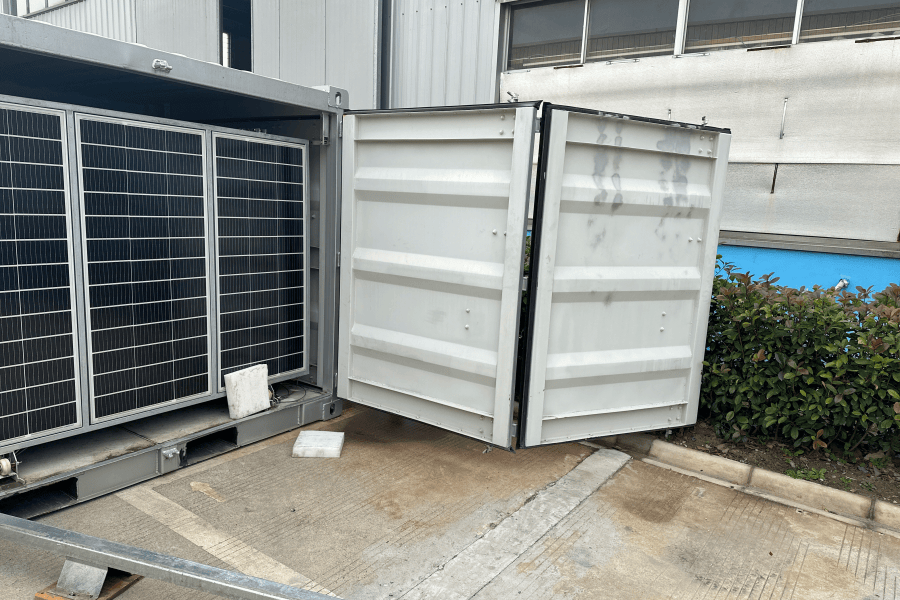
This is where the technical specification of an IP54 Outdoor Industrial ESS Container stops being a line item and becomes the foundation of your project's success. It's a philosophy of design that acknowledges the real world. "IP54" isn't just a code. It's a promise: protection against dust (5) that could interfere with operation, and protection against water splashed from any direction (4). For most remote coastal or dusty inland sites, this is the baseline for year-round, set-and-forget (almost) reliability.
But the spec is just the start. The real magic is in how this rating is achieved while maintaining performance. At Highjoule, when we build to this standard, we're thinking about the integrated thermal management system that can cool the batteries efficiently even when the container's exterior is caked with salt spray or dust. We're thinking about the C-rate - the speed at which the battery charges and discharges. In a microgrid, you need a high C-rate for frequency regulation when a cloud bank passes over your solar farm. But high power means more heat. So the container's climate control has to be robust enough to handle those thermal spikes without failing, itself a potential single point of failure if not designed right.

Beyond the Spec Sheet: What It Really Means On Site
So what does this look like on the ground? First, it's about safety compliance from the inside out. Every component, from the battery racks to the power conversion system (PCS), is selected and integrated with UL 9540 and IEC 62933 standards in mind. This isn't just for certification; it's for the local fire marshal on a remote Scottish island who needs to approve the installation. Having that recognized certification simplifies everything.
Second, it's about serviceability. Honestly, I've crawled into enough containers in my career to know that easy access matters. Our design philosophy is "modular isolation." Critical components are in separate, accessible bays. If a HVAC unit needs service, the technician doesn't have to power down the entire battery array. This modularity, built into the container's layout, drastically reduces mean time to repair (MTTR).
Case in Point: An Island in the North Atlantic
Let me give you a concrete example from a project we completed last year. A small community on a North Atlantic island was reliant on a diesel-powered microgrid. Their goal was to integrate a 4 MW wind farm and slash diesel use by over 70%. The challenge? Hurricane-force winds, salt-laden air, and a site that could be inaccessible by ship for weeks in winter.
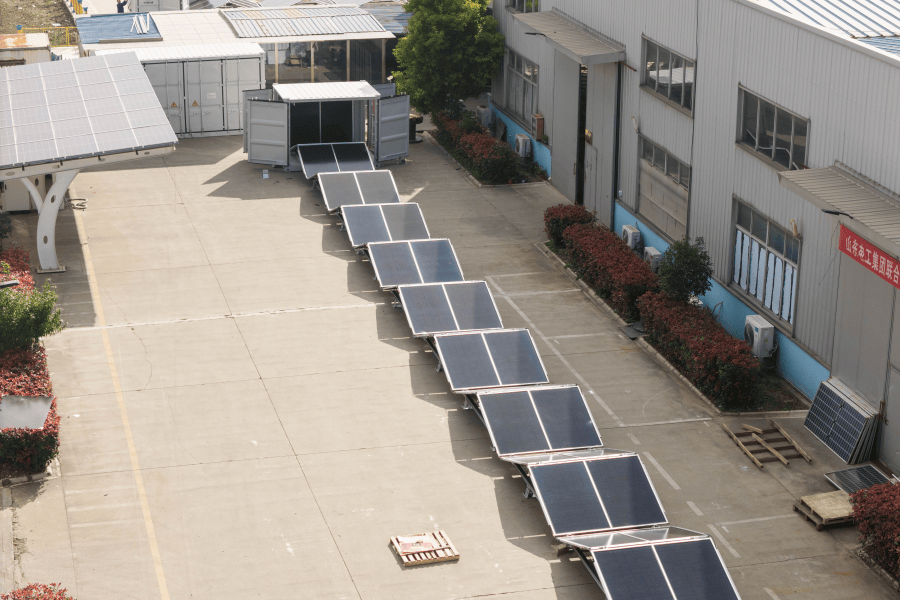
The solution centered on two of our IP54 outdoor industrial ESS containers. The spec was non-negotiable. We went beyond, adding corrosion-resistant coatings on all external fittings and seismic bracing (yes, even there). The thermal system was oversized by 20% for the worst-case still, hot day. The result? The system has operated autonomously for 14 months. During a recent storm that took down other infrastructure, the BESS seamlessly provided backup power and frequency regulation for the microgrid, allowing the community to ride through the event without starting a single diesel generator. The LCOE for their renewable energy plummeted because the storage part of the equation just worked.
Making the Spec Work for Your Project
The lesson here is that for remote and island microgrids, the container is not just a box; it's the first and most critical line of defense. When evaluating a Technical Specification of IP54 Outdoor Industrial ESS Container for Remote Island Microgrids, don't just check the box for IP54. Dig deeper.
- Ask about the thermal management under partial load: Systems often run at 30-60% load. Is the cooling efficient at those levels, or does it cycle on/off inefficiently?
- Question the service pathways: Can major components be replaced without a cutting torch and a two-week downtime?
- Demand local compliance: Does the entire assembled system meet the specific electrical and fire codes (like NFPA 855 in the US) for your region?
Our two decades in this field have taught us that the best technology is the one you don't have to think about. It's just there, doing its job, rain or shine, gale or calm. That's the resilience you're buying. So, what's the one environmental challenge at your site that keeps you up at night? Maybe we've already built the container that solves it.
Tags: UL Standard BESS IP54 Container Microgrid Remote Energy
Author
James Zhang
20+ years agricultural energy storage engineer / Highjoule CTO