
The Ultimate Guide to All-in-one Integrated BESS for Agricultural Irrigation
Contents
- The Silent Problem: Grid Dependency & Spiking Costs
- Why This Hurts Your Farm's Bottom Line (More Than You Think)
- The All-in-One BESS Solution: Your Farm's Power Hub
- A Real-World Case: The California Vineyard Project
- Key Tech Explained (Without the Jargon)
- What to Look for in a Farm-Ready BESS
The Silent Problem: Grid Dependency & Spiking Costs
Let's be honest. If you're running a farm, your mind is on the crops, the weather, and the market. The last thing you want is another complex piece of machinery to worry about. But here's the reality I've seen firsthand on sites from California to Bavaria: your irrigation system's power supply is probably one of your biggest operational headaches and a hidden cost center.
You're tied to the grid. When electricity prices peak in the late afternoon - often the same time you need to run those powerful pumps - your operating costs skyrocket. Or worse, you're in a remote area where grid connection is weak or non-existent, forcing you to rely on expensive, noisy, and polluting diesel generators. The International Energy Agency (IEA) notes that agriculture's energy needs are growing, and price volatility is a major risk to food production economics. It's a frustrating spot to be in: you need reliable, affordable power to grow your business, but the traditional options are working against you.
Why This Hurts Your Farm's Bottom Line (More Than You Think)
This isn't just about paying a higher utility bill. It's about predictability and resilience. A sudden grid outage during a critical irrigation window can stress crops and impact yield. Diesel gensets require constant fueling, maintenance, and emit fumes that frankly, nobody wants around. And let's talk about the future: many regions are implementing stricter emissions regulations. That diesel backup plan might not be viable - or affordable - for much longer.
The financial pain is twofold: direct high energy costs and indirect risk to your crop value. It locks you into a reactive cycle, where you're always at the mercy of external factors you can't control.
The All-in-One BESS Solution: Your Farm's Power Hub
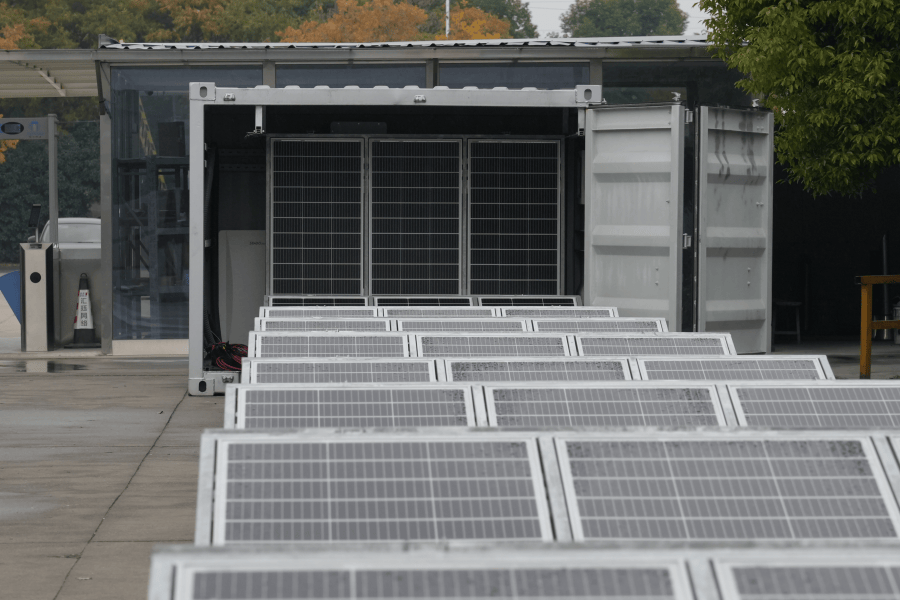
This is where the modern, all-in-one Battery Energy Storage System (BESS) changes the game. Think of it not as just a battery, but as an intelligent power hub for your farm. It's a pre-engineered, containerized or skid-mounted unit that integrates the batteries, the power conversion system (PCS), the thermal management, and the safety controls - all in one plug-and-play package.
For irrigation, its magic lies in flexibility. Pair it with your existing grid connection and/or solar PV, and it does three key things: 1) Stores cheap, off-peak power (or solar energy) to use during expensive peak hours (a process called peak shaving). 2) Provides instant backup power if the grid fails, ensuring irrigation cycles aren't interrupted. 3) Enables full off-grid operation with solar, drastically reducing or eliminating diesel use.
It turns your power supply from a cost center into a manageable, optimized asset.
A Real-World Case: The California Vineyard Project
I want to share a project that really drove this home for me. We worked with a mid-sized vineyard in Sonoma County, California. Their challenge was classic: high TOU (Time-of-Use) rates made running frost protection fans and irrigation pumps brutally expensive, and they had concerns about PSPS (Public Safety Power Shutoff) events during fire season.
We deployed a 500 kWh all-in-one BESS, integrated with their existing solar array. The system was designed for two main jobs: shift their solar generation to use in the evening peak, and provide 8+ hours of critical backup for their irrigation control systems and well pumps.
The result? They cut their peak-period grid electricity purchases by over 90% in the first season. During a scheduled PSPS event, the BESS seamlessly took over, keeping soil moisture sensors and drip irrigation systems online, protecting a valuable pinot noir block through a critical dry period. The peace of mind for the grower was, honestly, as valuable as the direct savings.

Key Tech Explained (Without the Jargon)
When evaluating a BESS for farm use, you'll hear some technical terms. Let's decode them:
- C-Rate: Simply put, this is how fast the battery can charge or discharge. A 1C rate means a 100 kWh battery can deliver 100 kW of power for 1 hour. For irrigation with large pumps, you need a system with a high enough C-rate to meet that sudden surge in power demand when the pump kicks on.
- Thermal Management: This is the system's "climate control." Batteries perform poorly and degrade quickly if they get too hot or too cold. A robust liquid-cooling system (like in many Highjoule units) is crucial for maintaining performance and longevity, especially in outdoor farm environments with big temperature swings.
- LCOE (Levelized Cost of Energy): This is the most important number for your ROI. It's the total lifetime cost of the system divided by the total energy it will produce/store. A well-designed all-in-one BESS with a long lifespan (like our 15-year warranted systems) achieves a low LCOE, meaning the cost per kWh you use from it becomes very competitive - often beating diesel and peak grid power hands down.
What to Look for in a Farm-Ready BESS
Not all BESS are built for the rugged, remote reality of a farm. Based on two decades of field deployments, here's my checklist:
- Safety & Compliance First: The unit must be certified to local standards like UL 9540 (USA) and IEC 62933. This isn't just paperwork; it's your guarantee of rigorous safety testing for fire and electrical hazards.
- All-in-One Simplicity: Look for a truly integrated solution. The best ones arrive on a truck, are placed on a simple concrete pad, and have minimal interconnection work. This slashes installation time and cost.
- Robust Design: Can it handle dust, moisture, and temperature extremes? IP54 rating or higher is a good sign. The enclosure should be industrial-grade.
- Intelligent Software: The brain of the system should allow you to easily set schedules (e.g., "charge from solar, discharge from 4 PM to 9 PM") and monitor performance remotely from your phone or computer.
- Local Support & Warranty: This is critical. Does the provider have local technicians and spare parts? What does the long-term service agreement look like? At Highjoule, for instance, our partnership model includes remote monitoring and local service hubs to ensure your system keeps running optimally year after year.
The journey to energy independence for your farm doesn't have to be a complex engineering project. With today's all-in-one BESS technology, it's becoming a straightforward operational decision. The right system pays for itself by turning your energy spend into a predictable, controlled line item - and gives you the resilience to handle whatever the grid (or the weather) throws at you.
What's the single biggest energy challenge you're facing with your irrigation setup this season?
Tags: BESS LCOE UL Standards Agricultural Irrigation Microgrid Battery Energy Storage System All-in-one ESS Renewable Energy for Farms
Author
James Zhang
20+ years agricultural energy storage engineer / Highjoule CTO