
IP54 Mobile BESS for High-Altitude Sites: Solving Deployment & Safety Challenges
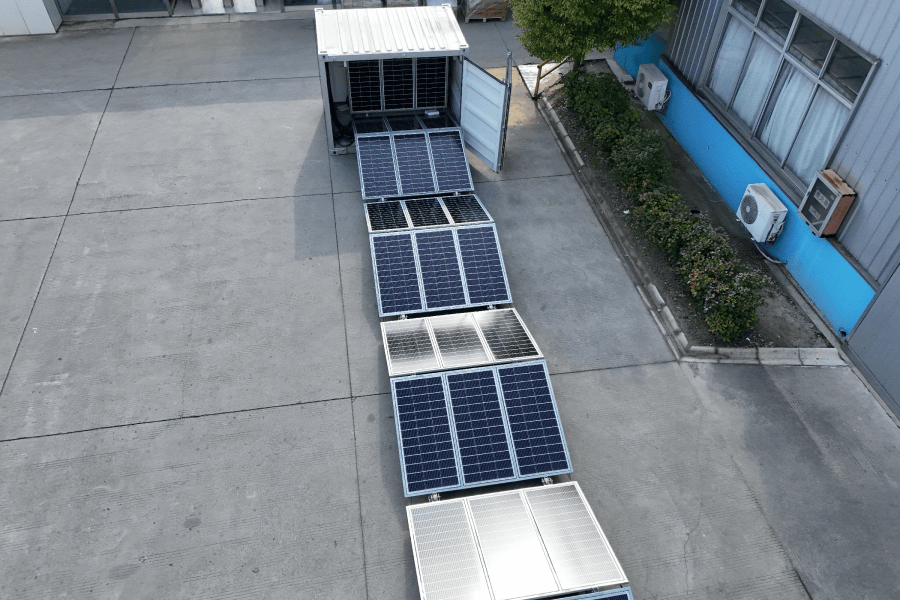
Table of Contents
- The Cold, Hard Truth About Altitude and Your BESS
- Why Standard Units Fail (And What It Really Costs You)
- The Mobile, Ruggedized Solution: More Than Just a Box
- Real-World Proof: From Alpine Sites to Rocky Mountain Grids
- Key Tech Explained: C-rate, Cooling, and Your Bottom Line
The Cold, Hard Truth About Altitude and Your BESS
Let's be honest. If you're looking at energy storage for a site above, say, 1500 meters, or in a place with wild temperature swings and relentless weather, you've probably felt the frustration. The glossy brochures from most vendors show pristine containers in sunny, flat fields. But that's not your reality, is it? Your site might be a mining operation in the Rockies, a remote microgrid in the Alps, or a wind farm extension in a high-altitude pass. The standard, off-the-shelf Battery Energy Storage System (BESS) unit? It wasn't built for this.
I've been on-site for deployments where the air is thin, the winter hits -30C, and summer sun bakes everything at 40C. The challenges here aren't theoretical; they're immediate. Reduced air density affects cooling efficiency. Extreme thermal cycling stresses every component. Condensation becomes a silent killer for electronics. And honestly, the logistics of getting a permanent, fixed solution to these locations can blow your budget and timeline out of the water before you even flip the switch.
Why Standard Units Fail (And What It Really Costs You)
The core problem is that a standard container is designed for a standard environment. Deploy it high up, and three critical things happen. First, thermal management goes haywire. Air-cooling, which works fine at sea level, becomes significantly less effective because there's less air mass to carry heat away. This forces the system to work harder, reducing efficiency and accelerating wear. According to a NREL study on BESS performance, improper thermal management can lead to a 20%+ reduction in cycle life. That's a direct hit to your return on investment.
Second, safety margins get squeezed. Electrical components and battery cells have different derating factors for altitude. Internal pressures can become unbalanced. I've seen firsthand on site how control cabinets in non-spec containers develop internal condensation, leading to corrosion and potential short circuits. It's a slow-motion failure that standard IP ratings (often tested at low altitude) don't fully account for.
Third, and this is a huge one for project managers, is deployment flexibility and cost. Building a permanent concrete pad with all the civil works in a remote, high-altitude area is a logistical and financial nightmare. Your Levelized Cost of Energy Storage (LCOE) skyrockets before the system even generates a single watt-hour of value.
The Mobile, Ruggedized Solution: More Than Just a Box
This is where the spec of a true IP54 Outdoor Mobile Power Container for High-altitude Regions stops being a checklist and starts being a business enabler. At Highjoule, we don't just take a standard container and slap on a bigger fan. We engineer for the environment from the ground up.
Take the IP54 rating. In this context, it's not just about dust and water jets. It's about ensuring that seal integrity holds during rapid barometric pressure changes and that the enclosure protects against wind-driven snow and ice. The "mobile" aspect is key. It means the unit is a self-contained, pre-tested, and pre-commissioned asset that we can deliver and have operational in weeks, not months. It sits on a skid or trailer, minimizing your site prep. Need to move it in five years? No problem. That flexibility alone can transform your project economics.
Our design philosophy is to bake in the standards you expect - UL 9540, IEC 62933, IEEE 1547 - but then go further. We specify components rated for high-altitude operation from the get-go. The thermal system is a hybrid approach, often combining liquid cooling for the battery racks with a pressurized, filtered air system for the power conversion and control areas. This ensures stable performance whether you're in Denver or on a mountain peak.

Real-World Proof: From Alpine Sites to Rocky Mountain Grids
Let me give you a concrete example. We worked with a utility partner in Colorado on a grid resilience project. The site was at 2,200 meters, with heavy snow loads and a need to support a critical community during winter outages. The challenge was deploying a 2 MWh system quickly and ensuring it would operate reliably at -25C.
A standard container solution would have required a massive, heated shelter and months of civil work. Instead, we provided two of our high-altitude-rated mobile power containers. They were fabricated, tested at our facility (including in an altitude chamber), and shipped. On-site, they were placed on simple gravel pads, connected, and were online before the first major snowfall. The integrated thermal management system maintains optimal cell temperature without external heaters, and the IP54 construction has withstood brutal ice storms. The client's team can monitor it remotely, and the mobility means they can reposition it in the future if grid needs change. It solved the technical challenge while providing incredible operational and financial flexibility.
Key Tech Explained: C-rate, Cooling, and Your Bottom Line
I know some of these terms get thrown around, so let's break down what matters for your decision.
- C-rate & Thermal Management: The C-rate is basically how fast you charge or discharge the battery. A 1C rate means full power in one hour. In high altitudes, if your cooling can't keep up, you have to derate the system - you can't use its full power without overheating it. That's like buying a sports car you can only drive in first gear. Our solution's robust cooling allows for sustained, high C-rate operation (like 1C or more) even in thin air, meaning you get the full power you paid for, when you need it most.
- LCOE - The Real Metric: Levelized Cost of Energy is your total lifetime cost divided by energy output. A cheaper, standard unit that fails early or underperforms has a terrible LCOE. Our approach might have a slightly higher upfront cost (though mobility often saves on civil works), but it delivers a lower LCOE through longer life, higher availability, and full-power capability in tough conditions. It's an asset, not a consumable.
The bottom line? If your project is anything but a perfect, low-altitude, temperate site, a standard BESS is a compromise you can't afford. You need a system designed for the real world. The right mobile, high-altitude ready container isn't an expense; it's insurance for performance, safety, and your project's financial success.
What's the single biggest environmental challenge facing your next storage deployment? Is it the cold, the heat, or the sheer remoteness of the site? Let's talk about what "built for it" really means.
Tags: UL Standard BESS LCOE Europe US Market Renewable Energy Mobile Power Container High-Altitude IP54
Author
James Zhang
20+ years agricultural energy storage engineer / Highjoule CTO