
LFP Solar Container for Data Center Backup: A Practical Guide for Cost & Safety
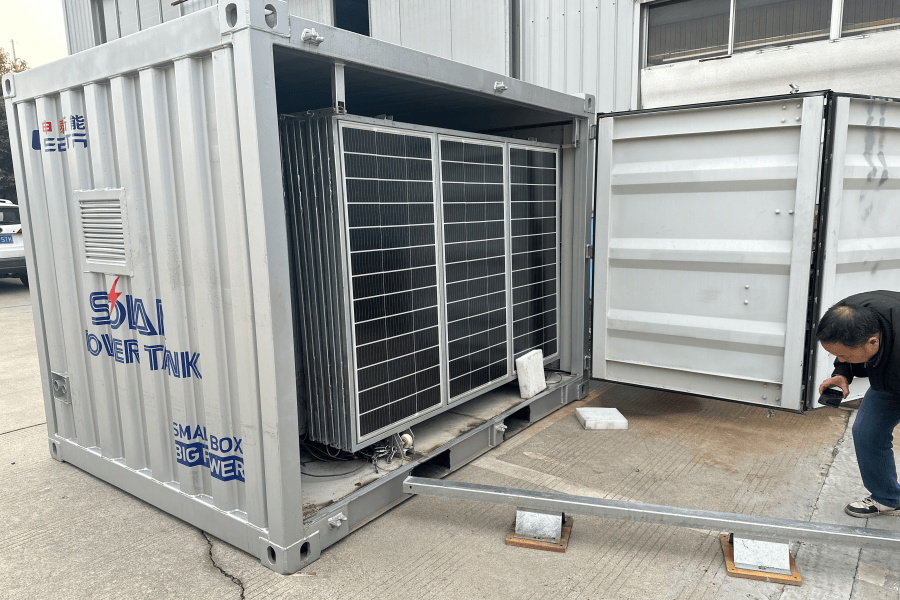
Table of Contents
- The Real Problem: It's More Than Just Backup Runtime
- The Hidden Cost Trap of "Just Any" Storage
- Safety: The Non-Negotiable in a Data Center
- How a Properly Spec'd LFP Solar Container Solves This
- A Real-World Look: A German Colocation Facility's Journey
- Key Specs Decoded: What Your Team Should Actually Focus On
The Real Problem: It's More Than Just Backup Runtime
Honestly, when I'm sitting with a data center operations manager, the first thing they tell me is, "We need 4 hours of backup at 2 MW." That's the starting line. But the real conversation - the one that happens after the third coffee - is about everything around that runtime. It's about the space they don't have inside the building, the fire marshal's latest visit, the CFO asking why the diesel genset maintenance bill is skyrocketing, and the sustainability report that's due next quarter. The backup power specification, especially when integrating solar and storage, isn't just a technical document; it's a tightrope walk between facility constraints, safety codes, total cost of ownership, and future-proofing.
The Hidden Cost Trap of "Just Any" Storage
I've seen this firsthand on site. A team picks a battery system based purely on upfront $/kWh. It looks great on the CAPEX spreadsheet. But then, the real costs creep in. Maybe the thermal management is so power-hungry it adds 20% to the facility's cooling load. Or the cycle life is poor, meaning the bank needs replacement years earlier than planned. The industry is catching on to this. Analysts at the National Renewable Energy Lab (NREL) consistently stress that Levelized Cost of Storage (LCOS) C which includes capex, opex, degradation, and efficiency C is the only metric that matters for long-term value. A low upfront cost with high operational headaches is a losing proposition for a 24/7/365 operation like yours.
Safety: The Non-Negustiable in a Data Center
Let's be blunt: you cannot have a thermal event. Not even a small one. The old chemistries that required massive, complex ventilation and gas suppression systems as a "just in case" add enormous complexity and cost. The shift to Lithium Iron Phosphate (LFP) isn't just a trend; it's a fundamental de-risking of the storage asset. Its intrinsic thermal stability is a game-changer. But - and this is a big but - the container itself and its integration must be built to the highest standards. A safe cell in a poorly designed enclosure is still a liability. This is where specs for UL 9540 (the system standard), UL 1973 (batteries), and IEC 62933 come in. They're not just acronyms; they're your insurance policy.

How a Properly Spec'd LFP Solar Container Solves This
This is where the Technical Specification of an LFP Solar Container for Data Center Backup Power moves from a generic idea to a tailored solution. It wraps the superior safety and cycle life of LFP chemistry into a self-contained, plug-and-play power asset. Think of it as a backup power plant on a skid. The right spec sheet addresses the core pain points head-on:
- Space & Siting: It goes outside. No competing for precious white space or requiring costly indoor bunkers.
- Predictable TCO: With LFP's 6000+ cycle life (at 80% depth of discharge) and high round-trip efficiency (often >95%), your LCOS plummets. You're buying decades of reliable service.
- Regulatory Peace of Mind: A pre-certified container solution (like those we engineer at Highjoule to meet both UL and IEC standards) turns a months-long permitting headache into a straightforward installation. The local AHJ (Authority Having Jurisdiction) sees a tested, listed system.
A Real-World Look: A German Colocation Facility's Journey
Let me give you a concrete example from last year. A major colo provider in Frankfurt was under pressure to reduce diesel dependency and add redundancy. Their challenge? Zero indoor space, strict local fire codes (DIN VDE), and a need to seamlessly integrate with their existing medium-voltage infrastructure.
The solution was a 1.5 MW/3 MWh LFP solar container, but the magic was in the specifications. We worked with their team on:
- Grid-Forming Capability: The inverter specs included black-start and grid-forming functions, allowing the container to act as a voltage source, not just a follower, enhancing grid resilience.
- Container Environmental Specs: This wasn't just an IP rating. We specified a NEMA 3R enclosure with integrated, indirect liquid cooling for the racks. This maintained optimal cell temperature (around 25C) year-round with minimal auxiliary power draw, even during a humid German summer. The thermal management spec was as critical as the battery capacity.
- Local Compliance: The entire system was engineered from the ground up to meet VDE-AR-E 2510-50, the go-to standard for German storage systems. This pre-compliance sped up approval immeasurably.
The container was deployed on a concrete pad in 3 days. It now provides critical bridge power during grid transitions and has cut their monthly diesel test-run costs by over 70%. The facility manager told me the biggest win was "operational simplicity." The system just runs.
Key Specs Decoded: What Your Team Should Actually Focus On
When you're reviewing that technical specification document, look past the headline capacity. Here's my take, from the field, on what matters:
| Specification Line Item | Why It Matters for Your Data Center |
|---|---|
| C-Rate (Charge/Discharge) | A 1C continuous rating means the system can deliver full power for one hour. For backup, a 0.5C (2-hour discharge) is common and less stressful on the battery. But check the peak C-rate for handling sudden, large loads. It's about power agility. |
| Round-Trip Efficiency (AC-AC) | This is your "gas mileage." 92% vs. 88% might not sound like much, but over thousands of cycles, that lost energy adds massive heat and cost. Aim for >94% in the inverter and >95% in the battery for a system total >90%. |
| Thermal Management System | Is it passive air, forced air, or liquid cooling? For a container in Arizona or Spain, air cooling might struggle, leading to throttled power or lifespan loss. Indirect liquid cooling, like we use, is quieter, more efficient, and maintains uniform cell temperature - the single biggest factor in longevity. |
| Cycling Lifetime & Warranty | The spec should state cycles at a defined Depth of Discharge (DoD) and end-of-life capacity (e.g., 6000 cycles at 80% DoD to 70% capacity). The warranty should mirror this. This is the core of your LCOS calculation. |
| Certifications (Listed, not just Tested) | It must say UL 9540 Listed or IEC 62933 Compliant. This means a Nationally Recognized Testing Lab (NRTL) certified the entire system - battery, inverter, HVAC, safety systems - as a unit. Component-level certs are not enough. |
At Highjoule, when we build a container solution, we don't just assemble components. We engineer the system holistically. That means the BMS talks seamlessly to the thermal system, the inverter is optimized for the LFP discharge curve, and every busbar is sized for minimal loss. It's this systems-level thinking, baked into the technical spec from day one, that delivers the reliability you need.
So, the next time you look at a Technical Specification for an LFP Solar Container, see it as the blueprint for your future risk mitigation, operational savings, and energy resilience. The right details in that document are what let you sleep soundly, knowing the lights - and the servers - will stay on. What's the one constraint in your next project that keeps you up at night?
Tags: Energy Storage Container UL Standard BESS Data Center Backup Power LFP Battery
Author
James Zhang
20+ years agricultural energy storage engineer / Highjoule CTO