
Rapid Deployment Energy Storage for Construction: Cut Costs & Ensure Power
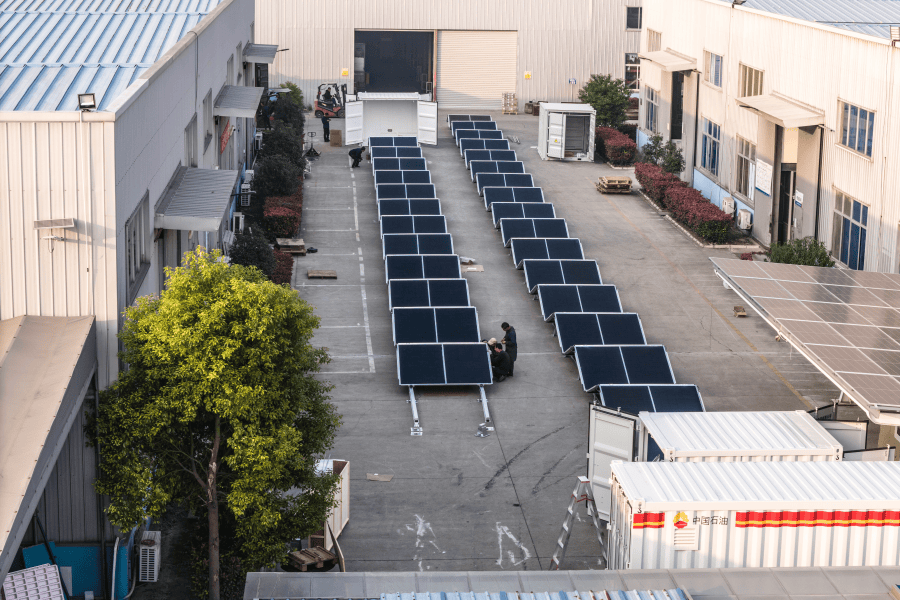
Table of Contents
- The Diesel Hangover on Your Job Site
- Beyond the Fuel Bill: The Real Cost of "Temporary" Power
- The Containerized Solution: It's More Than Just a Big Battery
- Specs That Matter: Reading Between the Lines of a Data Sheet
- A Tale from the Field: California Solar Farm Construction
- Making the Numbers Work: The LCOE Conversation
- Your Next Step: What to Look For
The Diesel Hangover on Your Job Site
Let's be honest. If you're managing a large-scale construction project in the U.S. or Europe, you know the drill for temporary power. You order the diesel gensets, you schedule the fuel trucks, you brace for the noise complaints, and you build a line item for fuel and maintenance that seems to have a mind of its own. It's the way it's always been done. But after 20+ years on sites from Texas to Bavaria, I can tell you the headache is real, and it's getting more expensive by the day.
We're not just talking about fuel prices anymore. We're talking about tightening emissions regulations in urban areas, noise ordinances that can shut down night work, and the sheer logistical nightmare of keeping multiple generators running smoothly. I've seen projects where the "temporary" power solution felt like a full-time job to manage. This is the core problem we've been facing: our need for flexible, reliable site power is at odds with the old, dirty, and inefficient ways of providing it.
Beyond the Fuel Bill: The Real Cost of "Temporary" Power
Let's agitate that pain point a little. The International Energy Agency (IEA) has consistently highlighted the construction sector's reliance on fossil fuels for off-grid power as a significant, and often overlooked, emissions source. But the financial hit goes deeper than the diesel bill.
Think about the soft costs. The labor for refueling and maintenance. The risk of fuel theft. The project delays if a critical genset fails. The inability to power sensitive surveying or communication equipment cleanly. And honestly, in today's market, there's a reputational cost. More clients are asking for sustainable construction practices. Showing up with a row of rumbling, fuming generators doesn't exactly scream "innovator."
This is where the conversation shifts. The industry needs a power source that is as mobile and flexible as a genset, but silent, emission-free, and with a predictable, lower operating cost. That's not a pipe dream; it's a Technical Specification of Rapid Deployment Energy Storage Container for Construction Site Power.
The Containerized Solution: It's More Than Just a Big Battery
So, what is this solution? It's a Battery Energy Storage System (BESS) pre-integrated into a standardized shipping container. But calling it just a "battery in a box" does it a massive disservice. This is a fully engineered power plant designed for the harsh, dynamic environment of a construction site.
The true value lies in its rapid deployment. We're talking about a solution that can be delivered, positioned, connected, and commissioned in a matter of days, not weeks. It plugs into your site's main distribution panel. You can pair it with a primary grid connection to shave peak demand charges, or combine it with a small, efficient backup generator (turning it into a "hybrid" system) to drastically reduce runtime and fuel consumption. In some cases, you can even pair it with temporary solar arrays for near-zero-emission site power.

Specs That Matter: Reading Between the Lines of a Data Sheet
When you look at a spec sheet for one of these containers, don't just get lost in the kilowatt-hour (kWh) capacity. That's important, but it's the supporting specs that ensure reliability and safety. Here's my take on what to really focus on:
- Power Rating & C-rate: The power output (in kW) tells you how much load it can handle at once. The C-rate (the ratio of power to energy capacity) indicates the battery's "athleticism." A higher C-rate means it can discharge its energy faster - crucial for powering heavy equipment like cranes or piling rigs that have high surge demands. It's the difference between a marathon runner and a sprinter; on a construction site, you often need both.
- Thermal Management: This is non-negotiable. Batteries perform poorly and degrade quickly if they're too hot or too cold. A top-tier system will have a liquid cooling and heating system that maintains the cells within a perfect temperature range, whether it's 110F in Arizona or -10F in Norway. I've seen firsthand how passive air-cooled systems struggle and fail in dusty, variable site conditions.
- Safety & Compliance (UL/IEC/IEEE): This is where you cannot compromise. For the North American market, look for UL 9540 certification for the overall system and UL 1973 for the batteries. In Europe, IEC 62619 is key. These aren't just stickers; they mean the system's electrical safety, battery management, and fire containment have been rigorously tested by an independent body. It's your insurance policy.
- Grid-Forming Capability: An advanced feature that's becoming a game-changer. It allows the BESS to create a stable, clean "grid" by itself, which is essential for powering sensitive equipment or for sites with no grid connection at all.
At Highjoule, for instance, our rapid-deployment containers are built around these principles. We design for the real world - with robust environmental protection (IP54 minimum), integrated fire suppression that exceeds code, and a control system simple enough for a site foreman to monitor via a tablet.
A Tale from the Field: California Solar Farm Construction
Let me give you a real example. We worked with a contractor building a large solar farm in Central California. The site was remote, the grid connection was weak and expensive to upgrade, and their initial plan was a fleet of diesel gensets. The challenges were classic: fuel logistics over rough terrain, noise disturbing a nearby community, and a corporate mandate to reduce the project's carbon footprint.
We deployed two of our 1 MWh rapid-deployment containers, coupled with a single, smaller, high-efficiency diesel genset in a "genset-assist" mode. The BESS provided the base load and handled all the short, sharp power spikes. The generator only kicked in occasionally to recharge the batteries, running at its optimal, fuel-efficient speed. The result?
- Diesel fuel consumption reduced by over 70%.
- Near-silent operation, eliminating community complaints.
- Zero emissions during night shifts when the BESS powered the site alone.
- The system paid for itself in fuel savings before the 18-month project was complete.
The project manager told me the biggest benefit was the "set-it-and-forget-it" reliability. They managed power from an app, and the constant refueling drama just vanished.
Making the Numbers Work: The LCOE Conversation
This brings us to the bottom line: Levelized Cost of Energy (LCOE). For a long time, diesel gensets had a seemingly low upfront cost, which made them the default. But LCOE looks at the total cost over the system's life - capital, fuel, maintenance, and even carbon taxes if applicable.
When you run that model for a rapid-deployment BESS, especially in a hybrid setup, the numbers are compelling. The fuel savings are massive and predictable. Maintenance on a battery system is minimal compared to a diesel engine. The National Renewable Energy Laboratory (NREL) has published data showing how pairing storage with generators improves overall fuel efficiency and reduces costs significantly. You're not just buying power; you're buying predictability and removing a major operational variable.

Your Next Step: What to Look For
If you're evaluating Technical Specification of Rapid Deployment Energy Storage Container for Construction Site Power, look beyond the brochure. Ask the provider about their thermal management design. Demand to see the UL or IEC certification documents. Get a detailed LCOE analysis for your specific site conditions and duty cycle. And most importantly, ask for case studies from projects similar to yours.
The technology isn't just ready; it's proven. The question is no longer if battery storage can work on a construction site, but how much it can save you on your next project. What's the one power-related headache on your current site that you wish would just go away?
Tags: Construction Site Power UL Standard BESS LCOE Rapid Deployment Energy Storage Temporary Power
Author
James Zhang
20+ years agricultural energy storage engineer / Highjoule CTO