
Rapid Deployment BESS Containers for Agricultural Irrigation: Solving Key Pain Points in the US & EU
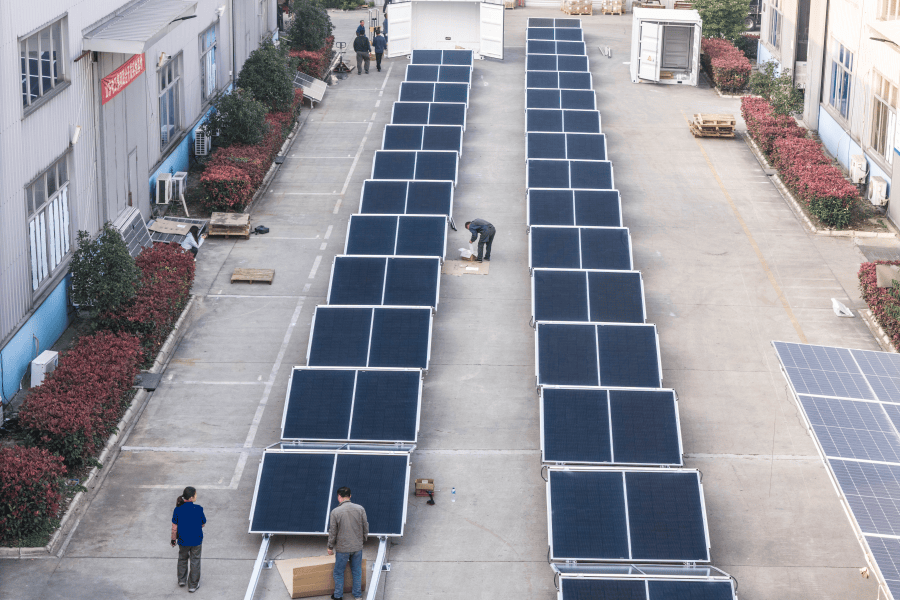
The Real Reason Your Farm's Irrigation Energy Costs Are Skyrocketing (And a Fast-Track Fix)
Honestly, if I had a dollar for every time a farm manager in California or an agri-business owner in Spain told me their irrigation power bill was eating their profits alive, I'd probably be retired by now. Sitting across the table, the frustration is palpable. It's not just about cost; it's about reliability, control, and the sheer complexity of modernizing century-old farming practices. Over my twenty-plus years in the field - literally and figuratively - deploying BESS solutions globally, I've seen this challenge evolve. The push for sustainable agriculture, coupled with volatile energy markets and an often-strained grid, has created a perfect storm. But here's the good news: the technology to not just weather this storm, but to thrive in it, is here. And it's not some futuristic concept; it's a pragmatic, rapid-deployment industrial containerized solution that's changing the game right now.
Quick Navigation
- The Hidden Costs Beyond the Power Bill
- Why "Fast Deployment" Isn't Just a Marketing Gimmick
- The Solution Unpacked: More Than Just a Box of Batteries
- Case in Point: A Win in the Central Valley
- Making the Numbers Work for Your Operation
The Hidden Costs Beyond the Power Bill
Let's cut to the chase. The problem isn't simply "energy is expensive." It's a multi-headed beast. First, you have demand charges. For our industrial and large agricultural clients, these fees, based on your peak power draw in a billing cycle, can constitute up to 50% of your electricity bill. When all your pumps kick on during a midday heatwave to save a crop, you're not just paying for the water; you're getting hit with a massive peak demand penalty. The National Renewable Energy Lab (NREL) has highlighted how demand charge management is a primary economic driver for commercial storage.
Then there's grid dependency and instability. In remote agricultural areas, the grid can be weak. Voltage sags or brief outages might not register at your home, but they can wreak havoc on sensitive pump controllers and irrigation systems, leading to downtime and potential crop damage. I've been on sites where a two-second blip meant hours of manual system resets across hundreds of acres.
Finally, there's the missed opportunity of renewables. Many farms have invested in solar. But solar production often peaks in the afternoon, while irrigation might be most efficient at night or early morning to reduce evaporation. Without storage, you're selling that cheap, clean solar power back to the grid at low rates, only to buy expensive grid power later. It just doesn't make financial sense.
Why "Fast Deployment" Isn't Just a Marketing Gimmick
When you're dealing with seasonal operations and tight planting/harvesting windows, time is a crop. Traditional energy infrastructure projects can take 12-18 months from planning to commissioning - permitting, civil works, custom engineering. That's an entire growing season lost. The agility to respond to a new water regulation, to capitalize on a new solar array, or to simply get costs under control this season is invaluable.
This is where the Technical Specification of a Rapid Deployment Industrial ESS Container becomes critical. "Rapid deployment" means it's designed from the ground up for this. We're talking about a fully integrated, factory-tested system that arrives on a standard shipping container chassis. The civil work is minimal - often just a level concrete pad. The goal is connection-ready within weeks, not years. I've seen firsthand on site how this speed transforms the project economics and client readiness to adopt the tech.
The Solution Unpacked: More Than Just a Box of Batteries
So, what should you look for in these specs? It's the details that separate a reliable asset from a liability.
1. Safety & Compliance: The Non-Negotiables
This is paramount. For the US market, UL 9540 (the standard for Energy Storage Systems and Equipment) and UL 1973 (for batteries) aren't just nice-to-haves; they're insurance policies and often a permitting requirement. In the EU, IEC 62933 series is key. A proper rapid-deployment container will have these certifications for the entire system, not just components. It means the thermal management, fire suppression, electrical safety, and battery management have been rigorously tested as a unified unit.
2. Performance That Matches Irrigation Cycles: C-rate & Thermal Management
Irrigation pumps demand high power. You need a battery that can discharge energy quickly to meet that surge. This is where C-rate matters. Simply put, it's a measure of how fast a battery can charge or discharge relative to its capacity. A 1C rate means a full discharge in one hour. For covering short-duration peak demands, you'll want a system capable of higher C-rates (e.g., 1C or more).
But pushing high power generates heat. Thermal management is the unsung hero. A passive air-cooled system might struggle in a 45C (113F) Texas summer, leading to accelerated degradation or safety shutdowns. Look for specs mentioning active liquid cooling or advanced climate control. It maintains optimal cell temperature, ensuring performance when you need it most and extending the system's life. At Highjoule, we've found this to be the single biggest factor in long-term ROI for harsh environments.

3. The Brains: Intelligent Energy Management System (EMS)
The container is the muscle; the EMS is the brain. A good EMS isn't just a simple timer. It should seamlessly integrate with your irrigation schedule, local weather forecasts, grid tariff rates, and on-site solar. Its job is to autonomously decide the most economical moment to charge (from grid or solar) and discharge, flattening your demand curve and maximizing self-consumption of renewables. This intelligence is what turns a capital expense into a revenue-generating or cost-saving asset.
Case in Point: A Win in the Central Valley
Let me share a recent project that hits close to home. A large almond grower in California's Central Valley was facing crippling demand charges and had significant behind-the-meter solar. Their challenge was twofold: reduce peak grid draw during irrigation and shift their abundant midday solar energy for use in the early evening.
We deployed a 1.5 MWh rapid-deployment containerized BESS. The specs were key: UL 9540 certified for fast permitting, a 1C capable battery for pump surges, and liquid cooling for the valley heat. The on-site EMS was programmed with their irrigation schedules and utility rate structure.
The result? They slashed their peak demand by over 40%, cutting those punitive charges immediately. Furthermore, they increased their on-site solar consumption from ~30% to over 80%. The system was operational less than 10 weeks after the contract was signed - critical for aligning with their irrigation season. The project wasn't just about green credentials; it had a clear sub-5-year payback, which is what made the decision easy for the management.
Making the Numbers Work for Your Operation
Ultimately, it boils down to Levelized Cost of Storage (LCOS) - the total cost of owning and operating the storage system per unit of energy discharged over its lifetime. A cheaper, uncertified system with poor cooling will degrade faster and may face operational limits, raising its real LCOS. A robust, rapidly-deployed system with superior thermal management might have a higher upfront cost but a significantly lower LCOS because it lasts longer and performs reliably every day.
The beauty of the containerized approach we've championed at Highjoule is its predictability. The costs, the timeline, the performance, and the safety are all baked into a known, repeatable specification. It removes the uncertainty that has traditionally plagued custom energy projects.
So, the next time you look at your irrigation energy bill and feel that familiar frustration, ask yourself: Is my operation agile enough to handle the energy market's volatility? The technology to take control is here, and it's faster to deploy than you might think. What's the one constraint in your energy strategy that, if solved this season, would make the biggest difference to your bottom line?
Tags: UL Standard BESS Agricultural Irrigation Renewable Energy Energy Storage System
Author
James Zhang
20+ years agricultural energy storage engineer / Highjoule CTO